Español
 Русский
 Francés
 Português
 ภาษาไทย
 Indonesia
 Việt
Việt
 العربية
 Melayu



Precision in Veneer Drying: How Shine’s Wood Veneer Dryer Handles Grades A to C—and Why Quality Thresholds Matter
In the intricate world of wood processing, few steps are as critical as veneer drying. The transformation of freshly peeled veneer into stable, usable material demands precision, consistency, and equipment that can adapt to varying quality inputs. At the forefront of this industrial challenge stands Shine, a manufacturer whose wood veneer dryers have earned a reputation for balancing high throughput with nuanced material handling. Yet even the most advanced machinery has its limits—limits rooted not in mechanical capability but in the fundamental physics of processing raw wood.
This report examines how Shine’s veneer drying systems accommodate veneer grades ranging from premium A to utility-grade C, while drawing a clear line at excessively degraded material. The distinction is not merely about product quality; it is about operational integrity, equipment longevity, and the economics of efficient production.
The Grading Spectrum: From A to C
Veneer grading is the language through which mills communicate material quality. While standards vary by region and end-use, a generalized classification provides clarity:
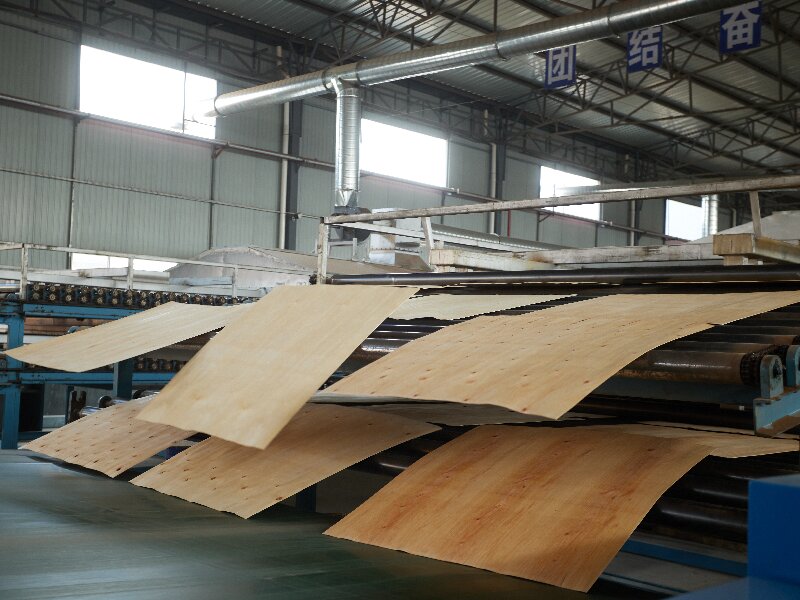
A-Grade Veneer represents the pinnacle of quality. These sheets are free from knots, splits, discoloration, and grain irregularities. Sourced from prime log sections, A-grade veneer is destined for high-visibility applications such as architectural panels, luxury furniture faces, and premium cabinetry. When processed through a wood veneer dryer, A-grade material responds predictably. Its uniform thickness, consistent moisture content, and absence of structural weaknesses allow for rapid, even drying at higher temperature settings. Shine’s systems excel here, leveraging precision airflow control to preserve the surface integrity that defines premium veneer.
B-Grade Veneer occupies the middle ground. Minor knots, slight grain variations, and small patches of discoloration are acceptable. B-grade material often serves as core stock in plywood, substrate layers in engineered wood products, or applications where visual uniformity is less critical. In veneer drying, B-grade requires more attentive handling. Knots and density variations create zones that dry at different rates, demanding nuanced temperature modulation. Shine’s dryers incorporate sectional temperature control and variable-speed mesh belts that allow operators to fine-tune the drying profile for mixed-grade batches without compromising throughput.
C-Grade Veneer sits at the utility end of the spectrum. This grade permits larger knots, open defects (if patched), pronounced grain irregularities, and color variations. C-grade veneer is typically destined for structural plywood, pallets, industrial packaging, or applications where strength outweighs appearance. Drying C-grade material tests the adaptability of any veneer drying system. Shine’s machines, equipped with enhanced tracking mechanisms and adjustable roller pressures, are designed to handle the dimensional inconsistencies common in lower-grade stock. The systems’ robust construction minimizes warp and curl, even when processing veneer with variable thickness across a single sheet.
Where the Line Is Drawn: The Case Against “Too Degraded”
For all the sophistication of modern wood veneer dryer technology, there exists a threshold beyond which processing becomes counterproductive. Shine’s engineering team has clearly delineated this boundary: excessively degraded veneer—often informally termed “below grade” or “reject stock”—should not enter the drying line.
What constitutes “too degraded”? The category includes veneer with multiple large, loose knots that threaten to detach during drying; sheets with extensive fungal stain or incipient rot that compromises structural integrity; material with severe thickness variation exceeding 3 millimeters across the sheet; veneer exhibiting deep checks or splits that fragment under tension; and stock contaminated with foreign debris such as bark inclusions, grit, or metal fragments from log handling.
The reasons for excluding such material are rooted in operational reality. When fragmented veneer enters a veneer drying system, the risks multiply:
Mechanical Interruptions: Loose knots, broken edges, and fragmented sheets can become lodged between rollers, wrap around drive shafts, or accumulate on sensor arrays. Shine’s dryers feature self-cleaning mechanisms and strategically placed access points, but repeated jams require manual intervention, disrupting production flow.
Fire Hazards: Accumulation of fragmented veneer inside the dryer creates concentrated pockets of combustible material. Modern veneer drying systems operate at elevated temperatures—typically 150°C to 200°C (300°F to 390°F) depending on species and thickness—and residual debris trapped in the drying chamber poses a legitimate fire risk.
Contamination of Acceptable Stock: When degraded veneer breaks apart mid-process, fragments can adhere to adjacent sheets, introducing defects into otherwise usable material. This cross-contamination reduces the yield of saleable product from a given batch.
Accelerated Wear: Abrasive debris such as grit or bark inclusions accelerates wear on felt pads, rollers, and conveyor belts. While Shine equips its dryers with wear-resistant components designed for extended service intervals, processing consistently contaminated material shortens maintenance cycles and increases operational costs.
Engineering Adaptations for Variable Quality
Recognizing that veneer quality exists on a continuum, Shine has incorporated design features that extend the usable range of veneer drying equipment while maintaining clear exclusion parameters.
Segmented Roller Sections: The dryer’s roller configuration is divided into independently adjustable zones. This allows operators to apply lighter pressure in areas where thinner or more fragile veneer passes while maintaining consistent traction for heavier stock.
Intelligent Feed Systems: Optical sensors at the infeed stage assess sheet dimensions and flag extreme irregularities. When a sheet exceeds preset tolerances for thickness variation or defect density, the system can automatically reduce line speed or—in configurations with rejection gates—divert the sheet before it enters the drying chamber.
Multi-Zone Airflow Control: Different grades require different drying regimes. A-grade veneer benefits from rapid initial drying with high airflow to preserve surface quality. C-grade material, with its variable density, performs better under gentler ramp-up curves that allow moisture to migrate evenly without inducing additional checks. Shine’s control architecture stores grade-specific profiles that operators can recall with a single command.
Enhanced Debris Management: The dryers incorporate magnetic separators at infeed points to capture ferrous contaminants. Additionally, brush systems beneath the return conveyor minimize the accumulation of loose fibers and fragments that could otherwise re-enter the process.
Economic Implications of Grade-Adjusted Drying
The decision to exclude excessively degraded veneer from drying is not merely a technical preference—it is an economic calculation. Mills operating Shine dryers report quantifiable benefits from disciplined grade management:
Throughput Stability: By preventing jams and interruptions, facilities maintain consistent linear output. A single jam requiring a 10-minute stoppage on a high-capacity line can reduce daily throughput by 3–5 percent.
Energy Efficiency: Fragmented or extremely variable veneer disrupts the thermal balance within the drying chamber. When material fragments accumulate, airflow patterns change, forcing the system to compensate with increased energy consumption. Processing only grades A through C within design parameters yields predictable energy usage per cubic meter of dried veneer.
Reduced Maintenance Costs: Facilities that enforce strict quality thresholds at the dryer infeed report 20–30 percent longer intervals between major maintenance shutdowns. Fewer foreign objects and less fragmentation translate to lower wear on bearings, rollers, and conveyor components.
Product Consistency: When drying lines process a uniform range of grades, the resulting output shows greater consistency in final moisture content—typically within ±1.5 percent across a batch. This consistency is particularly critical for mills producing engineered wood products where adhesive bonding relies on precise moisture parameters.
Operational Best Practices
For mills integrating Shine’s veneer drying systems, establishing clear protocols around grade acceptance yields optimal results. Industry operators recommend the following:
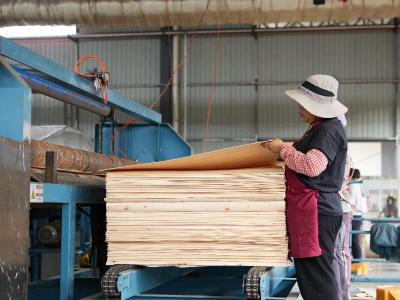
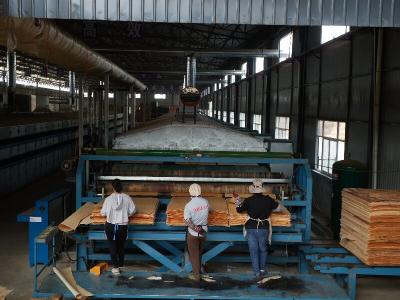
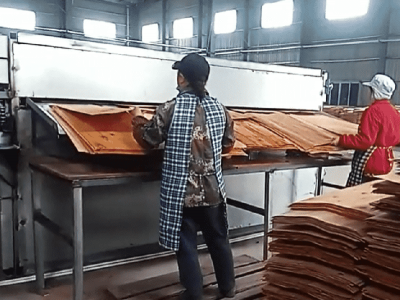
Pre-Dryer Sorting: Implementing a manual or automated sorting station before the dryer infeed ensures that only grades A through C reach the drying line. Many facilities use a combination of optical scanning and manual inspection to intercept excessively degraded material.
Moisture Profiling: Understanding that lower-grade veneer often enters the dryer with higher and more variable initial moisture content, operators should adjust line speed and temperature profiles accordingly. Shine’s systems support real-time moisture feedback loops, enabling dynamic adjustments without operator intervention.
Regular Cleaning Schedules: Even with disciplined sorting, some accumulation of debris is inevitable. Establishing scheduled cleaning intervals—typically every 8 to 12 hours of operation—prevents the gradual buildup that can lead to performance degradation.
Operator Training: Skilled operators recognize that not all lower-grade veneer is equal. Training programs that teach visual grading standards and their relationship to drying behavior empower line personnel to make real-time decisions about whether a questionable sheet should proceed.
Case Study: Optimizing Throughput with Grade Discipline
A plywood manufacturing facility in Southeast Asia operating two Shine continuous roller dryers provides a representative example. Before implementing stricter grade controls, the facility processed virtually all veneer produced, including sheets with extensive defects and debris. The result was an average of 4.7 production interruptions per shift due to jams or debris accumulation.
After instituting a pre-dryer sorting protocol that excluded excessively degraded material—while continuing to process A, B, and C grades—interruptions dropped to 0.8 per shift. Throughput increased by 18 percent without changes to line speed or energy input. Moreover, maintenance costs for the drying lines decreased by 26 percent over the subsequent six-month period. The facility reported that the yield loss from excluding the lowest-grade material was more than offset by the gains in productive drying time and reduced repair expenses.
Future Developments in Veneer Drying Technology
Shine continues to refine its wood veneer dryer platforms to further expand the processing window while maintaining the clear boundary against excessively degraded material. Emerging developments include:
Artificial Intelligence for Grade Assessment: Machine vision systems trained on thousands of veneer images can now classify grade with accuracy approaching human inspectors. Integrated directly with dryer controls, these systems can adjust drying parameters for each sheet individually, optimizing for quality while automatically diverting material outside acceptable parameters.
Predictive Maintenance Analytics: By monitoring vibration signatures, motor loads, and temperature patterns, newer Shine dryers can predict when debris accumulation is approaching problematic levels, alerting operators before a jam occurs.
Modular Debris Extraction: Next-generation designs incorporate accessible debris extraction ports at key points along the drying path, allowing operators to clear accumulations without stopping production.