Español
 Русский
 Francés
 Português
 ภาษาไทย
 Indonesia
 Việt
Việt
 العربية
 Melayu


Shine Wood Veneer Dryer Series: From Single-Layer to Six-Layer Solutions Tailored to Every Client’s Space, Output, and Customized Request
In the fiercely competitive global timber and plywood manufacturing industry, efficiency is measured not only in output volume but also in the precision with which machinery adapts to the physical and financial realities of the factory floor. For decades, producers of wood veneer—the delicate, thin sheets that form the backbone of plywood, laminated veneer lumber (LVL), and engineered flooring—have faced a frustrating paradox. To dry veneer rapidly and at scale, they needed large, expensive multi-deck dryers. But for small- to medium-sized enterprises (SMEs) or those operating in land-scarce environments, installing a massive, fixed-configuration dryer was often economically or spatially infeasible.
Enter Shine Machinery (Shine), a Chinese heavy hitter in wood processing technology that has systematically dismantled the “one-size-fits-all” model. With its newly expanded line of Shine veneer dryer systems—available in single-, double-, four-, and six-layer configurations—the company has engineered a paradigm shift. Instead of forcing customers to adapt their workshops and production targets to a machine, Shine has perfected the art of building the machine around the customer’s customized request. Whether a client possesses a cramped urban factory of 500 square meters or a sprawling rural complex of 10,000 square meters, Shine now offers a precisely matched drying solution that optimizes throughput per square meter, energy consumption, and labor efficiency.
This report dives deep into the technology, the market logic behind each configuration, and how Shine’s commitment to bespoke engineering is empowering veneer producers from Southeast Asia to South America.
The Unsung Hero of Plywood Quality: The Veneer Dryer
Before examining the Shine product matrix, it is essential to understand why the veneer dryer is arguably the most critical machine in any plywood mill. Freshly peeled wood veneer typically has a moisture content (MC) of 80% to 120% (green condition). For successful gluing into plywood, the MC must be reduced to between 6% and 12%. Uneven drying leads to cracks, waviness, and glue-line failure downstream. Over-drying wastes energy and makes the veneer brittle.
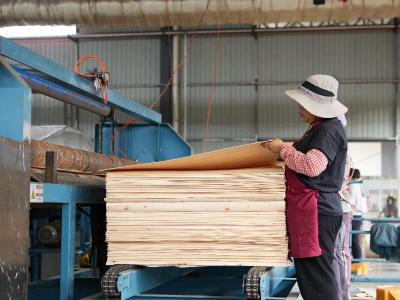
Traditional drying methods—air drying or using improvised kilns—are slow, inconsistent, and labor-intensive. A modern, purpose-built veneer dryer uses high-velocity hot air (heated by thermal oil, steam, or direct gas-fired burners) to strip moisture uniformly from both sides of the sheet. The number of “layers” or “decks” determines how many independent streams of veneer can be processed simultaneously within a single machine footprint.
This is where Shine’s strategic differentiation becomes evident. By offering four distinct layer configurations, each tied to a specific production band and spatial allowance, Shine ensures that no customer pays for capacity they cannot use—or is forced to settle for insufficient output.
Single-Layer Veneer Dryer: The Compact Pioneer for Tight Spaces
Target Output: 1.5 – 3.0 cubic meters per hour (depending on veneer species and initial MC)
Ideal Workshop Area: Under 800 square meters
Best For: Start-up plywood mills, specialty veneer producers (e.g., decorative face veneer), R&D facilities, and workshops in dense urban industrial zones.
The Shine single-layer veneer dryer is a marvel of minimalist engineering. As the name suggests, a single conveyor belt carries veneer sheets through a single, wide drying tunnel. Why would a producer choose this over a multi-deck system? Two words: flexibility and accessibility.
In a single-layer design, all drying nozzles are directed at one continuous stream of veneer. This allows for extremely precise control of temperature and airflow. For high-value wood veneer destined for visible architectural panels or automotive interiors, where surface checking (micro-cracks) is unacceptable, the single-layer dryer is unmatched. Operators can easily inspect every sheet at the infeed and outfeed, adjust speeds on the fly, and clean the internal plenums without dismantling half the machine.
Most critically, the single-layer model has the smallest floor space requirement of any industrial veneer dryer on the market. Its total length can be as short as 12 meters, with a width under 2.5 meters. A plywood entrepreneur operating out of a converted warehouse in Vietnam or a family-owned mill in Italy can slide this unit into a corner and immediately achieve professional-grade drying.
One recent buyer, Mr. Anwar Kamal from a startup in Malaysia, explained: “We have less than 600 square meters of total factory space. A four-layer dryer would have been impossible. But the Shine single-layer unit gives us 2.2 cubic meters per hour of perfectly dried rubberwood veneer. They even customized the infeed conveyor to accept our odd-sized 4x8-foot sheets. That’s what a customized request should mean—adapting to us, not the other way around.”
Double-Layer Veneer Dryer: The Balanced Workhorse
Target Output: 4 – 6 cubic meters per hour
Ideal Workshop Area: 1,000 – 1,800 square meters
Best For: Mid-sized plywood mills, producers transitioning from artisan to industrial scale, and companies needing redundancy.
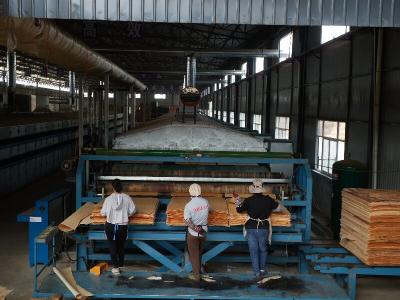
The double-layer configuration is Shine’s best-selling product globally. Conceptually, it stacks two independent drying decks vertically within a single insulated housing. Green wood veneer is fed simultaneously into both layers, effectively doubling the output of a single-layer unit while adding only 30% to the machine’s footprint.
But the genius of the Shine double-layer dryer is not merely stacking. Shine engineers have solved the classic problem of heat stratification—where upper decks run hotter than lower decks. Their proprietary cross-flow air circulation system, combined with independent temperature controls for each deck, ensures that veneer on the lower deck dries as efficiently as veneer on the upper deck.
From a customized request perspective, the double-layer dryer offers enormous flexibility. A customer may ask for a 24-meter-long machine with a 4.5-meter loading area for large leaf veneers, or a shorter 18-meter version for thinner, fast-drying poplar veneer. Shine’s design team routinely modifies:
Roller or mesh belt types: Mesh belts for thinner veneer (1.2mm and below), roller belts for thicker structural veneer.
Heating medium connections: Thermal oil, steam, or a hybrid system.
Automatic infeed systems: Magazine loaders for continuous operation or manual feed stations for lower volume.
“We bought our first double-layer Shine dryer in 2022,” recalls Ms. Carla Mendoza, production manager at a Chilean radiata pine plywood plant. “But our plant runs on a non-standard electrical voltage, and we needed a gas-fired burner instead of thermal oil because our boiler is old. Shine accepted every modification. The machine runs 18 hours a day, and our veneer breakage rate dropped from 7% to 1.5%.”
Four-Layer Veneer Dryer: High-Density for Land-Constrained Scale-Ups
Target Output: 8 – 12 cubic meters per hour
Ideal Workshop Area: 1,500 – 2,500 square meters
Best For: Established plywood factories with moderate land area but high output demands; producers of commodity core veneer.
When floor space is at a premium, but production targets are aggressive, the four-layer veneer dryer becomes the weapon of choice. By stacking four drying decks, Shine achieves an extraordinary density of output per square meter. A four-layer machine that occupies the same length and width as a single-layer unit can theoretically dry four times the volume.
Of course, practical realities intervene. Feeding four decks simultaneously requires a well-trained crew or an automated distribution system. Shine addresses this with optional oscillating cross-feeders that evenly distribute wet veneer across all four layers. Additionally, the four-layer dryer demands more sophisticated exhaust management to remove the vast quantities of humid air generated. Shine integrates variable-frequency-driven exhaust fans and heat recovery systems that reclaim up to 30% of exhaust heat to pre-heat incoming fresh air.
The four-layer model is where Shine’s customized request capability truly shines for large-scale clients. One recent order from a plywood conglomerate in Indonesia required a 32-meter-long four-layer dryer capable of handling both 1.2mm meranti face veneer and 3.2mm core veneer on different decks simultaneously. Shine delivered a unit with adjustable deck heights, independently variable belt speeds per deck, and a central PLC control that allows operators to set different drying profiles for each layer.
“We asked for the impossible,” said Mr. Budi Santoso, the conglomerate’s engineering director. “We needed to dry 2.8mm eucalyptus veneer on decks one and two, and 1.5mm acacia on decks three and four—two different species, two different thicknesses, in the same machine. Shine not only said yes but engineered a segmented temperature zone system where each deck has three independently controlled heating zones. Our throughput increased by 40% compared to our old European dryer, which cost three times as much.”
Six-Layer Veneer Dryer: The Industrial Megawatt
Target Output: 15 – 22 cubic meters per hour
Ideal Workshop Area: 2,500 – 4,000+ square meters
Best For: Large-scale, continuous-operation plywood and LVL mills; producers feeding multiple rotary peelers.
At the apex of Shine’s product pyramid sits the six-layer veneer dryer—a true industrial behemoth. Standing over 5 meters tall and stretching up to 40 meters in length, this machine is not for the faint of heart or shallow of pocket. It is designed for factories that process hundreds of cubic meters of logs daily and operate 24/7.
Why six layers? Simple mathematics. A six-layer dryer can accept six separate streams of wood veneer synchronously. With an automated veneer stacking and feeding system, a single six-layer Shine dryer can replace three double-layer units or two four-layer units, slashing the need for multiple operators, separate maintenance contracts, and disjointed production lines.
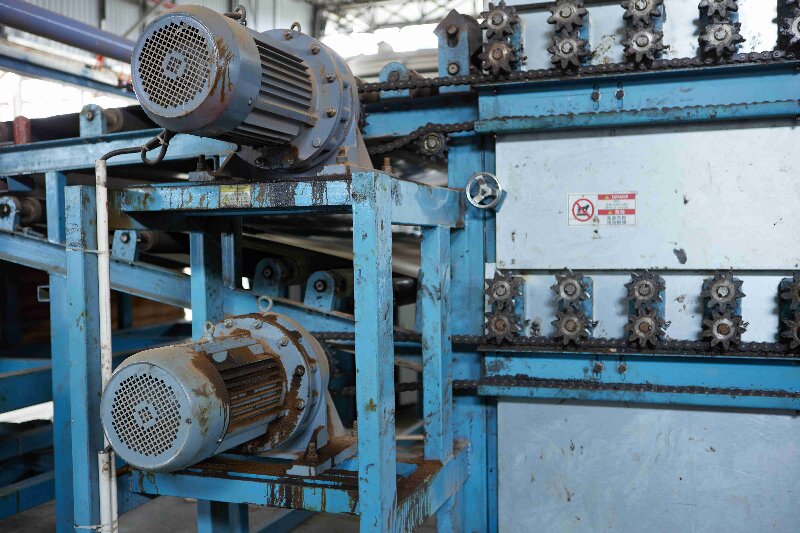
But the engineering challenges are immense. Uniform airflow across six vertical meters, maintaining belt tension across six long decks, and ensuring that lower decks do not get crushed by the weight of upper structures require advanced finite element analysis and robust steel fabrication. Shine meets these challenges with heavy-duty chassis construction, servo-driven independent belt tensioners, and a multi-zone, PLC-controlled air distribution system with over 200 individually adjustable nozzles.
Critically, the six-layer model is rarely sold “off the shelf.” Every six-layer Shine dryer is the result of an intensive customized request process. Shine’s engineers fly to the client’s site, map the existing production flow, analyze the species and thickness of wood veneer being processed, calculate the required evaporation rate, and then design the machine’s length, heating capacity, and automation level accordingly.
A landmark project in Brazil illustrates this perfectly. A major LVL producer needed to dry 4.5-meter-long, 3.6mm-thick plantation pine veneer at a rate of 20 cubic meters per hour. Their existing facility had a length constraint of only 28 meters (too short for a conventional 40-meter dryer). Shine responded with a custom six-layer dryer featuring:
High-turbulence jet impingement nozzles that increased the heat transfer coefficient by 35%, allowing a shorter drying length.
A cascading condensate removal system for the thermal oil coils, eliminating cold spots.
An integrated edge-jet system that directs extra airflow at the veneer edges, which tend to dry more slowly than centers in thick veneer.
A full touchscreen SCADA system with remote diagnostics, enabling Shine’s engineers in China to tune drying parameters in real-time.
The result: The dryer was installed within the existing building envelope, achieved nameplate capacity within two weeks of commissioning, and reduced fuel consumption per cubic meter by 18% compared to the client’s previous two-dryer setup.
The Customization Engine: How Shine Turns “Standard” into “Bespoke”
What unites all four configurations—single, double, four, and six layers—is Shine’s underlying philosophy of responsive manufacturing. Many dryer manufacturers offer “modular” designs, but true customization remains rare. Shine has institutionalized a five-step customized request workflow:
Digital Site Audit: Using drone footage, floor plan uploads, and live video walkthroughs, Shine’s application engineers create a 3D model of the client’s existing facility.
Veneer Characterization: The client sends 50-100 representative samples of their green wood veneer (different species, thicknesses, initial moisture contents). Shine’s lab tests drying behavior, shrinkage rates, and propensity for checking.
Iterative Design: Using proprietary simulation software, Shine models the proposed dryer’s airflow, temperature gradients, and mechanical stress. The client receives a virtual reality walkthrough of the machine operating inside their factory.
Component Selection Menu: Clients choose from options such as:
Heating system (thermal oil, steam, direct gas, biomass indirect)
Belt type (stainless steel mesh, plastic link, or roller chain)
Drive system (central single motor with clutches or multiple independent servo motors)
Automation level (manual feed to full robotic infeed/outfeed)
Exhaust heat recovery (none, basic recuperator, or advanced run-around coil)
Post-Installation Tailoring: Even after commissioning, Shine allows remote or on-site re-tuning of drying curves based on seasonal changes in wood veneer properties.
According to Selena, Head of International Sales at Shine Machinery, “Our competitors often say, ‘This is our standard dryer. Find a place for it.’ We say, ‘Show us your factory, your veneer, your target output, and your constraints. We will build the dryer that fits.’ That difference is not marketing—it is engineering. Last year, we fulfilled over 400 customized request orders, ranging from adding a simple manual override lever to designing a seismic-rated base for a client in a high-earthquake zone.”
Market Implications: The Rise of the Adaptive Factory
The global plywood market is projected to reach $200 billion by 2030, driven by construction booms in Asia and Africa and the substitution of steel and concrete with engineered wood in green building. However, wood panel producers are under pressure from rising log costs, tightening environmental regulations, and labor shortages. In this environment, a veneer dryer that can be precisely matched to a factory’s spatial and volumetric reality—and then reconfigured as needs change—is a strategic asset.
Shine’s layered strategy also democratizes high-quality drying. A small furniture maker in Kenya can now afford a single-layer dryer that fits in a 500-square-meter shed. A medium-sized plywood cooperative in the Philippines can scale up with a double-layer unit without buying a new building. And a Brazilian LVL giant can maximize output per square meter with a six-layer behemoth designed around an existing column layout. In each case, the starting point is the same: a conversation that begins with the phrase, “We have a customized request.”