Español
 Русский
 Francés
 Português
 ภาษาไทย
 Indonesia
 Việt
Việt
 العربية
 Melayu



The Impact of Drying Efficiency On Veneers Quality
The Impact of Drying Efficiency On Veneers Quality
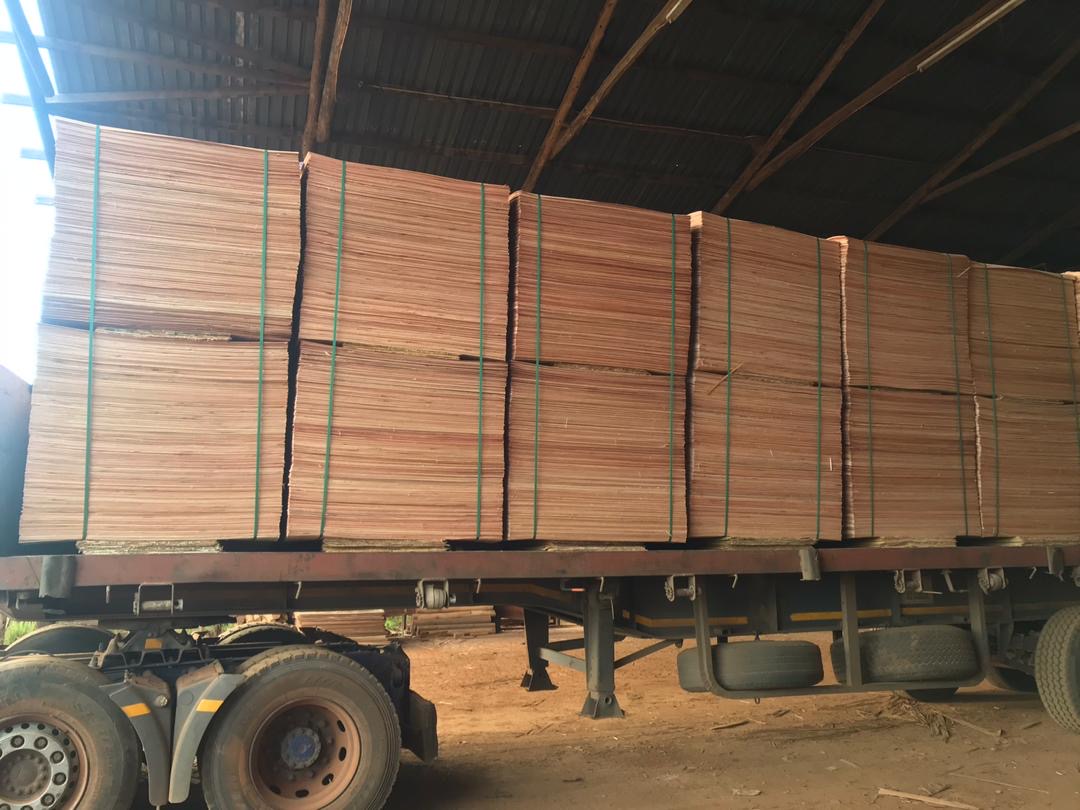
In the production process of engineered wood products, solid wood veneers, and plywood, drying is a crucial process that determines the quality of the finished product. It follows subsequent processes such as veneer rotary cutting, sanding and hot pressing, gluing, and coating, and is the core link in controlling the moisture content, stability, and aesthetics of the boards. Many board manufacturers fall into production misconceptions, simply pursuing faster drying speeds to increase production capacity, or blindly using low-speed drying to minimize defects, neglecting the balance, stability, and precision of drying efficiency. In fact, drying efficiency is not a single indicator of speed, but a comprehensive reflection of drying speed, temperature and humidity matching, hot air uniformity, and moisture content gradient control. An imbalanced drying efficiency directly leads to a series of quality defects such as cracking, deformation, bulging, delamination, and color difference in the boards, significantly reducing the finished product pass rate and market competitiveness. This article will deeply analyze the core relationship between drying efficiency and the quality of finished boards, dissect the quality risks of efficiency imbalances, and, based on veneer drying processes, provide efficient equipment and process solutions for quality improvement.
I. Core Definition and Industry Standards of Board Drying Efficiency
Board drying efficiency differs from ordinary production efficiency. It refers to the ability of a veneer dryer to complete compliant drying operations per unit time without damaging the wood fiber structure and ensuring uniform and stable moisture content. The core evaluation criteria include three dimensions: drying rate, moisture content uniformity, and board forming stability.
Wood is a porous biomass material. The initial moisture content of veneer raw materials is generally as high as 60%-80%. Depending on the application scenario, the compliant moisture content of the finished product needs to be stably controlled between 8%-12%. This range is a critical threshold for ensuring dimensional stability, strong bonding, and environmental compliance. The standardized drying process consists of three core stages: preheating, uniform drying, and moisture conditioning. The drying efficiency of each stage needs to be precisely matched and implemented gradually. The preheating stage rapidly raises the temperature to activate the wood's moisture activity; the uniform drying stage steadily releases free and adsorbed water; and the moisture conditioning stage eliminates the moisture content gradient and internal stress within the board. Efficiency that is too fast or too slow in any stage will disrupt the drying balance and create potential quality problems.
In the current context of high-quality development in the board industry, inefficient and extensive drying methods have been phased out. High-efficiency drying—characterized by uniform speed, evenness, precision, and low stress—has become the core foundation for achieving high-end production standards for finished boards.
II. Imbalanced Drying Efficiency: Quality Hazards Caused by Excessive Speed
The core contradiction in drying efficiency lies not in speed, but in its imbalance. Common quality defects in production almost all stem from uncontrolled drying efficiency: either unilaterally increasing speed leads to external dryness and internal wetness, resulting in stress concentration; or excessively low efficiency leads to insufficient drying and excessive moisture content; or uneven drying causes localized differences in moisture content, comprehensively affecting the structural performance and appearance quality of the finished boards.
(I) Excessively Fast Drying Efficiency: Structural Quality Damage Caused by High-Speed Drying
Some companies, in order to compress production cycles and increase daily output, blindly increase drying temperatures, accelerate conveyor speeds, and increase hot air velocities, resulting in severely excessive drying efficiency. Surface moisture evaporates rapidly, while internal moisture cannot migrate and precipitate out in time, creating a moisture content gradient of external dryness and internal wetness, leading to irreversible quality problems.
Firstly, there is the problem of board deformation and cracking. Rapid shrinkage of the surface fibers, while the internal fibers remain expanded, creates an imbalance of internal and external shrinkage tension, generating significant internal stress. This directly leads to veneer warping, bending, and edge curling. Thinner veneers are particularly prone to microcracks and surface fissures. Data shows that ultra-fast drying increases the deformation rate of boards by 15%-20%, significantly reducing the finished product yield of high-end boards.
Secondly, bonding performance is drastically reduced. Veneers that are dry on the outside but wet on the inside cannot properly expel residual moisture during the hot-pressing process, forming air bubbles in the core. This causes the finished boards to bulge, delaminate, and peel, rendering them unusable. Furthermore, excessively rapid drying leads to carbonization and embrittlement of the surface fibers, significantly reducing surface adhesion and decreasing subsequent adhesive bonding strength by more than 30%, drastically shortening the lifespan of the finished boards.
In addition, extremely rapid high-temperature drying damages the natural grain and color of the wood, causing the surface to yellow, blacken, and become uneven in color, resulting in noticeable color differences. This fails to meet the appearance requirements of furniture veneers and high-end decorative boards, forcing the products to be sold at a lower grade.
(II) Slow Drying Efficiency: Inefficient Drying Creates Hidden Quality Issues
Compared to rapid drying, the problems of excessively low drying efficiency and incomplete drying are more insidious. Many companies mistakenly believe that slow drying is more reliable, but in reality, it can lead to a series of hidden quality defects, affecting the long-term stability of the boards.
Insufficient drying efficiency primarily stems from excessive and unevenly distributed moisture content in the boards. Low drying temperatures, insufficient hot air circulation, and excessively slow equipment conveying speeds result in incomplete drying of the veneers, leaving a large amount of free moisture. Finished boards with excessive moisture content will continue to absorb and release moisture during subsequent use, leading to secondary deformation, mold, and dampness, especially in environments with significant temperature and humidity fluctuations, where the probability of deformation increases dramatically.
Furthermore, incompletely dried veneers retain internal moisture, hindering the adhesive curing reaction and resulting in substandard bonding strength. After long-term use, finished boards are highly susceptible to delamination, peeling, and loosening. More importantly, residual moisture in the boards accelerates the volatilization of formaldehyde and adhesives, leading to excessive formaldehyde emissions in the finished product, failing to meet E1 and E0 environmental standards, and directly impacting market access.
Furthermore, prolonged inefficient drying results in the board surface being exposed to a high-humidity, high-temperature environment for extended periods, easily promoting mold growth and water stains, causing surface contamination, affecting the finished product's aesthetics, and increasing rework and scrap costs for enterprises.
(III) Uneven Drying Efficiency: Localized Moisture Differences Lead to Poor Finished Product Stability
Besides overall efficiency being too fast or too slow, uneven drying efficiency is the core reason for inconsistent quality in mass-produced boards. Traditional, outdated dryers suffer from uneven hot air distribution, low temperature and humidity control precision, and uneven conveyor force, resulting in insufficient drying at the edges of the boards, excessive drying in the center, or inconsistent moisture content within the same batch.
This localized moisture content difference creates irregular internal stress within the board. After subsequent cutting, sanding, and coating processes, this stress is slowly released, causing deformation, warping, and substandard dimensional accuracy in the finished boards. Meanwhile, excessive deviations in moisture content within the same batch of boards can lead to inconsistencies in hardness, density, and bonding strength of the finished products, resulting in poor product quality stability. This fails to meet the requirements of large-scale, standardized production and severely impacts the company's brand reputation. Industry data shows that production lines with insufficient drying uniformity can have a defect rate exceeding 25%.
III. Efficient and Balanced Drying: The Core Key to Improving Board Quality and Reducing Costs
Combining the principles of board drying processes and addressing quality pain points, it's clear that the core of producing high-quality finished boards is not about maximizing drying speed, but rather achieving precise, balanced, and controllable drying efficiency. Stable and controllable efficient drying can avoid various quality defects, ensuring the dimensional stability, structural strength, and appearance quality of the boards, while maximizing production capacity, achieving a balance between quality improvement and efficiency enhancement.
Under a superior drying process, veneers undergo precise drying throughout the entire process—preheating, uniform drying, and humidity balancing—ensuring consistent moisture content both internally and externally. This fully releases internal stress in the wood, reducing the probability of cracking and deformation in the finished product to below 3%, and improving dimensional stability by over 40%. Simultaneously, the natural texture and color of the wood are fully preserved, and bonding strength and environmental standards are fully met, making it suitable for various applications including high-end furniture, decorative panels, and engineered wood products.
From a production efficiency perspective, balanced and efficient drying significantly reduces rework and scrap rates, minimizes raw material waste and energy consumption, shortens production cycles, and helps companies address the industry pain points of "high output but low quality" and "high quality but low efficiency," thereby enhancing product premium and market competitiveness.
IV. Adapting to High-Quality Production: Quality Improvement Solutions from Professional Veneer Dryers
Precise control of drying efficiency relies on professional drying equipment and an intelligent control system. As a professional veneer dryer manufacturer, we have been deeply involved in the board drying field for many years. Addressing the industry's pain points of uneven drying efficiency, unstable quality, and high energy consumption, we have optimized equipment structure and intelligent control systems to create efficient and precise drying solutions suitable for various types of veneers and boards, solving finished product quality problems from the equipment end.
First, we achieve precise closed-loop control of temperature and humidity. The equipment is equipped with an intelligent temperature and humidity control system with a control accuracy of ±1℃. It automatically matches the three-stage drying process parameters based on veneer thickness, initial moisture content, and wood material, precisely controlling the temperature, humidity, airflow, and conveyor speed in each stage of preheating, drying, and balancing. This eliminates over-drying and under-drying problems, ensuring controllable drying efficiency throughout the entire process.
Second, we optimize the full-area hot air circulation structure. Adopting a multi-layer uniform air supply design, we solve the problems of dead air zones and uneven drying in traditional equipment. This ensures uniform heating of the boards from top to bottom, front to back, inside and out, controlling the moisture content deviation within ±1%. This completely eliminates internal stress caused by localized drying imbalances, preventing defects such as board deformation, color difference, and localized cracking from the source.
Meanwhile, the equipment is equipped with an intelligent speed regulation and real-time moisture content detection module, which can monitor the drying status of the boards in real time and dynamically adjust the drying efficiency. It is adaptable to the drying needs of different veneer materials such as poplar, pine, birch, and mixed wood, as well as boards with different thicknesses from 1.2 to 4.0 mm, balancing drying efficiency and finished product quality. A single unit can stably process 2-5 tons of veneer per hour, significantly increasing production capacity while maintaining a finished product qualification rate of over 99%.
Furthermore, the equipment adopts an energy-saving and low-damage drying process. The low-temperature, uniform-speed drying mode reduces wood oxidation and carbonization, preserving the natural texture of the boards while reducing energy consumption. Compared to traditional equipment, it saves more than 20% on energy, helping enterprises achieve integrated upgrades in cost reduction, quality improvement, and efficiency enhancement.
V. Industry Summary: Precise Efficiency Control, Empowering High-Quality Upgrading of the Board Industry
The drying process is the "lifeline" of board quality. Balanced and precise control of drying efficiency directly determines the structural stability, appearance quality, and service life of the finished boards, and is a core breakthrough for standardized and high-end production in the board industry. Blindly accelerating drying, inefficient drying, and uneven drying can all become fatal flaws in product quality, hindering a company's market development.
In the current context of transformation and upgrading in the panel industry and increasingly fierce quality competition, moving away from extensive drying methods and relying on intelligent, precise, and efficient veneer drying equipment is crucial for achieving scientific control of drying efficiency. Eliminating problems such as uneven moisture content, internal stress imbalance, and finished product defects is essential to improving the core quality of finished panels from the source, reducing production losses, helping companies establish a quality advantage in a homogeneous market, and driving the entire panel industry towards refinement, high-end products, and high efficiency.