Español
 Русский
 Francés
 Português
 ภาษาไทย
 Indonesia
 Việt
Việt
 العربية
 Melayu



Precision Temperature Management in Veneer Dryers is the Backbone of Modern Wood Processing
In the intricate world of wood processing, the transformation of raw logs into exquisite wood veneer—a thin slice of wood used for surfaces in furniture, cabinetry, and flooring—is both an art and a science. Central to this process is the drying stage, where temperature control emerges as a non-negotiable factor determining success or failure. As global demand for high-quality, sustainable wood products rises, manufacturers are increasingly focusing on advanced veneer dryer technologies, with precise thermal management at their core. This article examines the importance of temperature in wood veneer drying, exploring its influence on quality, efficiency, and environmental sustainability.
Understanding Wood Veneer and the Drying Imperative
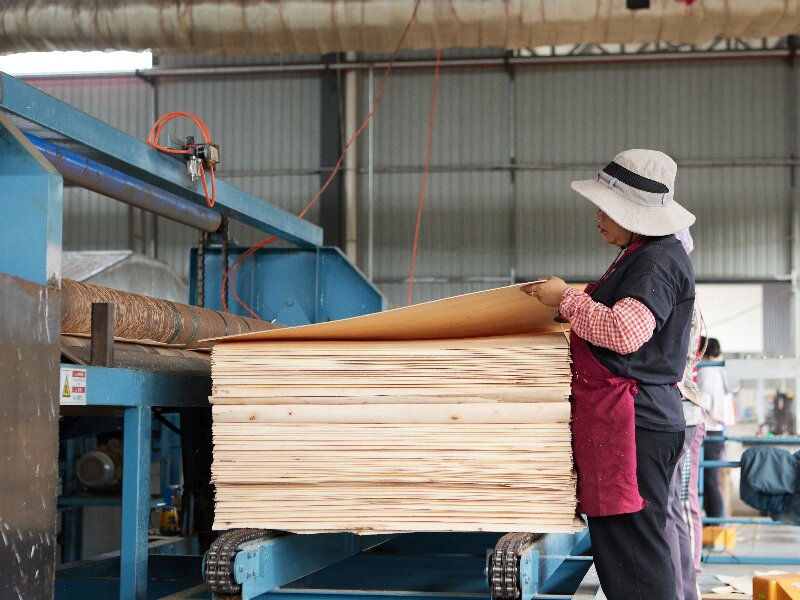
Wood veneer is produced by peeling, slicing, or sawing logs into thin sheets, typically ranging in thickness from 0.3 mm to 6 mm. These sheets are then dried, graded, and bonded to substrate panels like plywood or MDF. The drying phase is critical because freshly cut veneer has a high moisture content (often 30–60%). Without proper drying, veneer is prone to warping, mold growth, and adhesive failure during later pressing stages.
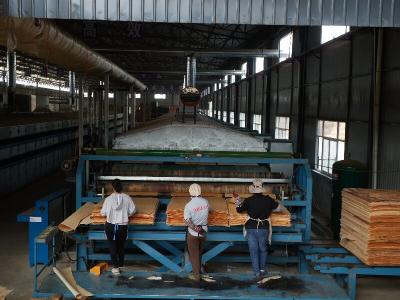
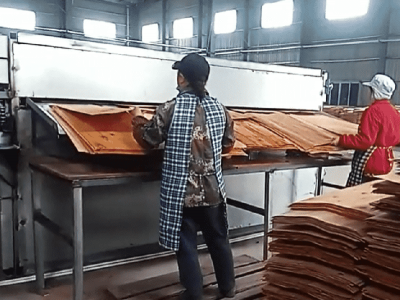
The veneer dryer—a specialized industrial oven—reduces moisture content to a target level (usually 5–12%) through controlled application of heat and airflow. While factors like humidity, air velocity, and drying time play roles, temperature control is the linchpin. It dictates the rate of moisture migration from the wood cells, influences energy consumption, and ultimately defines the veneer’s structural and aesthetic properties.
The Science of Temperature in Veneer Drying
Wood is hygroscopic, meaning it absorbs and releases moisture based on environmental conditions. During drying, heat energy breaks the bonds between water molecules and wood fibers, allowing moisture to evaporate. However, this process must be carefully calibrated:
Too low temperatures (<100°C in conventional dryers) prolong drying time, increasing energy costs and risking microbial growth.
Too high temperatures (>180°C) can cause case hardening (surface hardening while interior remains wet), honeycombing (internal cracks), discoloration, or even combustion in extreme cases.
Optimal temperature control ensures uniform moisture removal without damaging the veneer’s cellular structure. Modern veneer dryers use multi-zone systems where temperature profiles are adjusted based on veneer species, thickness, and initial moisture content. For instance, delicate species like walnut or cherry require lower temperatures (100–130°C) to preserve color, while robust species like oak can withstand higher temperatures (140–160°C).
Key Impacts of Precise Temperature Control
1. Product Quality and Consistency
Dimensional Stability: Proper temperature gradients prevent uneven shrinkage, which can lead to curling or buckling. Consistent temperature control across the dryer width ensures each veneer sheet dries uniformly, maintaining flatness and dimensional accuracy.
Color and Grain Integrity: High temperatures can degrade natural pigments, causing darkening or fading. Controlled thermal exposure preserves the aesthetic appeal critical for high-end furniture and decorative applications.
Mechanical Strength: Over-drying at high temperatures makes veneer brittle, reducing its tensile strength and flexibility. Conversely, under-drying leaves it weak and prone to decay. Optimal temperatures preserve fiber strength, enhancing veneer performance in subsequent lamination processes.
2. Energy Efficiency and Cost Management
Veneer dryers are energy-intensive, accounting for up to 70% of total energy use in veneer mills. Precise temperature control minimizes heat waste by adapting to real-time moisture levels. Advanced dryers with feedback loops adjust temperatures dynamically, reducing energy consumption by 15–25%.
Reduced Rejection Rates: By minimizing defects like cracks or stains, accurate temperature settings lower rejection rates, saving raw material costs and improving yield.
3. Production Throughput
Well-controlled temperatures accelerate drying cycles safely. For example, increasing the temperature from 120°C to 150°C (within safe limits for the species) can cut drying time by up to 30%, boosting production capacity without compromising quality.
4. Environmental Sustainability
Efficient veneer dryers with advanced temperature control systems lower carbon footprints by reducing fossil fuel or electricity use. Some modern dryers integrate waste heat recovery, where exhaust heat is recycled to preheat incoming air, further enhancing sustainability.
By preserving more veneer sheets (reducing waste), the process supports sustainable forestry goals—less raw wood is needed for the same output.
Technological Advances in Veneer Dryer Temperature Control
The evolution from basic batch dryers to continuous roller dryers has revolutionized wood veneer processing. Today’s intelligent systems feature:
Computerized Control Panels: PLC (Programmable Logic Controller) systems monitor temperature sensors along the dryer length, making real-time adjustments. Operators input parameters like species and thickness, and the system auto-sets optimal temperature profiles.
Infrared and Microwave-Assisted Drying: These technologies allow targeted heating, reducing thermal inertia and improving temperature control precision. They are particularly effective for thick or dense veneers.
IoT Integration: Sensors transmit temperature and humidity data to cloud platforms, enabling predictive maintenance and remote optimization. AI algorithms analyze historical data to recommend efficiency improvements.
Industry Challenges and Best Practices
Despite technological progress, challenges persist. Variability in raw wood (e.g., heartwood vs. sapwood differences) requires adaptive temperature control strategies. Best practices include:
Species-Specific Protocols: Each wood species has unique cellular structures and moisture pathways. Mills should develop customized drying schedules—e.g., temperate hardwoods like maple may need gradual temperature ramps, while tropical species like teak tolerate sharper rises.
Regular Calibration: Temperature sensors and heating elements must be calibrated monthly to prevent drift, ensuring readings reflect actual conditions.
Staff Training: Operators should understand the interplay between temperature, airflow, and moisture to intervene effectively when anomalies occur.
The Global Market Context
The global wood veneer market, valued at over $16 billion in 2023, is driven by construction and furniture sectors demanding high-quality finishes. As competition intensifies, manufacturers investing in high-precision veneer dryers with superior temperature control gain a competitive edge. Regions like Europe and North America lead in adopting automated dryers, while Asia-Pacific shows rapid growth, spurred by rising environmental regulations and quality standards.
Conclusion: Temperature as the Heart of Veneer Drying
In summary, temperature control is not merely a technical detail but the cornerstone of effective wood veneer drying. It directly influences product quality, operational efficiency, and environmental impact. As veneer dryer technologies advance, the integration of smart temperature control systems will continue to redefine industry standards. For manufacturers, prioritizing precision in thermal management is an investment in sustainability, profitability, and market leadership.
The future of wood veneer production lies in drier, smarter, and more responsive systems—where every degree Celsius is meticulously managed to transform raw wood into durable, beautiful veneer sheets that meet the world’s evolving needs.