Español
 Русский
 Francés
 Português
 ภาษาไทย
 Indonesia
 Việt
Việt
 العربية
 Melayu



A Comparative Analysis of Wood Veneer Dryer Brands: How to Select the Right Equipment for Your Mill
Introduction
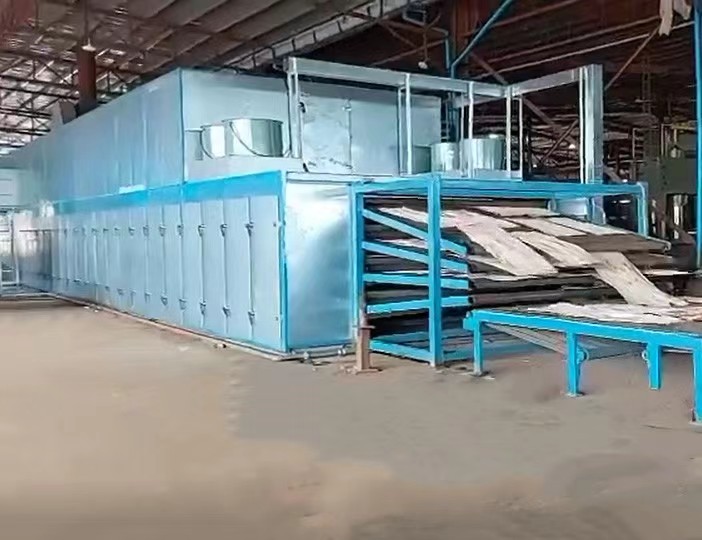
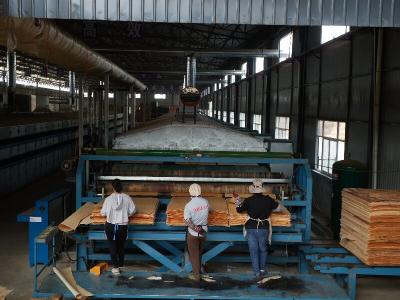
The wood veneer industry relies heavily on precision drying technology to ensure product quality, minimize waste, and maximize efficiency. As global demand for engineered wood products continues to rise, selecting the right veneer dryer has become a critical decision for mills aiming to stay competitive. With numerous brands offering varied technologies—from traditional jet dryers to advanced continuous belt systems—the choice can be overwhelming. This report provides a comprehensive comparison of leading wood veneer dryer manufacturers and outlines key factors to consider when investing in drying equipment.
Section 1: The Importance of Veneer Drying in Modern Wood Processing
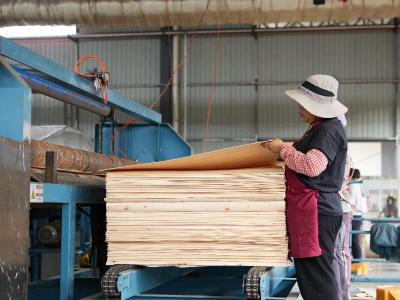
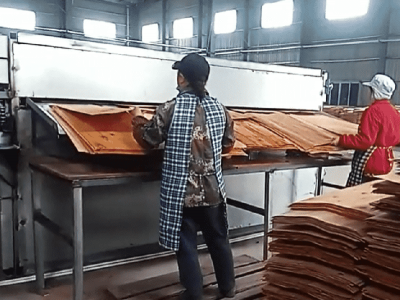
Wood veneer must be dried to a precise moisture content (typically 6–10%) to ensure stability, adhesion, and durability in downstream applications like plywood, LVL, and furniture. Inconsistent drying leads to defects such as curling, cracking, or delamination, resulting in significant material loss. Modern dryers not only remove moisture but also enhance veneer strength and reduce energy consumption—a crucial factor amid rising operational costs.
Section 2: Leading Brands in Veneer Drying Technology
Here, we examine five prominent brands, evaluating their core technologies, strengths, and typical use cases.
2.1. Durand-Raute (Canada)
A pioneer in veneer drying, Durand-Raute specializes in high-capacity jet dryers designed for large-scale mills. Their systems feature patented airflow technology that ensures uniform temperature distribution.
Key Model: Ven-Jet 4000 Series
Pros: High throughput (up to 30 m³/hour), energy-efficient heat recovery, robust automation.
Cons: High upfront cost, requires significant floor space.
Best For: Large plywood or LVL plants with continuous production lines.
2.2. Raute (Finland)
Raute’s multi-zone dryers offer precise moisture control through segmented heating and cooling stages. Their smart sensors adjust parameters in real-time based on veneer species and thickness.
Key Model: MasterDry 3.0
Pros: Exceptional moisture uniformity (±0.5%), low maintenance, compatible with IoT monitoring.
Cons: Longer installation time, complex calibration.
Best For: Mills processing diverse species or custom veneer grades.
2.3. Coe (United States)
Coe focuses on modular, customizable dryers, ideal for mid-sized operations. Their “FlexiDry” series allows incremental capacity expansion.
Key Model: FlexiDry M-Series
Pros: Scalable design, competitive pricing, user-friendly controls.
Cons: Lower peak capacity than premium brands, fewer automation features.
Best For: Growing mills needing flexibility and moderate output.
2.4. Imal-Pal (Italy)
Known for innovation, Imal-Pal combines drying with moisture profiling and defect detection. Their systems use infrared pre-drying to reduce energy use.
Key Model: PalDry Pro
Pros: Integrated quality scanning, 20–30% energy savings, compact footprint.
Cons: Higher technical training requirements, expensive spare parts.
Best For: High-value veneer production where quality control is paramount.
2.5. Chinese Manufacturers (e.g., Shandong Huaxin, Zhengzhou Yuke)
Asian brands offer cost-effective solutions, often mimicking established designs. While reliability varies, some newer models rival Western technology.
Key Model: Huaxin HX-3000
Pros: Low initial investment, quick delivery, decent performance for standard species.
Cons: Inconsistent build quality, limited after-sales support globally, and higher long-term maintenance.
Best For: Budget-conscious mills or regions with easy access to local service networks.
Section 3: Key Comparison Metrics
| Brand | Avg. Drying Efficiency | Energy Use (kWh/m³) | Moisture Uniformity | Typical Price Range |
|---|---|---|---|---|
| Durand-Raute | 95–98% | 80–90 | ±0.7% | $$$$ |
| Raute | 96–99% | 75–85 | ±0.5% | $$$$ |
| Coe | 90–94% | 95–110 | ±1.2% | $$ |
| Imal-Pal | 94–97% | 70–80 | ±0.6% | $$$$$ |
| Chinese Brands | 85–92% | 100–130 | ±1.5–2% | $ |
Note: Efficiency and energy use vary by veneer thickness, species, and initial moisture.
Section 4: How to Choose the Right Veneer Dryer – A Step-by-Step Guide
4.1. Assess Production Needs
Determine daily volume, veneer dimensions, and species mix (e.g., oak vs. pine). High-throughput mills may prioritize speed, while specialty shops focus on precision.
4.2. Evaluate Technology Features
Uniformity: Look for multi-zone control and humidity sensors.
Energy Recovery: Heat exchangers can cut fuel costs by up to 30%.
Automation: PLC systems with recipe storage reduce human error.
4.3. Consider Total Cost of Ownership
Include installation, maintenance, spare parts, and energy consumption. A cheaper dryer may cost more over 5 years due to inefficiency.
4.4. Verify After-Sales Support
Ensure access to technical service, training, and warranty coverage. Brands like Raute offer remote diagnostics; others may have limited global presence.
4.5. Request Factory Trials
Test your veneer samples at the manufacturer’s facility to verify performance before purchase.
4.6. Future-Proofing
Choose modular or upgradable systems to adapt to new materials or sustainability regulations (e.g., carbon emission limits).
Section 5: Industry Trends Shaping Dryer Development
AI Integration: Machine learning algorithms optimize drying cycles in real-time.
Sustainability: Biomass-powered dryers and waste-heat utilization are gaining traction.
Hybrid Systems: Combining convective, infrared, and radio-frequency drying for tricky species like eucalyptus or acacia.
Conclusion
Selecting a wood veneer dryer involves balancing performance, cost, and long-term reliability. While premium brands like Raute and Durand-Raute lead in technology and consistency, mid-range options from Coe or innovative solutions from Imal-Pal may better suit specific needs. Chinese manufacturers offer entry-level alternatives but require careful due diligence. Ultimately, the ideal dryer aligns with your production goals, operational expertise, and financial parameters. As drying technology evolves, investing in adaptable, energy-efficient equipment will be key to thriving in the competitive veneer market.