Español
 Русский
 Francés
 Português
 ภาษาไทย
 Indonesia
 Việt
Việt
 العربية
 Melayu



Shine Machinery Ushers in a New Era: Next-Generation Wood Veneer Dryer Technologies Mark a Landmark Start to 2026
SHANDONG, CHINA – February 2026 – As the global wood processing industry emerges from the holiday season and into the promise of a new year, Shine Machinery Co., LTD., a pioneering force in industrial drying solutions, is not merely celebrating the calendar turn. The company is marking the occasion by announcing a comprehensive upgrade to its flagship line of wood veneer dryers, culminating a year of intense research, development, and strategic innovation. With several groundbreaking announcements already made in the first weeks of 2026, Shine is positioning itself—and its global clientele—for an unprecedented year of efficiency, quality, and sustainability.
The dawn of 2026 finds Shine Machinery at the apex of its technological evolution. Following a year of rigorous field testing and strategic launches in late 2025, the company has entered the new year with a suite of upgraded veneer drying technologies designed to address the most persistent and costly challenges faced by manufacturers of plywood, furniture, decorative surfaces, and engineered wood products. These upgrades represent a paradigm shift in veneer drying technology, moving the industry further away from brute-force, energy-intensive methods toward an era of intelligent, adaptive, and highly precise thermal processing.
"The new year is always a time for reflection and forward-thinking, but for Shine, 2026 is shaping up to be a landmark year," stated Sophia Jiao, CEO of Shine Woodworking Machinery. "We have stepped into this year not just with new products, but with a reinforced commitment to solving our customers' problems. The upgrades we are rolling out across our veneer dryer series are direct responses to the evolving demands of the market: the need for absolute precision, radical energy efficiency, and the flexibility to handle a diverse range of materials. We are not just selling machinery; we are providing the tools for our partners to lead their markets."
The Cornerstone of Innovation: Smarter, More Adaptive Drying
At the heart of Shine's new-year announcements is a profound enhancement of the "Intelligent Drying Core" (IDC) that powers its latest generation of dryers. First introduced in late 2025, the IDC system has been refined and upgraded based on real-world performance data collected from partner facilities across Asia and Europe. This system fundamentally reimagines how a wood veneer dryer operates, transitioning from a reactive heating chamber to a proactive, cognitive processing unit.
Traditional drying methods have long been a critical bottleneck in wood processing. Inconsistent heat application often leads to significant material loss due to cracking, warping, and uneven moisture content. This not only jeopardizes the structural integrity and aesthetic value of the final product but also leads to wasted raw materials and diminished profitability. Shine's upgraded technology directly confronts these issues with a multi-faceted approach.
Multi-Sensor Fusion and Real-Time Moisture Mapping
The new Shine veneer dryer systems employ a dense array of non-contact moisture and temperature sensors that operate in concert. As sheets of wood veneer transit through the dryer, this sensor fusion generates a high-resolution, real-time moisture map for every single sheet in the batch. This capability is critical because raw veneer is inherently variable. Moisture content can differ significantly based on the part of the log the veneer was cut from, the species, and the growth conditions of the tree. By identifying these natural variations as they enter the dryer, the Shine system can anticipate and compensate for inconsistencies before they become defects.
Adaptive Zonal Control and AI-Powered Curve Optimization
Leveraging the data from the moisture mapping, the upgraded dryers feature a more sophisticated adaptive zonal control. The drying chamber is divided into multiple independent micro-climate zones, each with the ability to dynamically adjust temperature, humidity, and airflow velocity. The system's AI-powered machine learning algorithm—a key component of what Shine calls its "Cognitive Drying Engine" (CDE)—continuously analyzes the drying data, learning the optimal drying curves for different wood veneer species, thicknesses, and target moisture levels.
This represents a significant leap forward. A standard dryer applies a uniform environment, but Shine's technology means a slightly wetter section of a birch veneer sheet receives a tailored drying profile compared to a drier section, ensuring uniform final moisture content across the entire sheet. This predictive capability prevents the common pitfalls of over-drying or under-drying, which are the primary causes of defects like case hardening, where the surface seals too quickly, trapping moisture inside. "Our breakthrough is in 'sheet-level cognition,'" explained Dr. Dennis, Shine's Head of Thermal Dynamics Engineering. "We understand that veneer from different parts of the log, with varying grain densities and initial moisture profiles, requires a bespoke drying trajectory. The IntelliDry Pro delivers precisely that".
Sustainability at the Forefront: Energy Efficiency as a Standard
In an era defined by soaring energy costs and stringent environmental regulations, sustainability is no longer an optional feature—it is a business imperative. Recognizing this, Shine has made energy efficiency a central pillar of its 2026 machine upgrades. The next-generation veneer dryers are engineered not just to dry wood, but to do so with a dramatically reduced carbon footprint and lower operational costs.
Closed-Loop Energy Recovery and Advanced Insulation
A major focus of the new design is the enhanced closed-loop heat recovery system. In conventional dryers, the hot, moisture-laden air is simply exhausted into the atmosphere, wasting vast amounts of thermal energy. Shine's upgraded system captures this energy. As the moist air is expelled, it passes through a high-efficiency heat exchanger, transferring up to 40-50% of its thermal energy back to the incoming fresh air. This pre-heating process dramatically reduces the energy input required from the primary heaters, whether they run on gas, thermal oil, or steam. Coupled with this is the use of high-grade aluminum silicate rock wool insulation, at least 7.5 cm thick, which ensures minimal thermal leakage, holding internal heat steady and reducing energy waste.
"The energy savings are transformative," noted a recent industry analysis of Shine's technology. "Operators can expect a 40-50% reduction in specific energy consumption per board foot compared to conventional single-pass vented dryers, delivering a rapid ROI and a dramatically smaller carbon footprint". This commitment to energy stewardship not only lowers the cost per cubic meter of dried wood veneer but also aligns manufacturers with the global push for greener, more sustainable production methods.
Redefining Flexibility: The Power of Customization
One of the most significant themes emerging from Shine's 2026 announcements is the move toward hyper-customization. The company has officially launched a comprehensive customization program for its veneer dryer systems, recognizing that no two production facilities share identical challenges or opportunities. This philosophy, detailed in mid-January, represents a departure from traditional industrial equipment manufacturing, where clients are often forced to adapt their facilities to fit standardized machines.
Shine's approach is the inverse: their engineers now adapt the technology to fit perfectly within a client's existing operation. This client-centric model operates across multiple levels, from basic configuration adjustments to complete bespoke engineering.
From Modular Adaptations to Complete Bespoke Engineering
For clients with specific needs, Shine offers Level 1 configuration customization, allowing selection from various modular options, including drying technology (jet, conveyor, or hybrid systems), heating methods, and control system sophistication. Level 2 involves process-specific adaptation for unique requirements, such as species-specific optimization for exotic or difficult-to-dry woods, or integration with existing material handling systems.
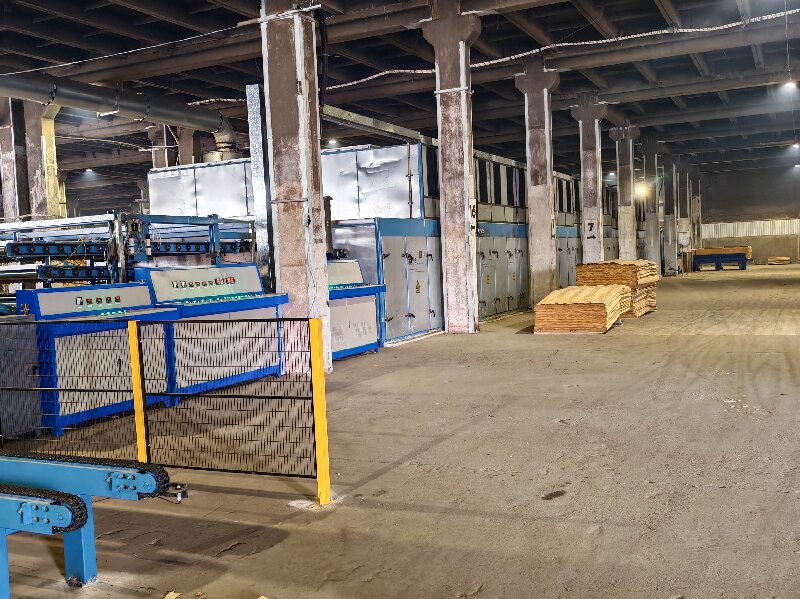
The most advanced tier, Level 3, involves designing entirely original drying solutions for clients with radical challenges. A compelling case study involved a mid-sized furniture manufacturer in North Carolina whose facility featured an irregular production floor with multiple support columns and low ceiling clearance. While other equipment manufacturers insisted on expensive factory reconstruction, Shine's engineering team designed a custom L-shaped veneer dryer that navigated around the obstacles. The resulting machine not only fit perfectly but also increased drying efficiency by 22% and reduced energy consumption by 18%.
This level of customization is made possible by advanced 3D modeling and simulation tools, a modular component architecture that allows for countless configurations, and even additive manufacturing capabilities for truly unique parts. It ensures that whether a client is drying delicate figured maple for luxury musical instruments or high-oil-content tropical woods like teak, their veneer drying technology is perfectly optimized for the task.