Español
 Русский
 Francés
 Português
 ภาษาไทย
 Indonesia
 Việt
Việt
 العربية
 Melayu


Precise Deviation Correction In Veneer Drying!
Precise Deviation Correction For Stable Production In Veneer Drying!
Solving the Problem of Veneer Drying Deviation, Strengthening the Quality Defense Line in Panel Processing
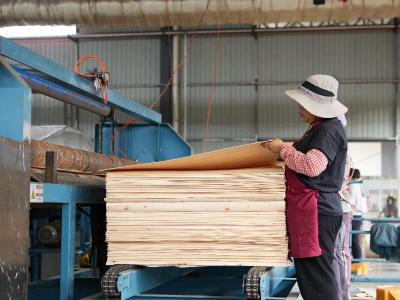
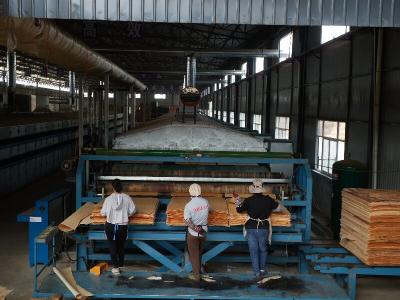
In the processing and production of engineered wood panels and furniture panels, the veneer drying process is a core step in controlling the moisture content and forming quality of the panels. The stability of the equipment directly determines the finished product qualification rate and production efficiency. Many panel manufacturers have reported frequent deviation problems in the conveying process of veneers during continuous drying equipment, which can easily cause panel wrinkles, edge damage, uneven drying, machine jams, and other malfunctions. This not only increases raw material losses and equipment maintenance costs but also seriously restricts continuous production lines. Addressing this common pain point in the industry, industry technicians have developed a mature and efficient solution for correcting and preventing veneer drying deviation, helping companies accurately solve production problems.
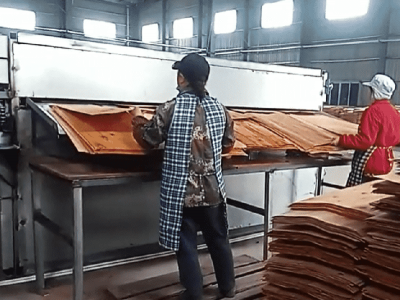
It is understood that veneer drying deviation is not caused by a single factor but is caused by a combination of issues related to equipment assembly, conveying systems, material conditions, and operational debugging. Drying equipment relies on conveyor belts and rollers to transport veneers at a uniform speed. If deviation occurs, the veneers will rub and squeeze against the equipment's side walls, leading to uneven drying, deformation, and warping. This results in a significant increase in the defect rate, and in severe cases, it can wear down the conveyor belt, damage core components of the dryer, cause equipment malfunctions and downtime, and result in direct economic losses for the company.
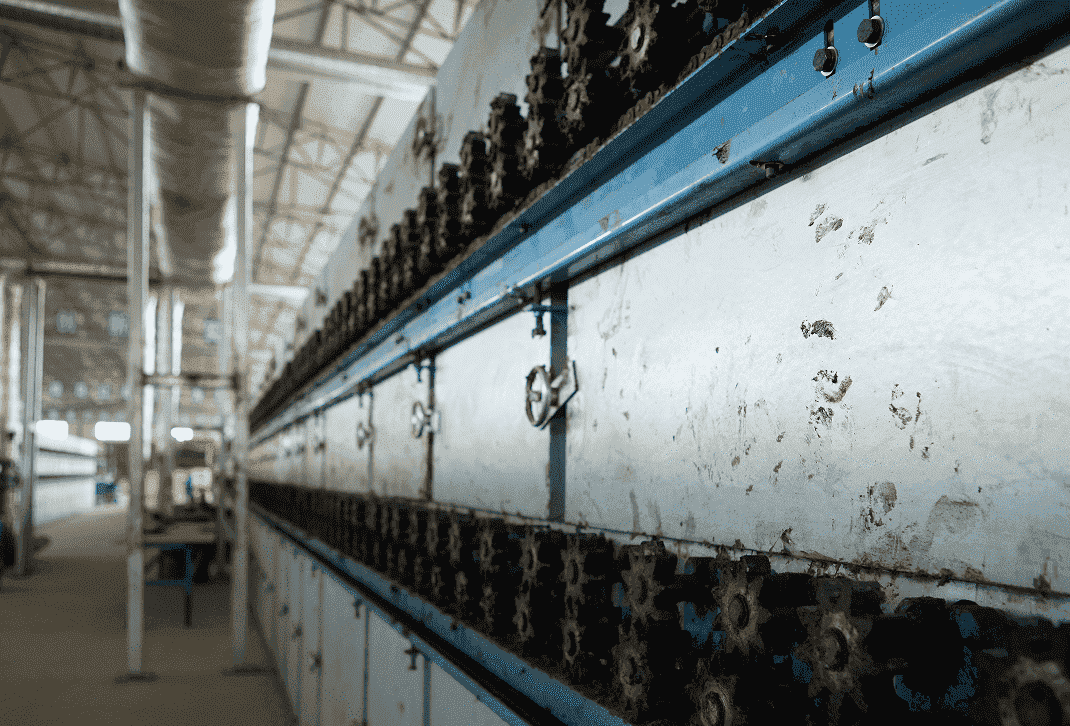
Based on practical experience in frontline production, technicians have summarized the core causes of belt misalignment, mainly covering four aspects: First, deviations in the precision of the conveyor system, such as rollers and idlers not being installed horizontally or perpendicularly, resulting in inconsistent tension on both sides of the conveyor belt, following the principle of "tightening rather than loosening," causing veneers to continuously shift towards the side with greater tension; second, improper material feeding, such as misaligned veneer feeding positions, overlapping, uneven loading, and uneven feeding speed, leading to imbalanced conveyor forces and causing misalignment; third, inadequate equipment maintenance, such as sawdust and stains adhering to the surfaces of rollers and idlers, causing uneven local friction, and long-term use leading to belt loosening, deformation, and uneven joints; and fourth, improper equipment debugging, such as unbalanced idler tilt angles and tension adjustments, and the lack of precise limiting structures to constrain the veneer conveying trajectory.
To address different degrees of misalignment, the industry has introduced a tiered correction solution, balancing immediate correction with precise fine-tuning, adaptable to various sizes of drying production lines. For minor, regular belt misalignment, a quick correction method using idler rollers can be employed. The idler rollers on the misaligned side of the conveyor belt are slightly tilted forward along the conveyor direction, with the tilt angle controlled between 2° and 5°. The friction difference will then pull the belt back to its original position automatically. Adjustments should follow the principle of "small adjustments, multiple times," with each adjustment not exceeding 3° to avoid over-adjustment causing reverse misalignment. Simultaneously, the parallelism of all idler rollers should be calibrated to ensure uniform conveyor force.
For persistent misalignment in a fixed direction, the core focus is on optimizing conveyor tension and roller accuracy. Strictly adhering to the principle of "tight but not loose," the tensioning mechanism screws on both sides of the equipment are adjusted to ensure uniform tension on the conveyor belt, with a tension error controlled within 5%, completely resolving the misalignment caused by uneven tension. The horizontal and vertical alignment of the head and tail drive rollers and redirecting rollers is recalibrated, and the bearing housing installation position is corrected to ensure the roller axis is perpendicular to the conveyor belt centerline, eliminating conveyor trajectory deviation at its source.
For irregular misalignment and feed deviation issues, the focus is on optimizing the feeding process and hardware protection. Standardize manual or mechanical feeding operations to ensure veneers are centered and laid flat, eliminating issues like uneven loading and stacking. Simultaneously, install intelligent anti-deviation devices that monitor the veneer conveyor trajectory in real time using position detection sensors, coupled with an automatic pusher correction mechanism. When deviation exceeds the limit, it automatically fine-tunes the positioning, adapting to automated continuous production scenarios. Furthermore, limit guide wheels and side guards can be added to both sides of the conveyor belt, or drum-shaped anti-slip rollers can be used, utilizing structural characteristics to counteract lateral offset forces and effectively prevent deviation.
Besides immediate correction, routine maintenance and prevention are key to eliminating veneer deviation. Industry technicians recommend that companies establish a regular inspection mechanism, cleaning sawdust and debris from rollers and idlers daily, calibrating conveyor belt tension and idler parallelism weekly, and checking conveyor belt joints and component wear monthly, promptly replacing aged or deformed parts. At the same time, standardize equipment operation procedures, eliminating non-standard operations such as high-speed start-stop and overloading, reducing stress fluctuations in the conveyor system, and lowering the probability of deviation from the source.
Currently, the veneer processing industry is upgrading towards refinement, efficiency, and intelligence, with the stability and precision of the drying process becoming a core focus for enterprises to improve quality and efficiency. Industry insiders say that veneer misalignment, seemingly a minor equipment malfunction, directly impacts product quality, production costs, and efficiency. A comprehensive solution encompassing "precise troubleshooting, tiered correction, and routine maintenance" can completely resolve the drying misalignment problem, effectively reducing the defect rate of veneers and equipment failure rate. This helps enterprises achieve stable and continuous production on their assembly lines, laying a solid foundation for upgrading the quality and increasing the production capacity of finished veneers.