Español
 Русский
 Francés
 Português
 ภาษาไทย
 Indonesia
 Việt
 العربية
 Melayu



What Are The Advantages Of Biomass Burners Over Traditional Heat Sources?
What Are The Advantages Of Biomass Burners Over Traditional Heat Sources?
In applications such as veneer drying, wood processing, and industrial heating, the choice of heat source directly dictates a factory’s production costs, environmental compliance, and operational stability. For a long time, coal-fired boilers, natural gas systems, thermal oil heaters, and diesel burners have been the industry standards. However, with tightening environmental regulations and volatile energy prices, biomass burners—characterized by their ability to utilize recycled materials, offer low operating costs, and provide stable heat—have emerged as the preferred upgrade for plywood and veneer processing enterprises. Compared to traditional heat sources, their core advantages lie in five key areas: economic efficiency, low-carbon environmental performance, energy recycling, operational adaptability, and manageable maintenance.
Traditional heat sources—such as coal, natural gas, and thermal oil systems—all have significant drawbacks. Coal-fired systems generate high levels of sulfur dioxide and particulate emissions, making environmental permitting difficult; consequently, many production regions have restricted the installation or retrofitting of such units. Natural gas and diesel are subject to the fluctuations of the global energy market, leading to unstable and consistently high drying costs. Thermal oil systems, meanwhile, feature complex structures and long heat-transfer paths, resulting in high heat loss, as well as additional expenses related to potential oil leaks and the degradation and replacement of the thermal fluid itself. In contrast, biomass burners utilize semi-gasification staged combustion and swirl-based air distribution, achieving higher thermal efficiency and operating on a fundamentally different principle than legacy heating systems.
First, they enable the on-site consumption of waste materials, significantly reducing fuel costs and turning waste into a valuable resource.
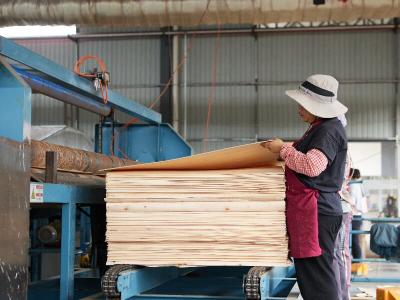
Wood processing plants continuously generate by-products such as sawdust, veneer offcuts, bark, and rotary-cutting waste. Previously, these were classified as solid waste, requiring companies to incur costs for removal and disposal. Biomass burners specifically designed for the wood industry can directly combust wood waste, wood chips, and sawdust—eliminating the need to process everything into expensive pelletized fuel—thereby converting production by-products directly into a source of heat for drying. Compared to natural gas or diesel, this can reduce total fuel costs by 30%–50%; it also offers a competitive advantage in overall operating costs when compared to coal-fired systems. For veneer drying lines, the ability to maintain a stable, self-sufficient fuel supply—thereby avoiding production disruptions caused by natural gas rationing or rising oil prices—allows for controllable drying costs. This is a key value proposition for overseas timber processing plants.
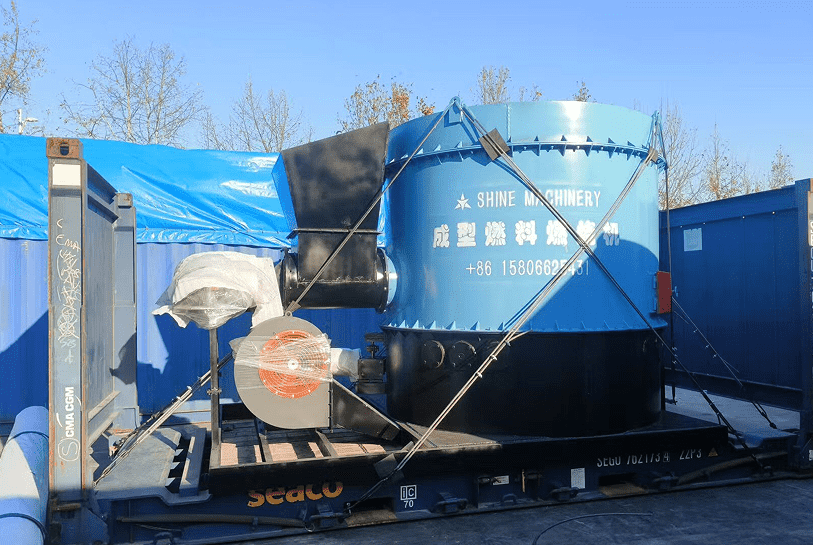
Second, it offers a low-carbon, clean solution. When equipped with dust removal systems, it becomes easier to meet environmental protection standards.
Biomass is a carbon-neutral, renewable resource; the carbon absorbed during the growth of the raw material is released during combustion, creating a closed loop that significantly reduces the carbon footprint compared to fossil fuels. Advanced biomass burners utilize low-temperature, staged combustion technology, which inhibits the formation of nitrogen oxides (NOx), ensures complete combustion, and minimizes black smoke. When paired with auxiliary systems—such as water-film or cyclone dust collectors—particulate emissions can be kept consistently within regulatory limits. Compared to direct-fired coal furnaces, these systems produce significantly lower levels of sulfur dioxide (SO₂) and particulate matter. Many regions offer greater support for biomass-based heating projects; by transitioning to such heat sources, enterprises face less pressure during environmental inspections and avoid production cutbacks or shutdowns caused by excessive emissions.
Third, it provides a stable heat output, which is well-suited for the low-temperature, slow-drying processes required for veneers, thereby ensuring product quality.
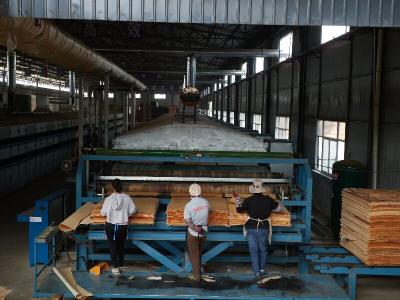
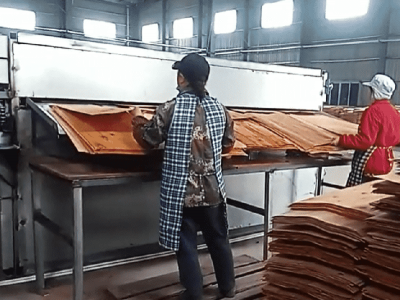
The drying of plywood and veneers demands high stability in both hot-air temperature and airflow volume. Fluctuating temperatures can lead to uneven moisture content, warping, cracking, discoloration, or even the rejection of the veneer. Traditional thermal-oil boilers suffer from heat-transfer lag and slow temperature increases, while gas burners are prone to significant, instantaneous temperature fluctuations. In contrast, biomass burners can be precisely integrated with roller, tray, or mesh-belt dryers. They deliver a consistent, clean flow of hot air and support precise, constant-temperature control. This is ideal for the low-temperature, slow-drying processes required for various wood species—such as eucalyptus, rubberwood, birch, and oak—helping to reduce the rate of defective veneers and ensure consistent product quality. Furthermore, the heat-source system can be configured for waste-heat recovery from the drying kilns, further enhancing overall thermal efficiency.
Fourth, it provides a diverse range of fuel sources, offering greater resilience against supply-chain risks.
Natural gas relies on pipeline infrastructure and is subject to rationing during periods of peak demand; diesel and heavy fuel oil are commodities prone to extreme price volatility; and the regulation of coal continues to become increasingly stringent. Biomass fuel offers great flexibility; in addition to a facility’s own wood waste, it can utilize various other biomass feedstocks—such as wood pellets, straw briquettes, and bamboo chips. With diverse local sourcing channels, factories are not dependent on a single energy source, which reduces supply chain risk. This makes the technology particularly well-suited for deployment in timber-rich regions, including parts of China (such as Guangxi and Yunnan), as well as countries across Africa and Southeast Asia.
Fifth, the system features a high degree of automation and simple operation and maintenance (O&M), making it ideal for continuous production lines.
This new generation of biomass burners comes equipped with automated feeding, automatic ash/clinker removal, and temperature-controlled safety interlock systems. They can be synchronized with drying equipment for automated startup and shutdown, eliminating the need for the constant manual coal-feeding and furnace monitoring required by older, manually-stoked coal boilers—thereby significantly reducing labor costs. The equipment’s compact design allows for integration with existing hot-air drying ductwork, avoiding the need for disruptive, large-scale modifications to the production line. Furthermore, unlike thermal oil heating systems, these burners eliminate issues such as the need for periodic oil replacement, the risk of pipeline leaks, and complex maintenance procedures; this results in shorter downtime and ensures the continuity of the production process.
Naturally, there is no single "correct" choice for a heat source. Biomass burners are best suited for wood-processing enterprises that generate significant amounts of internal wood waste, require stable, long-term drying operations, and are looking to upgrade their environmental compliance. If a facility’s own waste output is insufficient and biomass fuel must be purchased externally, it is essential to conduct a thorough cost analysis beforehand.
From the perspective of long-term industry development, green, circular production has become the prevailing trend. A biomass burner is more than just a heating system—it is a solution for the resource recovery of solid waste. It simultaneously addresses the challenge of disposing of factory waste while providing a stable, low-cost heat source. By balancing profitability, environmental responsibility, and production stability, this technology has become the primary reason why an increasing number of plywood and veneer manufacturers are replacing their traditional heat sources.