Español
 Русский
 Francés
 Português
 ภาษาไทย
 Indonesia
 Việt
Việt
 العربية
 Melayu

Why Do Veneer Dryers Need Customized Models?
Why Do Veneer Dryers Need Customized Models?
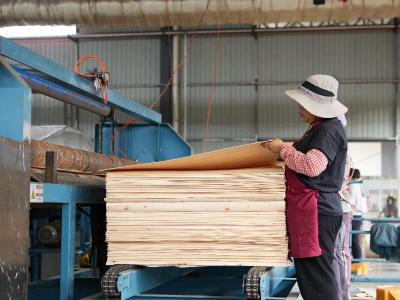
In the production chain of engineered wood products, plywood, and blockboard, veneer dryers are the core equipment that determines the quality, production efficiency, and production cost of finished boards. Many board manufacturers struggle with choosing the right dryer when initially purchasing equipment. Standardized equipment is difficult to adapt to diverse and personalized production scenarios, which is the core reason why veneer dryers must be customized to specific operating conditions.
I. Adapting To Different Raw Material Characteristics To Ensure Finished Product Quality
The variability of wood raw materials is the primary factor preventing universal veneer dryers from being universally applicable. Veneers of different materials, thicknesses, and moisture contents have vastly different requirements for drying temperature, air velocity, drying time, and hot air circulation modes. Universally modeled equipment cannot accurately match these requirements, easily leading to quality defects.
From the perspective of wood types, commonly used boards such as rubberwood, eucalyptus, poplar, and birch have different wood density, fiber structure, and baseline moisture content. For example, rubberwood veneers from tropical regions have high moisture content and are soft, requiring a gradient temperature increase and high-volume air circulation drying mode. Hard eucalyptus veneers, on the other hand, are dense and have slow moisture penetration, requiring low-temperature, long-term drying to prevent external drying followed by internal dampness and cracking. The fixed temperature and airflow parameters of general-purpose dryers cannot adapt to the drying logic of different woods, easily leading to problems such as scorched veneer surfaces, excessive internal moisture content, and warping, directly reducing the pass rate of the boards.
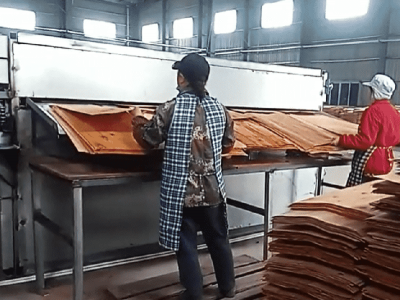
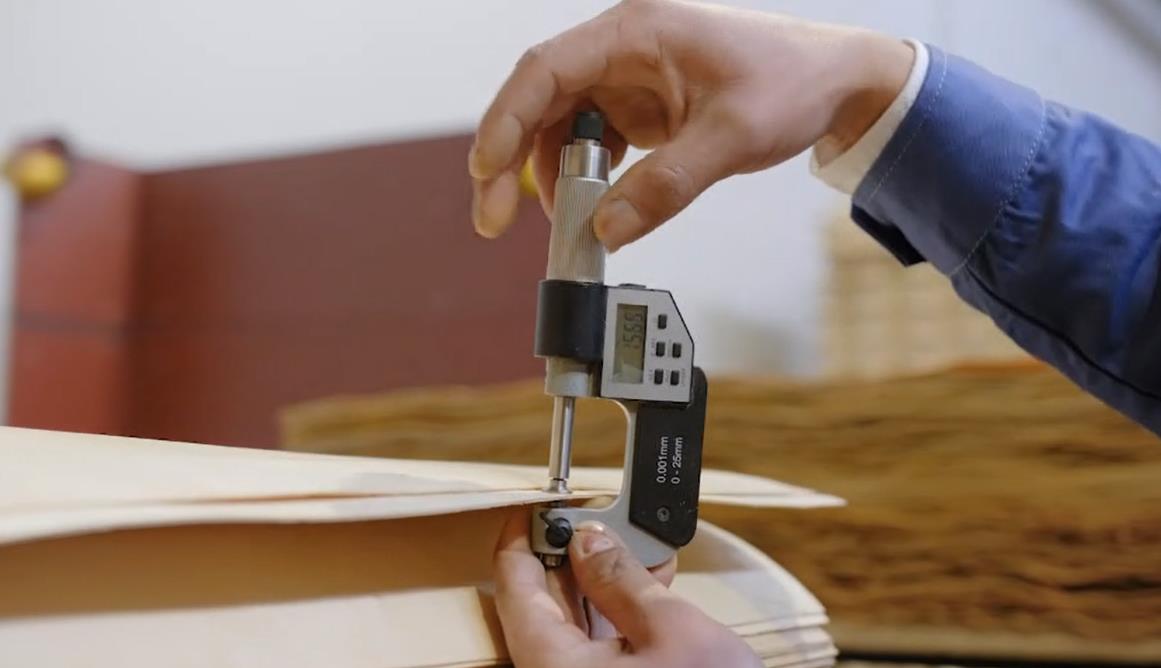
In terms of veneer specifications, the market offers a wide range of veneer widths and thicknesses. The drying requirements for ultra-thin 1.0mm veneers and thick 3.0mm veneers, as well as for standard 3-meter width veneers and extra-wide 6-meter width specialty veneers, are completely different. Standard dryers have fixed parameters for the drying chamber, roller spacing, and air supply structure. Processing extra-wide veneers can result in incomplete drying of the edges and corners, while processing narrow, thin veneers can easily lead to over-drying and increased breakage rates. Customized dryers can precisely adjust drying zone parameters, hot air output methods, and equipment operating speed according to the specific thickness, width, and raw material type of the veneer, ensuring uniform drying and achieving the required moisture content for each batch of veneer, thus avoiding quality defects from the source.
II. Matching Enterprise Production Capacity Needs, Eliminating Waste And Insufficient Capacity
Different board manufacturers have significantly different production scales, order volumes, and production rhythms. A one-size-fits-all standardized equipment either fails to meet mass production needs or results in wasted equipment resources and energy. Customized models can precisely adapt to enterprise capacity planning, maximizing capacity utilization.
Small board processing plants have scattered orders and low daily output. If they purchase large standard dryers, the equipment will run idle for long periods, consume a lot of energy, and the depreciation and maintenance costs will far exceed production revenue, resulting in serious resource waste. On the other hand, large-scale production enterprises have high production demands on their assembly lines. Small standard dryers have limited capacity, requiring multiple machines to operate simultaneously. This not only occupies a lot of space but also increases labor and maintenance costs. Furthermore, multiple machines operating simultaneously makes it difficult to ensure consistent drying standards for batches of products.
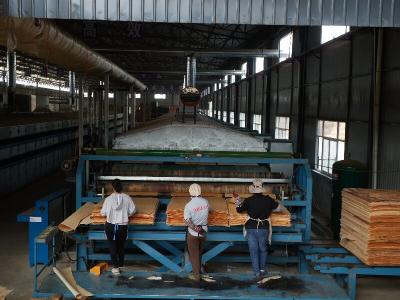
Customized veneer dryers can be flexibly adjusted according to a company's daily output, order volume, and production shifts, adjusting key parameters such as the number of layers, drying chamber length, and feeding/discharging speed to precisely match production capacity needs. Small and medium-sized enterprises can customize compact single-layer, short-chamber models suitable for small-batch production, reducing energy consumption and maintenance costs. Large enterprises can customize multi-layer models with lengths exceeding 50 meters, paired with automated feeding and discharging systems, achieving efficient mass production of tens of thousands of veneers per day, perfectly adapting to large-scale assembly line operations and completely solving the industry pain point of capacity mismatch.
III. Adapting To Factory Site And Production Line Layout, Improving Space Utilization
The factory dimensions, ceiling heights, workshop layouts, and equipment arrangements vary among veneer manufacturers. Standardized, fixed-size dryers often present site adaptation challenges, easily leading to problems such as equipment inaccessibility, obstruction of production aisles, and poor coordination with upstream and downstream equipment, affecting the overall production process.
Some older factory buildings have limited ceiling height and narrow workshop widths, making it impossible to fit the dimensions of large standard dryers. Forcing their installation would reduce operating space and hinder routine equipment maintenance and personnel operations. While newly built standardized factory buildings offer ample space, each company has its own production line layout plan. The fixed structure of standardized equipment may cause disconnects between the drying process and upstream/downstream processes such as peeling, gluing, and hot pressing, resulting in time-consuming material transfers, production line bottlenecks, and a significant reduction in overall production efficiency.
Customized veneer dryers can be tailored to the actual dimensions of the factory, including ceiling height and production line layout. The machine's length, width, structure, and material feeding/discharging directions can be adjusted accordingly, while also optimizing installation spacing and maintenance space. This ensures smooth installation, maximizes factory space utilization, and achieves seamless integration of the drying process with the entire production line, shortening material transfer paths and making the production process smoother and more efficient, adapting to the unique hardware conditions of different factory sites.
IV. Adapting To Regional Climate And Energy Conditions To Achieve Cost And Energy Reduction
Different regions have vastly different climates, humidity levels, and energy supply methods, directly impacting veneer drying efficiency and energy costs. Standardized equipment cannot adapt to varying regional conditions, easily leading to high energy consumption and unstable drying efficiency.
Southern regions experience consistently high temperatures and humidity, resulting in high natural moisture content in veneers. Furthermore, moisture tends to accumulate during the drying process, necessitating optimized hot air dehumidification and exhaust systems to enhance airflow efficiency. Northern regions experience low temperatures and dry winters, leading to slow equipment start-up and significant heat loss. Strengthening equipment insulation and adjusting the temperature gradient are crucial to prevent decreased drying efficiency at low temperatures. General-purpose dryers, lacking climate-optimized parameters, are prone to incomplete drying in the south and soaring energy consumption and reduced production capacity in the north.
Furthermore, different companies utilize different energy supply methods. Heating modes such as biomass fuel, steam, thermal oil, and electricity place entirely different requirements on equipment heat exchange structures and temperature control systems. Customized dryers can be tailored to a company's existing heat source equipment and energy cost structure, matching a dedicated heat exchange system, hot air circulation structure, and temperature control module. Combined with customized configurations such as waste heat recovery and intelligent temperature control, they precisely adapt to local energy conditions, significantly reducing the energy consumption per unit of veneer during drying, resulting in substantial long-term production cost savings for companies.
V. Adapting to Personalized Production Upgrade Needs, Enhancing Equipment Adaptability And Expandability
With the upgrading of the board industry, the market demand for high-end and customized boards continues to grow. Companies are constantly iterating and upgrading their production processes. Standardized equipment, with its limited functionality and poor expandability, cannot adapt to the production needs of new processes and products. Customized veneer dryers, however, can be integrated with a company's process upgrade plans, equipped with personalized functional configurations, and adapted to diverse production scenarios.
For high-end panel production needs, customized high-end models equipped with online moisture content detection, AI intelligent temperature control, and precise zoned temperature adjustment can be developed. These models monitor the veneer drying status in real time, automatically adjusting wind speed, temperature, and operating speed to eliminate batch-to-batch color differences and moisture content deviations, ensuring the stability of high-end panel quality. For automated production lines, integrated models can be customized to connect with automatic feeding, sorting, and packaging systems, achieving unmanned drying operations and improving automation levels. For veneers with special specifications and processes, customized special cavity structures and anti-breakage conveying devices can be developed to meet the production needs of specialty panels.
Furthermore, customized equipment can reserve interfaces for functional upgrades. When enterprises expand their production capacity or upgrade their processes, they do not need to replace the entire machine; only supporting modules need to be upgraded to complete the equipment iteration, significantly reducing equipment replacement costs and extending equipment lifespan.
VI. Customization Is An Inevitable Trend For Improving The Quality And Efficiency Of Drying Equipment
As the core equipment in panel production, the veneer dryer's performance directly determines product quality, production efficiency, and operating costs. Standardized equipment that offers "one machine for all" may seem cost-effective, but it actually harbors numerous hidden problems such as potential quality issues, wasted capacity, high energy consumption, and poor adaptability.
The core value of customized veneer dryers lies in their ability to precisely adapt to the specific needs of raw materials, production capacity, site conditions, climate, and processes, based on the actual production conditions of each enterprise. This breaks through the limitations of standardized equipment, achieving optimal drying quality, precise capacity matching, lowest energy costs, and strongest production adaptability. In the current trend of refinement, high-end development, and energy conservation in the board industry, customized models are no longer just an optional configuration for enterprises, but an inevitable choice for board manufacturers to enhance their core competitiveness and achieve long-term stable development.