Español
 Русский
 Francés
 Português
 ภาษาไทย
 Indonesia
 Việt
Việt
 العربية
 Melayu



How To Dry Moldy Veneer?
How to Dry Moldy Veneer?
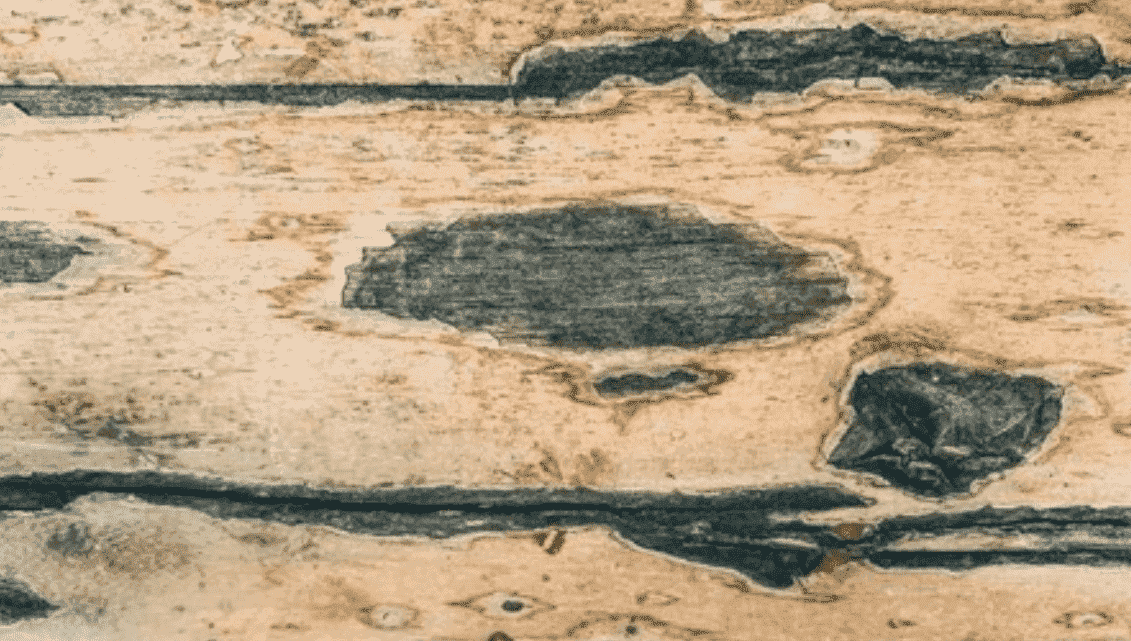
Moldy veneer is a common problem encountered by many wood processing plants during plywood production. Prolonged storage of wet veneer, poor workshop ventilation, and high humidity during the rainy season all allow mold to multiply rapidly, forming mold spots and blue stain on the surface. In severe cases, the wood fibers are damaged, rendering the veneer unusable and resulting in significant raw material losses for the company. Many factories make mistakes when dealing with moldy veneer: direct exposure to the open air, high-temperature drying, and repeated washing, ultimately causing the veneer to warp, crack, and dry unevenly, making it prone to re-molding even after drying. To efficiently treat moldy veneer, a complete set of standardized processes must be followed, including pretreatment, segmented temperature-controlled drying, and finished product protection, using professional drying equipment to control moisture content while maximizing the usability of the veneer.
I. Before Drying: Pretreatment Based on Mold Level
The first step in treating moldy veneer is not to directly send it into the drying equipment, but to first determine the severity of the mold and perform preliminary cleaning to prevent the continued spread of mold spores.
Slight Mold (Surface mold only, no internal blackening or rot): Use a soft brush to remove surface mold along the wood grain. If possible, spray with a compliant, environmentally friendly mold remover and allow it to stand to decompose the mold mycelium. After completion, place in a ventilated area to briefly drain excess agent. Do not soak the veneer with large amounts of water to prevent further increase in internal moisture content.
Moderate Mold (Large areas of mold on the surface, slight blue discoloration, intact core fiber): After cleaning the mold, sort and isolate the veneer separately from normal veneer to avoid cross-contamination. Dry the veneer as soon as possible after pretreatment, minimizing the resting time.
Severe Mold (Internal blackening, rotten and loose wood fibers): The wood structure of this type of veneer is damaged, and it is unlikely to meet the bonding strength requirements after drying. It is recommended to reject it directly to avoid problems such as bubbling and delamination during subsequent hot pressing in production.
Another key point in the pretreatment stage: sort the veneer by thickness and stack them uniformly to avoid uneven drying caused by mixing thick and thin veneers, creating conditions for subsequent continuous drying.
II. Core Steps: Scientific Drying Process Combined with Professional Veneer Drying Equipment
After pretreatment, the crucial drying process begins. Natural air drying is highly susceptible to rainy weather, resulting in long drying cycles, uneven heating of the veneer surface, and easy mold growth during the drying period. Traditional steam and thermal oil drying equipment experience large temperature fluctuations, easily leading to a "surface dry, internal wet" phenomenon where the surface is dried but the core remains moist, making it highly prone to mold recurrence.
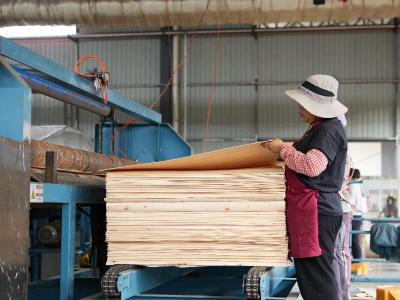
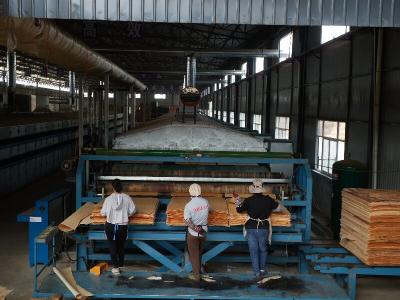
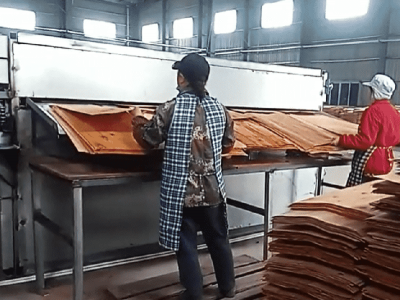
Addressing the pain points of moldy veneer drying, Shine Machinery's roller-type veneer dryer is well-suited for this condition. The equipment is equipped with a proprietary biomass combustion heating system that can directly burn waste wood scraps, providing stable heating and significantly reducing veneer drying costs. The entire equipment system employs a layered circulating hot air structure and PLC intelligent temperature and speed control, supporting a flexible drying curve with low-temperature slow drying and segmented temperature increases, perfectly adapting to the drying needs of moldy veneers: In the initial stage, a medium-low temperature is used for uniform heating to slowly expel moisture from the veneer, preventing rapid fiber shrinkage and cracking; in the middle stage, stable temperature control and continuous moisture removal gradually reduce the veneer's moisture content; in the later stage, buffered cooling releases internal wood stress, reducing warping and deformation.
The equipment allows real-time adjustment of hot air temperature and board conveying speed, coupled with a powerful adjustable dehumidification system to promptly expel high-humidity exhaust gas from the sealed drying channel, inhibiting mold growth within the drying chamber. This ensures uniform heating of both sides of the veneer, maintaining a stable moisture content within the plywood production standard range of 8%–12%, inhibiting mold regrowth at its source. Compared to traditional steam and thermal oil drying solutions, the entire production line consumes less energy, supports 24-hour automated continuous production, is unaffected by outdoor weather, and can recover a large number of lightly to moderately moldy veneers, reducing raw material loss.
III. Post-Drying: Proper Storage to Prevent Secondary Mold Growth
After veneer drying, it should not be stacked immediately. Freshly dried veneer is still hot and needs to be cooled down in a clean, well-ventilated, and moisture-proof workshop. Once the temperature difference between the veneer and the workshop environment has decreased, batch-by-batch sampling should be conducted using a moisture content meter to confirm that the moisture content meets the standard before categorizing and stacking for storage.
Warehouses need to be well-ventilated and moisture-proof. The floor should be raised to isolate moisture. Finished veneers should be covered with dustproof film to minimize the storage period between drying and hot pressing. In high-humidity seasons, anti-mold protection treatment can be applied to prevent airborne mold spores from re-attaching to the veneer surface.
IV. Daily Prevention: Reduce Veneer Mold Growth and Lower Rework Drying Pressure
To reduce the workload of reworking moldy veneers, source control is equally important. It is recommended that veneers be sent to the drying line within 24 hours after rotary cutting to avoid prolonged accumulation of wet boards. The workshop should be well-ventilated and dehumidified, and the stacking height in the material storage area should be controlled to ensure air circulation. Using Shenghuai Intelligent Continuous Veneer Drying Line enables on-demand drying of cut veneers, shortening the storage period of wet veneers from the source and significantly reducing the probability of mold growth.

The core principle of drying moldy veneers is to first perform graded pretreatment, then perform flexible and uniform humidity-controlled drying, and finally ensure proper storage and moisture prevention. Blindly using high-temperature baking or open-air drying are not optimal solutions. Selecting professional intelligent veneer drying equipment, combined with standardized processes, can not only salvage usable moldy veneers, reduce raw material waste, and stabilize the quality of finished plywood products, but also control production energy consumption and improve the overall economic efficiency of the factory.