Español
 Русский
 Francés
 Português
 ภาษาไทย
 Indonesia
 Việt
Việt
 العربية
 Melayu



Can Holed Wood Veneers Be Fed By Automatic Loading Systems?
Can Holed Wood Veneers Be Fed By Automatic Loading Systems?
Industry Insight Resolves Key Question for Plywood Mills
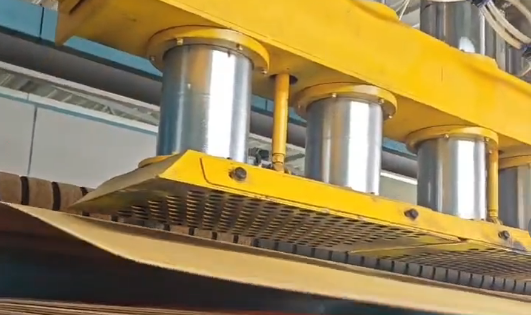
A frequent technical question across plywood manufacturing circles has been clarified in recent field tests: without mechanical grippers, upgraded vacuum automatic loading systems can pick holed wood veneers and feed them smoothly into a roller veneers dryer. This breaks the long-held view that holed wood veneers require full manual handling before drying.
Modified from conventional vacuum loading units, the improved system adopts multiple suction cups and higher air volume. It does not need to grip the entire sheet of wood veneers; securing only the front one-third section is enough to pull the full veneer into feeding rollers and onward to the veneers dryer.
For decades, many factories hesitated to use standard vacuum loaders for sheets with knot holes, natural perforations or trimming gaps. Traditional setups featured limited suction cups and insufficient airflow. Air leakage through holes on wood veneers often caused unstable grabbing, sheet dropping and jams before wood veneers entered the veneers dryer. Most mills reserved automatic feeding only for intact wood veneers, while holed sheets relied on manual sorting and loading, raising labor costs and slowing the entire drying line.
The upgraded vacuum loader uses multi-point suction cups together with a high-air-volume negative pressure system to offset air loss caused by veneer holes. By gripping merely the front one-third of wood veneers and relying on rollers for continuous feeding, the equipment avoids leakage interference from holes in the middle or rear veneer sections. It separates single sheets precisely without tearing wood veneers at perforations. The roller conveyor maintains consistent sheet spacing as wood veneers move to the veneers dryer, supporting smooth hot-air circulation and uniform moisture removal.
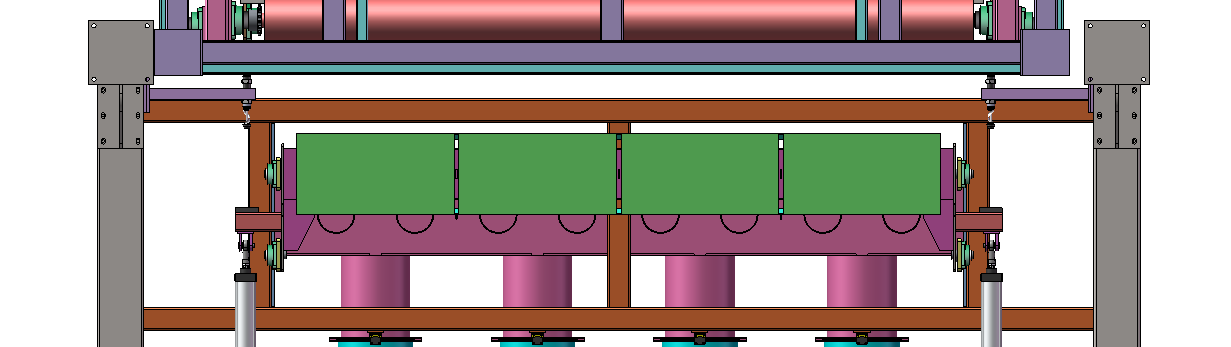
Engineers point out feasibility depends on hole size, veneer thickness and vacuum equipment parameters. Wood veneers with small scattered holes work continuously with this multi-cup, high-flow vacuum loader. Sheets with large hollow areas or severe damage still need pre-sorting. When matched with a compatible veneers dryer, this vacuum loading setup cuts feeding labor by over 60% and reduces breakage rates of holed wood veneers versus manual operation.
Market feedback shows more plywood producers upgrade lines with multi-cup, high-air-volume vacuum loaders to process mixed batches of intact and holed wood veneers. The unified automatic feeding simplifies production scheduling, shortens drying cycles and improves overall yield of raw wood veneers treated inside the veneers dryer.
Industry analysts expect this local-grip vacuum loading solution with multiple suction cups and high airflow, compatible with holed wood veneers, to become a mainstream matching option for new roller veneers dryer deliveries in the next two years, helping medium and large mills build unmanned veneer drying workshops.