Español
 Русский
 Francés
 Português
 ภาษาไทย
 Indonesia
 Việt
Việt
 العربية
 Melayu



Daily Maintenance Guide for Veneer Roller Dryers
Daily Maintenance Guide for Veneer Roller Dryers
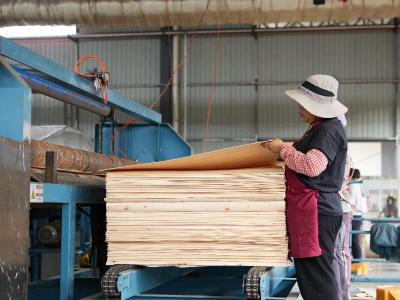
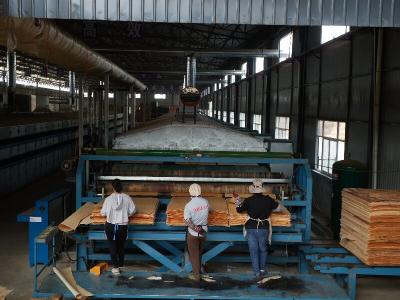
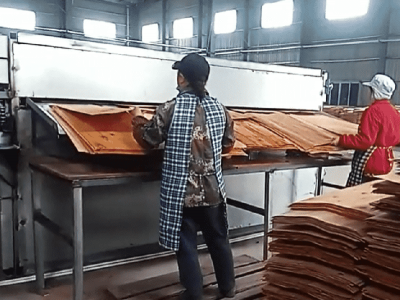
The veneer roller dryer serves as the core thermal equipment in plywood and wood veneer production lines. Its drying performance directly affects veneer moisture content, surface flatness and final product qualification rate. Many wood processing plants suffer from declining heat exchange efficiency, roller noise, fan unbalance and unexpected shutdowns due to inadequate daily maintenance, leading to higher repair costs and delayed orders. Industry technical experts recommend standardized pre-shift, in-shift and post-shift maintenance procedures and preventive upkeep to ensure stable long-term operation and lower drying energy consumption.
Pre-shift inspection is the first critical step. Operators shall check tension of rollers, conveyor chains, sprockets and tightness of bolts and fasteners before startup. Add high-temperature resistant grease to roller bearing seats every 3 days; only a slight grease overflow is acceptable. Overfilling will trap wood dust. Check heat exchangers and air nozzles for wood chip and bark blockage, which causes uneven hot air distribution and inconsistent veneer moisture. Blow finned heat exchangers horizontally with compressed air; never scratch fins with hard tools to avoid permanent deformation. Inspect wiring, temperature and moisture sensors, and verify emergency stop and overheat protection work reliably. Follow the correct startup sequence: start the circulating fan first, then apply heat gradually. Never heat without air circulation to prevent local overheating and damage to heat exchange components.
Real-time inspection and anomaly control are required during production. Listen continuously for abnormal noise from rollers, reducers and circulating fans. Monitor temperature rise: bearing housing temperature shall not exceed 75℃, and motor housing temperature rise shall stay within 60℃. Shut down immediately for troubleshooting if excessive vibration, abnormal noise or overheating occurs; do not run the machine with known faults. Clear jammed veneer fragments promptly to avoid roller surface damage and blocked airflow. Prevent hard objects and metal debris from entering roller gaps to protect the anti-corrosion coating on roller surfaces.
For models equipped with biomass burners: clean ash from burner grates every 8 hours and flue sediment ash daily for stable heat supply. For versions with AI online moisture detection: calibrate sensors with standard samples every 7 days to avoid under-dried or over-dried veneer caused by detection deviation.
After each shift, cut off power, wait for cooling and apply lockout-tagout before cleaning. Remove wood dust at infeed/outlet sections, roller gaps, fan impellers and inside the chamber to reduce fire risks and fan unbalance from dust buildup. Clean roller surfaces with soft brushes. Use neutral detergent for stubborn glue stains; do not grind roller surfaces with grinders. Clear debris on heat exchangers to preserve heat transfer efficiency. Refill grease for chains and bearings as required. Check reducer oil level; top up with the same grade gear oil if the level drops below half of the scale. Keep maintenance logs to record runtime, lubrication, abnormal noise and temperature data for traceable management.
Besides daily routines, weekly, monthly and quarterly maintenance schedules must be established. Lubricate and fasten transmission assemblies weekly, and calibrate roller parallelism. For new fans, perform the first oil change after 72 operating hours; replace lubricant every 3000 working hours thereafter. Calibrate temperature control and frequency conversion systems monthly. Inspect insulation wool and air duct sealing strips, and replace damaged ones to stop air leakage. Check flexible coupling blocks monthly; replace cracked or aged blocks immediately to avoid impact damage to rollers. Conduct quarterly deep cleaning of air ducts and heat exchangers, inspect roller straightness and wear, and rebalance fans. Stock critical spare parts such as bearings, sprockets and seals in advance for predictive replacement and minimize unplanned downtime.
According to technical specialists, proper maintenance greatly extends roller dryer service life, stabilizes veneer quality and cuts energy and breakdown costs. Wood manufacturers should assign dedicated maintenance personnel and train operators professionally. Avoid the rough management style of prioritizing production over maintenance. Standardized daily upkeep keeps veneer drying lines running continuously and efficiently.