Español
 Русский
 Francés
 Português
 ภาษาไทย
 Indonesia
 Việt
Việt
 العربية
 Melayu



Why Freshly Peeled Wood Veneers Require Rapid Drying
Why Freshly Peeled Wood Veneers Require Rapid Drying
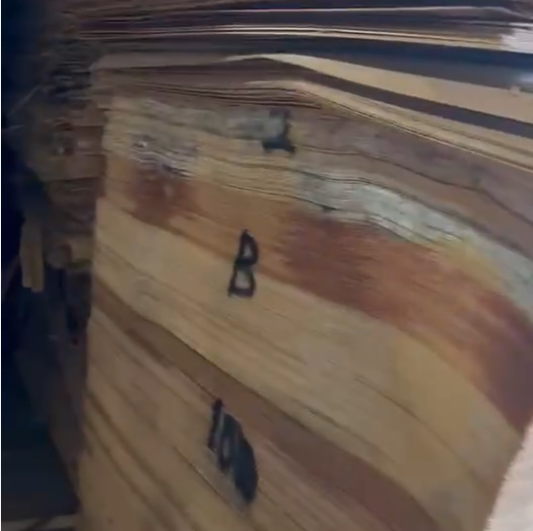
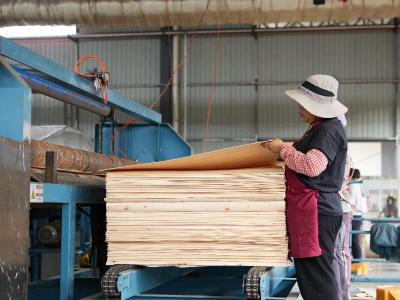
In the full production chain of plywood and furniture veneer panels, log peeling marks the first forming process. Immediately after peeling, rapid drying of wood veneers has long been regarded by the industry as a core checkpoint for finished product quality control and production cost management. Freshly peeled wood veneers usually feature a moisture content ranging from 60% to 100%, making them unfit for gluing and hot pressing. Controlled rapid drying serves as an indispensable process linking upstream and downstream manufacturing. Recently, technical experts in the wood processing sector explained why rapid drying is necessary for wood veneers after peeling, illustrating its multiple benefits for panel quality, production efficiency and raw material loss control.
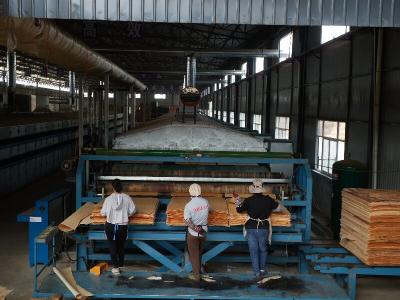
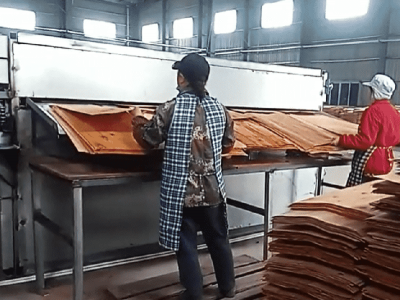
Logs are generally steamed and softened before peeling to ensure smooth cutting, which leaves wet wood veneers saturated with moisture right after processing. Air drying takes days or even weeks, and is highly vulnerable to weather and ambient humidity. Without timely drying, wood veneers are prone to mildew, blue stain, discoloration, warping and deformation, resulting in scrapped raw materials and higher production waste. Automated rapid drying equipment can finish drying wood veneers within minutes, enabling continuous streamlined operations including peeling, drying, sorting, jointing and gluing, and greatly boosting turnover efficiency of the whole production line.
For final panel quality, hot pressing with undried, high-moisture wood veneers creates major hidden dangers in plywood manufacturing. Under high temperature during hot pressing, trapped internal moisture vaporizes rapidly and generates high-pressure steam, which easily causes blistering, glue delamination and surface cracking. Such defects downgrade finished panels or render them completely unusable. Industry specifications require wood veneers to reach 8%–12% moisture content to suit adhesive curing and hot pressing. Rapid drying stabilizes uniform moisture across batches of wood veneers, strengthens glue bonding, and guarantees flatness, dimensional stability and service life of finished plywood.
Experts add that rapid drying is more than simple moisture removal. Controlled low-speed, low-temperature drying reduces internal stress inside wood veneers, lowers risks of shrinkage cracking and curling, maintains full flatness, and minimizes later patching work. Compared with open-air air drying, enclosed intelligent roller dryers protect wood veneers from mold and insect infestation, extend storage time, and help factories manage inventory and balance seasonal production schedules.
Moreover, rapid drying helps manufacturers cut costs and pursue greener production. Traditional outdoor drying needs large yards, occupying land and raising labor handling expenses. Integrated rapid drying lines occupy limited space and can be paired with biomass combustion heating systems for higher energy efficiency and less wood waste. As quality standards keep rising in overseas panel markets, stable drying treatment of wood veneers becomes a key process advantage for domestic wood panel enterprises to improve competitiveness and expand global markets.
Industry insiders note that rising timber costs make lower rejection rates and higher yield critical for factory profitability. Rapid drying after peeling is not merely a basic processing step for wood veneers; it is a core procedure to control panel quality from the source, optimize workflows and raise added value. Moving forward, new-generation intelligent dryers equipped with AI visual sorting, constant temperature & humidity control and waste heat recovery will further drive the wood-based panel industry toward energy conservation, higher efficiency and premium quality.