Español
 Русский
 Francés
 Português
 ภาษาไทย
 Indonesia
 Việt
Việt
 العربية
 Melayu


Why Do Veneers Curl After Peeling?
Why Do Veneers Curl After Peeling? How Can This Be Avoided?
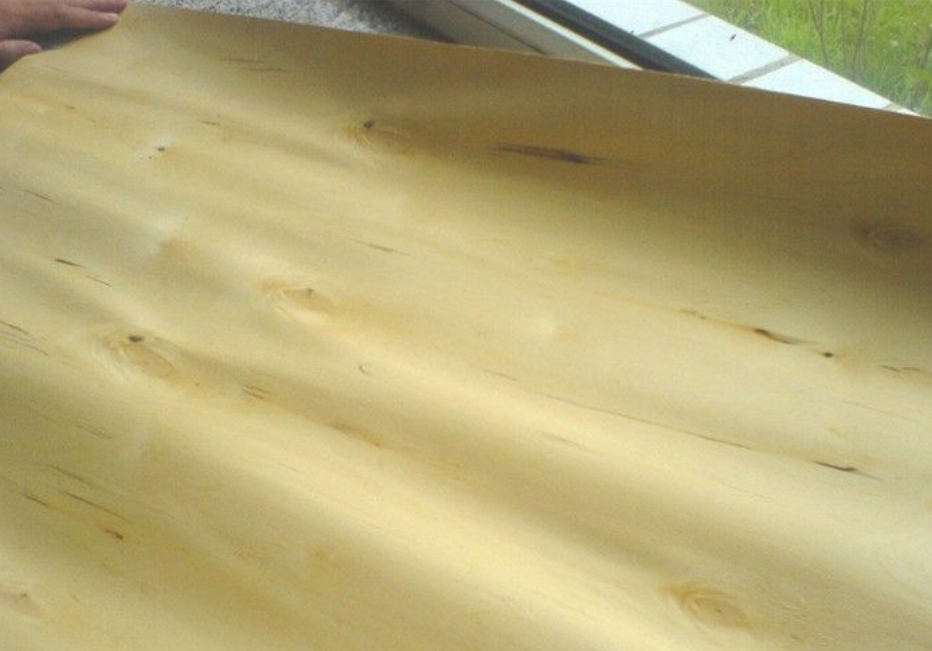
Vene curling is a very common problem in the plywood and veneer processing industry. Once veneers curl or warp, subsequent splicing, gluing, and hot-pressing processes will be affected, directly reducing the veneer grade and increasing waste. Many factories only attribute the problem to the rotary cutting process, but in fact, rotary cutting stress, the inherent characteristics of the wood, and uneven drying are the three main causes. A properly matched veneer dryer is the core equipment for suppressing curling and stabilizing flatness at the source.
I. Main Causes Of Rotary-Cut Veneer Curling
1. Differences in Wood Structure and Stress (Inherent Factors)
Wood is an anisotropic material with a large difference in tangential and radial shrinkage. At the same time, logs have problems such as stress wood, eccentricity, and uneven distribution of wood rays. After rotary cutting, the fiber state of the tight and loose sides of the veneer is inconsistent: the loose fibers are stretched, and the tight fibers are compressed, naturally exhibiting a tendency to spring back and easily curl towards the loose side.
In addition, insufficient steaming and softening of logs, and large differences in moisture content between the inside and outside, lead to an imbalance in veneer fiber tension after rotary cutting, causing curling immediately after peeling. This phenomenon is particularly pronounced in the tail sections of logs, small-diameter timber, and stress-treated veneers.
2. Improper Rotary Cutting Process Parameter Adjustment (Direct Cause from the Front End)
Mismatches in pressure gauge gap, blade height, blade angle, and rotary cutting speed are the most common causes on-site. If the pressure gauge is too tight, the back of the veneer is excessively crushed; if the pressure gauge is too loose, cracks appear on the back of the veneer, fibers loosen, and the unbalanced stress on both sides causes direct curling after rotary cutting. Thin veneers (0.6–1.2mm) are more sensitive to rotary cutting parameters; even slight deviations in parameters significantly increase the curling and scrap rate.
3. Uneven drying generates significant internal stress (the most significant contributing factor).
If wet veneer is air-dried naturally or using a simple drying method, one side dries faster than the other, and the edges dry faster than the center. The surface fibers shrink and harden first, while the core layer retains moisture and continues to expand. This difference in shrinkage creates drying stress, directly causing the veneer to bend, curl, and warp.
Many factories produce veneer that appears flat after rotary cutting, but curls after a while or after drying. The root cause is uncontrolled drying speed and a large moisture content gradient, creating irreversible residual stress.
II. Comprehensive Process Control Solution
From rotary cutting to drying, systematically prevent veneer curling. Preventing curling cannot rely solely on adjusting the rotary cutting machine; it requires a complete process coordination: log pretreatment → rotary cutting adjustment → conveying and temporary storage → controlled drying → cooling and shaping of the finished veneer. The veneer drying stage is of paramount importance.
1. Log Pretreatment to Balance Wood Stress in Advance
Properly steam/pre-soften logs to allow fibers to fully absorb water, improve plasticity, and reduce the stress difference between the tight and loose surfaces during rotary cutting; avoid direct rotary cutting of raw material. Steaming temperature and time should be matched to the tree species and log diameter; insufficient softening is crucial for fast-growing timbers such as eucalyptus and poplar.
2. Optimize Rotary Cutting Machine Parameters to Reduce Initial Cutting Stress
Fine-adjust blade height, pressure gauge gap, and cutting edge angle according to veneer thickness to ensure controllable cracking on the back of the rotary-cut veneer and prevent excessive crushing; appropriately reduce the rotary cutting speed for small-diameter timber and end-of-line material to reduce instantaneous impact stress. Minimize prolonged stacking and sun exposure of wet veneer after rotary cutting to prevent localized premature drying and curling.
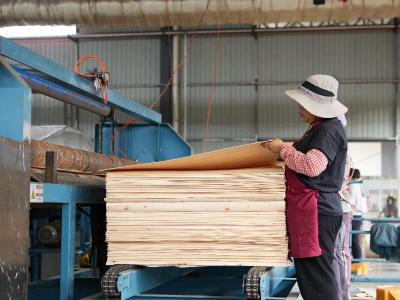
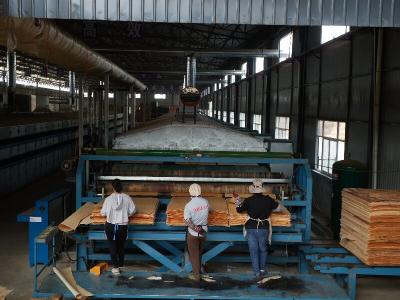
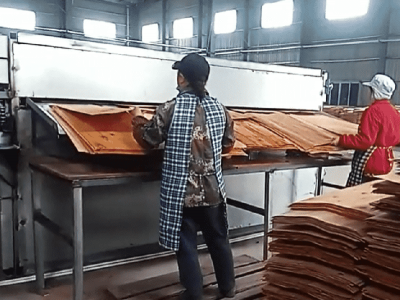
3. Use a Roller Veneer Dryer with Segmented Temperature Control and Double-Sided Even Hot Air (Core Method)
Traditional direct drying and single-sided hot air equipment easily result in one side being dry and the other wet, exacerbating curling. High-quality roller veneer dryers eliminate curling factors from the drying end through multiple design features:
Zoned gradient temperature control, low-temperature slow drying to prevent surface hardening:** The drying chamber is divided into a preheating section, a main drying section, and a humidity-regulating and temperature-equalizing section. Gentle initial heating allows moisture to migrate smoothly from the inside out, preventing surface crusting and internal moisture retention, significantly reducing drying stress.
Uniform hot air on both sides + roller-pressed limiting conveyor:** Evenly distributed hot air from both sides ensures simultaneous dehydration of both sides of the veneer. Multi-layered rollers provide continuous, smooth support and uniform conveying, suppressing free warping and rebound of the veneer, maintaining straight conveying even for thin veneers.
Stress relief cooling section at the tail end:** After drying, the veneer enters a cooling and humidity-regulating zone, slowly releasing residual stress inside the veneer instead of being discharged at high temperature. This prevents rapid shrinkage and secondary curling deformation upon cooling after exiting the machine.
Flexible speed adjustment to adapt to different tree species and thicknesses:** For easily curled thin-skinned and stress-prone woods, the conveying speed and drying temperature can be reduced for gentle dehydration, balancing capacity and flatness. Many customers have found that, after comparison, simply replacing the rotary cutting process with a professional roller veneer dryer significantly reduces veneer curling and waviness scrap rates, improves veneer grade, and directly reduces raw material waste.
4. Proper Stacking and Curing After Drying
Veneers that have passed drying (with uniform moisture content) should not be directly stacked in the open air to avoid wind vents and direct sunlight, which can cause localized moisture absorption/loss and secondary deformation. Stack them flat and press them appropriately to ensure uniform and stable moisture content and maintain flatness.
III. Summary
Venene curling is essentially due to an imbalance of stress on both sides of the fiber: partly from the cutting stress of rotary cutting and the natural stress of the log, but a larger part from the shrinkage difference caused by uneven moisture content during drying.
To stably control curling, proper log softening and precise adjustment of rotary cutting parameters at the front end are fundamental; the key to long-term stable quality improvement and reduced losses lies in using a professional veneer dryer to achieve balanced, segmented, and controllable drying + stress cooling and shaping on both sides. We specialize in the research and development of roller veneer dryers, providing customized drying solutions for different tree species and veneer thicknesses, such as eucalyptus, poplar, and birch, to help veneer factories reduce curling and scrap rates and stabilize finished product quality.