Español
 Русский
 Francés
 Português
 ภาษาไทย
 Indonesia
 Việt
Việt
 العربية
 Melayu


Turning Waste into Wealth: How Shine Machinery‘s Biomass Burner Technology is Revolutionizing the Global Veneer Drying Industry
In the rugged, industrial landscape of Shandong Province, a quiet revolution is taking place. Amidst the whir of conveyor belts and the rush of hot air, Shandong Shine Machinery Co., Ltd. (Shine Machinery) is championing a technology that addresses two of the most pressing challenges facing the global wood processing industry today: soaring energy costs and stringent environmental regulations. At the heart of this transformation lies a patented innovation—the high-efficiency biomass burner.
For decades, plywood and veneer manufacturers have been tethered to traditional energy sources. Steam boilers guzzling coal, thermal oil heaters running on expensive diesel, or gas-fired systems have long been the standard for drying the thin wood veneers that form the backbone of the furniture and construction industries. However, these conventional methods come at a heavy price, both financially and ecologically. Shine Machinery’s latest generation of biomass combustion systems offers a compelling alternative: a direct-fired, high-calorific value system that turns wood waste into a reliable, sustainable, and astonishingly cost-effective source of energy.
The Patented Heart of the Operation: The Biomass Burner
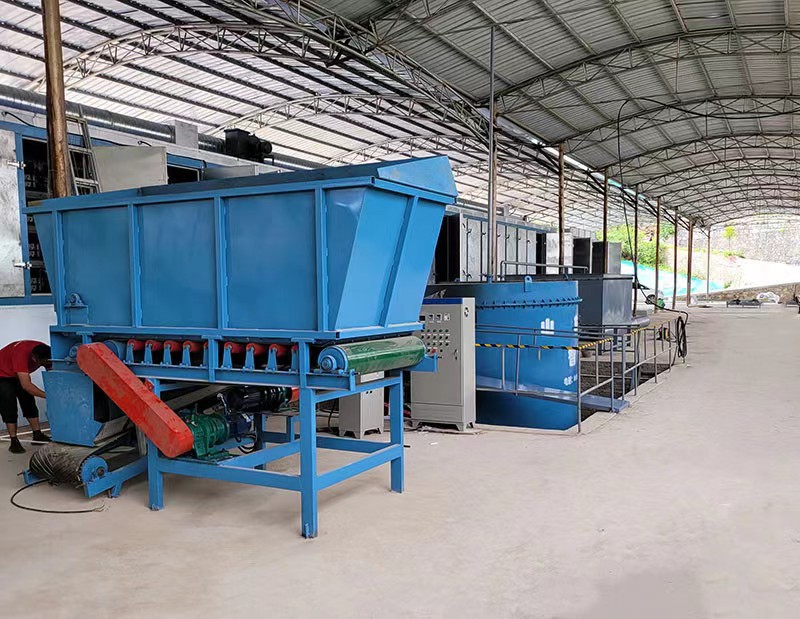
Unlike conventional furnaces that rely on indirect heat exchange, Shine Machinery’s biomass burner—protected by patent number CN201810847742.6—represents a paradigm shift in thermal efficiency. The core philosophy behind the design is simple yet profoundly effective: eliminate the middleman.
Traditional drying methods often involve a two-step process. A boiler burns fuel to heat water or oil, which is then circulated to a heat exchanger, where it warms the air before it enters the dryer. Each step in this chain is an opportunity for energy loss. Shine’s system bypasses this entirely. It uses a direct-fired method in which the combustion of biomass heats the air directly, which is then channeled into the dryer rollers. This direct approach minimizes thermal loss, ensuring that the maximum amount of energy generated is used for its intended purpose: removing moisture from veneer sheets.
The engineering behind the burner ensures complete combustion. By leveraging advanced airflow dynamics, the system maintains a furnace temperature exceeding 1,000 degrees Celsius. This intense heat is then moderated to provide a stable, consistent drying temperature within the dryer cabinet, typically ranging from 140 to 200 degrees Celsius. This stability is not merely a matter of comfort; it is critical for quality. Fluctuating temperatures can lead to case hardening, cracks, or uneven moisture content. Shine’s system boasts temperature control precision of ±5°C, ensuring that every sheet of veneer—whether destined for luxury yacht interiors or structural plywood—emerges with uniform quality, a flat surface, and is ready for gluing without the tell-tale signs of end波纹 (waviness) or splitting.
Environmental Stewardship: The Zero-Waste Cycle
The environmental credentials of the biomass burner extend far beyond reducing fossil fuel dependence. It is specifically designed to embrace the concept of a circular economy. In a typical veneer mill, waste is abundant. The process of rotary cutting logs generates significant byproducts: irregular log ends, bark, wood chips, sawdust, and even wet veneer clippings that are unsuitable for final products. Historically, these materials accumulated as waste, requiring disposal—often at a cost to the producer.
Shine Machinery has turned this problem into a feature. Their biomass burner is engineered to consume these exact waste streams. "As a fuel source, waste wood, waste veneer, and tree bark are the most economical options available," explains a senior engineer from the company. "Compared to coal, gas, or electricity, the cost of fuel for our system is effectively the cost of disposal. We take what the mill already has—their scrap—and convert it into high-temperature energy".
This capability aligns perfectly with global efforts to decarbonize heavy industry. In regions such as Europe and North America, regulatory frameworks are increasingly penalizing carbon emissions and incentivizing carbon-neutral energy sources. Biomass, derived from virgin wood waste, is considered carbon-neutral because the carbon dioxide released during combustion is roughly equivalent to the carbon absorbed by the tree during its growth. By displacing coal or heavy oil, Shine’s technology offers mills a clear pathway to reducing their carbon footprint.
Furthermore, the clean-burning nature of high-temperature combustion reduces particulate and volatile organic compound emissions compared to open burning or inefficient traditional furnaces. The complete burn leaves behind a minimal ash residue, reducing the burden of waste handling and further contributing to a cleaner factory environment.
Unprecedented Economics: Redefining the Cost of Drying
For business owners, the most persuasive argument for adopting this technology is often found in the balance sheet. In an industry where margins can be razor-thin, the cost of drying is a critical competitive lever. Shine Machinery’s data presents a compelling case.
The company claims that the comprehensive drying cost—including labor, electricity, and fuel—for their biomass-powered systems is remarkably low.
For the high-capacity 38-meter, 3-layer dryer (Model GTH30-38), which processes approximately 5 m³ per hour, the total cost is kept below ¥80 RMB per cubic meter (approximately $11 USD).
Even more impressive is the cost analysis for the 52-meter double-layer dryer, which ranges from ¥40 to ¥70 RMB per cubic meter ($5.50 to $9.60 USD).
To understand the scale of this saving, one must compare it to alternatives. In many developing markets, reliance on diesel or heavy fuel oil can make drying the single largest operational expense. A steam boiler system requires treated water, chemical treatments to prevent scaling, and certified operators. By eliminating the need for a pressure vessel (boiler), Shine’s system not only reduces fuel costs but also slashes maintenance overhead and the complexity of safety inspections. "The biomass burner saves costs by directly using waste wood without the need for a thermal oil furnace or steam boiler," the technical specifications note. "There is no heat loss or secondary heating, making the cost much lower than steam or thermal oil type dryers".
Integration with Advanced Drying Technology
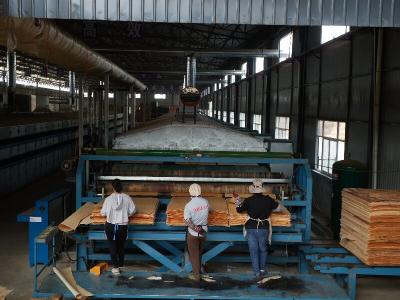
The biomass burner does not exist in a vacuum; it is the powerhouse for a suite of advanced veneer dryers that Shine Machinery has developed. These dryers, ranging from single-layer to high-capacity four-layer configurations, are designed to maximize the use of the generated heat.
The 3-layer 38-meter dryer is a marvel of thermal engineering. Using pressure-contact drying technology, the rollers themselves play an active role in the quality control process. As the wet veneer passes through the 34-meter heating zone, the rollers press and iron the surface, eliminating loose fibers and ensuring the sheet remains perfectly flat. This is particularly crucial for thin veneers in the 0.6mm to 0.8mm range, which are prone to curling.
Similarly, the 52-meter double-layer dryer focuses on maximizing output while preserving floor space. With a heating zone of 48 meters and an intelligent cooling section of 4 meters, it can handle thicker veneers up to 8mm, reducing moisture content from a high of 80% down to the target 10% with seamless consistency.
A fully automatic electronic control system manages the synergy between the burner and the dryer. This system acts as the brain of the operation. Sensors monitor the veneer's moisture content in real time. If the input wood is wetter, the system can automatically slow the conveyor speed or signal the burner to increase output. This "set it and forget it" automation reduces reliance on manual labor, minimizes human error, and prevents energy waste from over-drying.
Technical Specifications and Scalability
Shine Machinery offers a range of configurations tailored to different production scales. The integration of the biomass burner is standardized across their product line, often featuring a 6-ton unit with a 21.5 kW power rating for their medium- to large-scale lines.
38-Meter 3-Layer Dryer (Model GTH30-38) Highlights:
Heating Length: 34 Meters
Drying Capacity: 5m³/hour
Working Width: 3000mm
Total Power: 190.4 KW (Actual consumption ~140-150 KW/h)
Temperature Control: 140-200°C (±5°C)
52-Meter Double-Layer Dryer (Model GTH30-52) Highlights:
Heating Length: 48 Meters
Drying Capacity: 3.5m³/hour
Heat Requirement: 1.12 to 1.225 million Kcal/hour
Total Power: 191 KW (Actual consumption ~130 KW/h)
Special Feature: High efficiency on thicker stock
The robust construction further enhances the value proposition. The use of Q235B + φ102 seamless steel pipes for rollers ensures longevity and resistance to thermal stress. Bearings are specified to withstand extreme conditions, rated for temperatures from -20°C to 500°C, and designed to be maintenance-free, eliminating the need for greasing and reducing downtime.
Global Impact and Customer Validation
The proof of any industrial technology lies in its adoption rate. Shine Machinery has successfully deployed its biomass-heated dryers across four continents. From the tropical climates of Southeast Asia to the developing industrial sectors of Africa and South America, the equipment has proven its mettle.
Testimonials from the field highlight the technology's "advantaged" nature. In countries such as Thailand, Malaysia, and Laos, where rubberwood and tropical hardwoods are common, the ability to burn on-site waste has transformed economics. Previously, mills paid for the disposal of bark and offcuts while simultaneously paying for fuel. Now, that waste stream fuels the production line.
One of the unsung benefits customers report is the machine’s durability in harsh environments. The electrical components, sourced from international brands, boast low failure rates. The sophisticated air duct design—featuring jet boxes with saw-tooth thread patterns—prevents the common and frustrating problem of veneer jamming, which can halt production for hours.
Future Outlook: The Age of Bio-economy
As the world moves toward the 2030 sustainability goals, the demand for "green" manufacturing will only intensify. Large-scale consumers of plywood—from construction firms seeking LEED certification to furniture retailers in Europe facing strict supply chain regulations—are increasingly demanding proof that their materials were produced with minimal environmental impact.
Shine Machinery’s biomass burner technology positions its customers at the forefront of this shift. By investing in a system that eliminates fossil fuel use and actively reduces industrial waste, veneer manufacturers are not just cutting costs; they are future-proofing their businesses. They are insulating themselves from the volatility of global oil and gas markets and aligning with the policy direction of major economies that favor carbon-neutral energy sources.
Moreover, Shine Machinery's continuous investment in Research & Development—reportedly ¥20 million annually—ensures that the technology will continue to evolve. Future iterations may focus on even higher levels of automation, integration with factory IoT systems, and further reductions in particulate emissions to meet the most stringent air quality standards, such as those in the European Union.
Conclusion
In the grand narrative of industrial progress, efficiency and sustainability are no longer opposing forces. Shandong Shine Machinery Co., Ltd. has demonstrated that they are, in fact, two sides of the same coin. The patented biomass burner system is more than just a piece of equipment; it is an integrated solution to a systemic problem. It tackles the high cost of energy head-on by utilizing the most accessible and cheapest fuel source available to a wood processor—their own waste.
By delivering high calorific value, stable heat output, and seamless integration with world-class drying technology, Shine Machinery is helping plywood manufacturers worldwide dry their products better, faster, and at a fraction of the cost of traditional methods. In an era where waste is simply a resource out of place, Shine Machinery is showing the world exactly how to put that resource back to work. The result is a cleaner planet, a healthier bottom line, and a truly sustainable future for the veneer industry.