Español
 Русский
 Francés
 Português
 ภาษาไทย
 Indonesia
 Việt
Việt
 العربية
 Melayu



Empowering Intelligent Manufacturing In The Wood Industry: Understanding The Veneer Dryer Sorting System
Empowering Intelligent Manufacturing In The Wood Industry: Understanding The Veneer Dryer Sorting System
Recently, with the accelerated intelligent and refined upgrading of the engineered wood industry, the core supporting technologies of veneer drying production lines have been continuously iterating. As a key intelligent supporting module of veneer dryers, the veneer sorting system has become a core piece of equipment for solving the problems of low efficiency, large grading errors, and high labor costs in traditional wood drying and sorting processes. It is widely used in the production of plywood, blockboard, and other board materials, helping the industry achieve automated upgrades in the entire process of drying, sorting, and palletizing. Many industry practitioners and enterprise technicians have paid close attention to the core principles and functional advantages of this system. Today, we provide a comprehensive analysis of the core connotation and industrial value of the veneer dryer veneer sorting system.
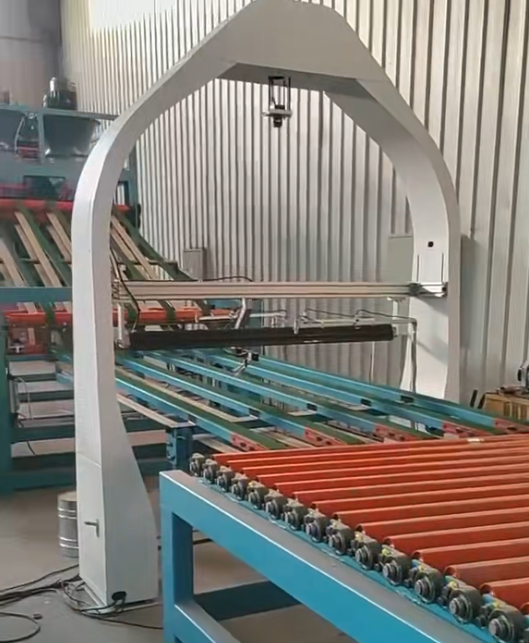
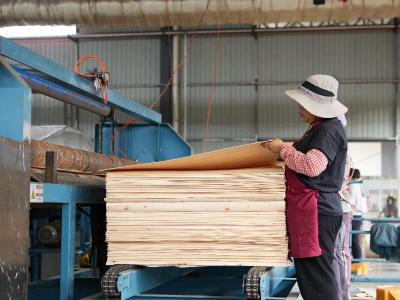
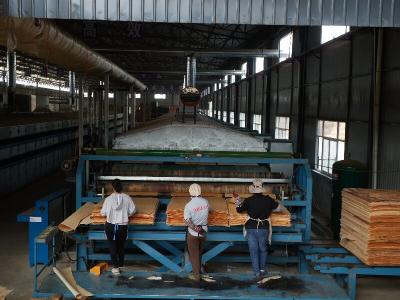
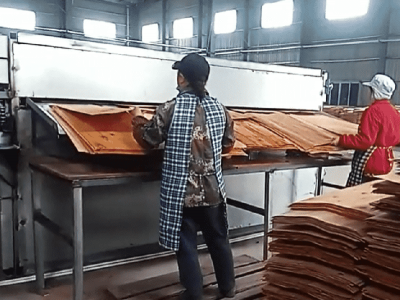
According to technical experts in the wood machinery industry, the veneer dryer veneer sorting system is an automated sorting and control system integrating visual inspection, intelligent algorithms, PLC central control, and mechanical actuators. It is a core component of modern intelligent veneer dryer production lines. This system connects the dryer's discharge end with subsequent palletizing, repair, and storage processes. Primarily targeting dried wood veneers, it automates defect detection, quality grading, precise sorting and conveying, and orderly palletizing, completely replacing the outdated production model of traditional manual sorting and visual grading.
Compared to traditional sorting methods that rely on manual observation and selection by workers, the intelligent veneer sorting system boasts standardized, digitalized, and high-precision operational logic. The entire system consists of five core components: a high-definition vision scanning module, an intelligent analysis algorithm system, a PLC programmable central control system, a pneumatic sorting actuator, and a graded conveyor platform. These modules work collaboratively to achieve unmanned intelligent sorting operations.
In the actual production process, the wood veneers, after being dried and shaped by the veneer dryer, are conveyed at a uniform speed into the sorting system's operating area. Equipped with a high-definition line-scan industrial camera, the system rapidly scans the entire surface of the PCB, accurately capturing various defects such as knots, holes, cracks, color differences, and missing corners. It also precisely detects the PCB's dimensions and moisture content uniformity. Subsequently, the system's built-in deep learning algorithm compares the collected data with preset industry standards and enterprise production parameters in real time, automatically classifying the PCBs into A, B, C, and D quality levels, accurately distinguishing between superior veneer PCBs, ordinary material PCBs, and defective PCBs requiring repair.
After the quality assessment, the PLC central control system quickly issues sorting instructions, driving pneumatic pushers, diversion gates, and robotic arms to precisely divert PCBs of different levels to their corresponding conveyor channels and stacking areas. Repairable PCBs with minor defects are automatically diverted to the repair process; qualified high-quality PCBs directly enter the palletizing and packaging stages; and defective or substandard PCBs are collected separately, achieving refined PCB classification and processing. Simultaneously, the system can feed back sorting and inspection data to the dryer's central control system in real time, dynamically adjusting parameters such as drying temperature, air speed, and drying time. This optimizes the drying process from the source, reduces the defect rate of veneer drying, and forms a closed-loop production system of "drying-inspection-sorting-process optimization."
Application data shows that the integration of an intelligent sorting system with a veneer dryer has a significant industry-enhancing effect. This system can reduce the need for manual sorting by more than 60%, completely avoiding problems such as visual fatigue and subjective judgment bias caused by long hours of manual work, and increasing the accuracy of veneer grading to over 99%. At the same time, the system solves problems such as veneer displacement, stacking, and misalignment that easily occur during manual sorting, reducing the equipment blockage failure rate of the drying production line to below 0.5%, significantly improving the stability of the production line operation. Furthermore, precise grading and sorting maximizes the utilization of wood resources; high-quality veneers are accurately classified to improve the quality of finished boards; and defective veneers are treated in a targeted manner to reduce raw material waste, effectively helping enterprises reduce costs and increase efficiency.
Currently, the engineered wood industry is moving away from extensive production models and transforming towards intelligent, high-quality, and green production. Traditional veneer drying and sorting processes have long suffered from low efficiency, poor standardization, and unstable quality control, hindering the upgrading of panel product quality. The widespread application of veneer sorting systems in veneer dryers has addressed this shortcoming in the intelligentization of drying production lines, achieving seamless integration and standardized operation between veneer drying and sorting processes.
Industry analysts indicate that with the continuous iteration of AI visual recognition and big data central control technologies, the detection accuracy, adaptability, and intelligence level of veneer sorting systems will be further improved, enabling them to handle the sorting needs of more tree species and veneer specifications. In the future, this system will become standard equipment for production line upgrades in small and medium-sized wood enterprises, continuously promoting the automation, standardization of quality control, and digitalization of management in the engineered wood industry, injecting sustained momentum into the intelligent manufacturing transformation of the wood industry.