Español
 Русский
 Francés
 Português
 ภาษาไทย
 Indonesia
 Việt
 العربية
 Melayu



Selecting The Suitable Pressure Rating In Wood Veneers Production Industry
Selecting The Pressure Rating: A Foundational Strategic Choice For Building Core Competitiveness In The Panel Industry
As competition in the wood-based panel market intensifies, the plywood sector has moved well beyond the stage where success was defined solely by production capacity or the number of machines. While many factories focus their technical upgrades on automation or reducing energy consumption during veneer drying, they often overlook a critical factor: the selection of the press’s pressure rating. This is not merely a technical specification; it is a strategic decision that directly influences product quality consistency, production costs, and market bargaining power. Choosing the right pressure system ensures that equipment capabilities align with product positioning—fundamentally enhancing bonding quality and dimensional accuracy, unlocking the full profit potential of the production line, and enabling the stable, large-scale manufacture of high-quality products.
Based on the pressure applied per unit area, hot presses are categorized into low-pressure, medium-pressure, and high-pressure systems—each with distinct process applications and clearly defined product scopes. Low-pressure systems (≤1.5 MPa) offer limited pressing force; they are primarily used for the pre-pressing and shaping of veneers and are suitable only for low-end products like packaging-grade panels, rather than the final forming of finished plywood. The medium-pressure range (1.5–5 MPa)—specifically 1.8–2.5 MPa—is the "sweet spot" for furniture-grade and construction-grade plywood, representing the industry standard for large-scale production. High-pressure systems (≥5–7 MPa) are specialized equipment designed for high-end products such as Laminated Veneer Lumber (LVL) and high-density engineered laminates; they are not suited for conventional plywood manufacturing.
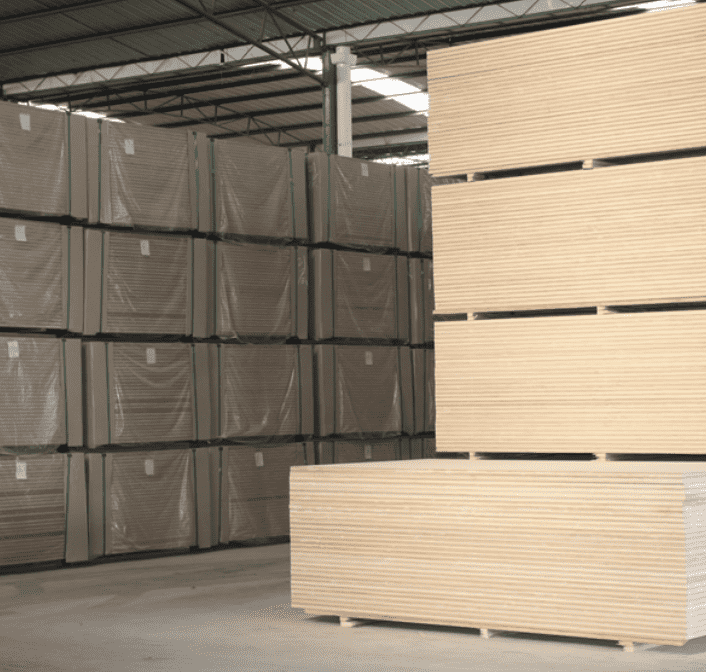
Pressure parameters directly dictate the bonding quality of the panel assembly and the structural integrity of the wood core. Insufficient pressure prevents tight contact between veneer layers, leading to discontinuous glue lines and substandard inter-layer adhesion. This often results in defects such as blistering or delamination, rendering the panels unable to meet quality standards for structural or furniture applications. In contrast, the 1.8–2.5 MPa medium-pressure range provides the optimal force to ensure the adhesive spreads and penetrates uniformly, while allowing wood fibers to interlock effectively. This approach avoids the defects—such as weak bonding or adhesive voids—associated with low pressure, while also preventing excessive pressure that would cause adhesive squeeze-out and subsequent gaps in the glue lines. It offers excellent adaptability across different wood species: high-density hardwoods like birch or beech require approximately 2.5 MPa to overcome the material's inherent resistance, whereas softer woods like poplar can be bonded effectively at 1.0–1.8 MPa—a range that also prevents the wood cells from being crushed or damaged.
Pressing pressure also dictates the dimensional stability of the panels. Low-pressure forming often results in high internal elastic stress, leading to thickness tolerances of ±0.3–0.5 mm. This poor dimensional consistency creates significant challenges for downstream processes like sanding and edge banding, ultimately reducing the yield of high-quality finished products. In contrast, a medium-pressure process allows for precise control over the degree of compression, effectively counteracting the wood's natural tendency to spring back. This keeps thickness tolerances within a tight range of ±0.1–0.2 mm, ensures a flat surface, and minimizes batch-to-batch variation—making it ideal for automated production lines and ensuring the smooth, continuous operation of downstream equipment such as sanders and stackers. While high-pressure processes can produce specialized, high-strength, high-density panels, applying them to standard plywood would destroy the wood's cellular structure, increase brittleness, and potentially even cause surface carbonization, rendering the material unusable.
Different pressure regimes also result in significant variations in production throughput, energy consumption, and operational/maintenance costs. Low-pressure processes typically require a cold press for pre-curing; while this reduces the load on the hot press, it extends the overall production cycle and limits efficiency for large-scale manufacturing. Optimized medium-pressure hot presses, which feature rapid closing and multi-stage pressure profiling, can achieve curing rates of 20–40 seconds per millimeter of panel thickness. This ensures a stable production rhythm, making them well-suited for standardized, high-volume orders. High-pressure presses, however, require high-power hydraulic systems and heavy-duty frames, leading to substantial capital expenditure and maintenance costs. Furthermore, they entail high energy consumption per unit of finished product, making them economically inefficient for the production of standard plywood. The core logic for selecting a press must align with a company’s specific product segment. For manufacturers of construction formwork or cabinetry and furniture panels, a medium-pressure press (1.8–2.5 MPa) is the standard choice, ensuring the structural integrity of the boards. Low-pressure equipment is generally suited for auxiliary pre-pressing or the production of low-end packaging-grade panels, and is inadequate for manufacturing structural finished boards. High-pressure equipment, meanwhile, serves a niche market—specialized, high-value-added products like LVL (laminated veneer lumber)—and is ideal for companies pursuing a high-end, differentiated strategy.
The performance of a press is contingent upon the synergy of its auxiliary equipment. A high-precision cold press positioned upstream can pre-shape the veneers, minimizing misalignment during hot pressing and ensuring more uniform pressure distribution across the board assembly. Integrating the press with automated loading and unloading systems creates a seamless production line, eliminating process bottlenecks, maximizing output, and enhancing the return on equipment investment.
In short, the selection of a press’s pressure rating is a foundational decision that shapes a panel manufacturer’s market competitiveness. Low-pressure systems cater to auxiliary processes and low-end products, while high-pressure systems focus on specialized, niche panels. A medium-pressure system (1.8–2.5 MPa) offers the optimal balance of quality, efficiency, and cost, making it the preferred solution for mainstream plywood production. Manufacturers should make customized selections based on their target markets, raw material species, and production capacity goals. By employing a scientifically sound pressure-processing configuration, companies can consistently strengthen their advantages in quality and cost, thereby building a competitive moat in a fiercely contested market.