Español
 Русский
 Francés
 Português
 ภาษาไทย
 Indonesia
 Việt
 العربية
 Melayu



What Points Must You Consider Before Purchasing A Veneer Dryer?
What Points Must You Consider Before Purchasing A Veneer Dryer?
A veneer dryer is the core piece of equipment in plywood and engineered wood veneer production lines. The quality of the drying process directly determines the yield of qualified veneers, the stability of the final wood panels, and the factory's operating costs. Many companies focus solely on the purchase price when selecting equipment, overlooking critical factors such as their specific production conditions, drying processes, energy consumption, and auxiliary requirements. This often leads to post-installation issues, including uneven moisture content, veneer cracking or warping, failure to meet production targets, and excessively high energy consumption. To select a dryer that is truly well-suited to your production line, you should thoroughly research and clarify the following information before making a purchase.
I. Assess Your Existing Veneer Production Conditions
The prerequisite for selecting the right equipment is a clear understanding of your raw materials and production requirements; this serves as the foundation for the manufacturer to develop an appropriate technical solution.
Veneer Raw Material Information: Identify the wood species being processed (e.g., eucalyptus, rubberwood, poplar, Albasia, etc.), as well as the thickness and dimensions (length and width) of the veneers. Different wood species vary significantly in density and shrinkage rates. Thinner veneers are more prone to scorching or curling, while thicker veneers require longer heat-exchange durations, necessitating specific configurations for airflow channels and temperature control. Additionally, determine the initial moisture content of the veneers—freshly rotary-cut veneers typically have a moisture content of 60%–80%. Seasonal fluctuations in raw material moisture content will directly impact the drying load.
Target Moisture Content for Finished Veneers: Establish the target final moisture content and the allowable tolerance range based on the requirements of your downstream plywood manufacturing process. Plywood production demands high uniformity in veneer moisture content; significant deviations—whether within a single sheet or across an entire stack—can lead to defects such as blistering or delamination during the subsequent hot-pressing stage.
Production Capacity Planning: Calculate your actual, effective hourly and daily output. It is advisable to include a 10%–20% capacity buffer to accommodate peak-season production; however, avoid the pitfall of blindly pursuing excessive capacity, which may result in underutilized equipment. Furthermore, consider your production expansion plans for the next 2–3 years to determine whether the equipment offers the potential for future upgrades. Factory Site Conditions: Measure the available length, width, and ceiling height of the workshop, and verify access routes for equipment entry and exit. Confirm the power supply capacity and voltage at the facility. Identify available heat sources—such as biomass combustion, steam, or thermal oil—as these options entail significant differences in both initial investment and ongoing operating costs. Additionally, assess local environmental emission requirements to determine if auxiliary systems, such as water-film dust collectors or exhaust gas treatment units, are necessary.
Production Line Integration: Verify the interface requirements for upstream equipment (such as rotary veneer peeling lines and vacuum board feeders) and downstream equipment (such as stacking systems). Ensure that the feed and discharge speeds of the dryer are synchronized with the upstream and downstream machinery to prevent board jams or breakage, which could disrupt the continuous operation of the entire production line.
II. Understanding Equipment Models and Core Process Performance
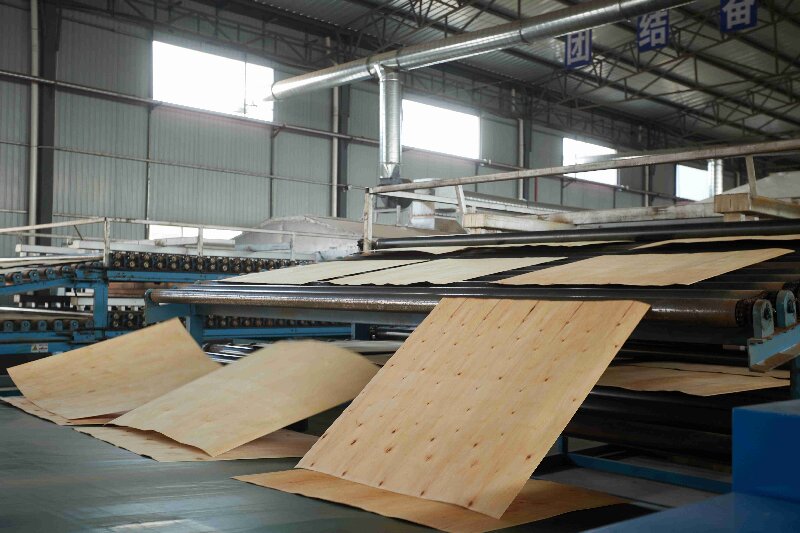
Common market options include roller-type veneer dryers, mesh-belt veneer dryers, and turnover-type (flipping) dryers. Since each model is suited to different applications, it is essential to carefully evaluate the core performance indicators of the equipment.
Structural Suitability: Roller-type dryers are ideal for the continuous drying of thin veneers, offering high drying speeds. Mesh-belt dryers are gentle on thin veneers, minimizing the risk of surface damage or compression. Fully automatic turnover-type dryers are better suited for thick veneers, as they ensure uniform heating on both sides, thereby reducing warping and deformation. Evaluate the number of decks, the effective length of the drying zone, and the design of the cooling section. Zonal temperature control is critical for preventing cracking, while a "low-temperature, slow-drying" process can effectively reduce the rate of veneer damage.
Hot Air Circulation and Moisture Content Control: Examine the design of the air ducts to ensure that hot air is distributed evenly across both the top and bottom surfaces of the veneers, preventing localized overheating or uneven moisture levels. Prioritize models equipped with PLC-based intelligent control systems and in-line moisture content monitoring. These systems allow for the automatic adjustment of feed rates, zonal temperatures, and airflow; they also support the storage of multiple drying profiles, enabling operators to switch between process parameters for different wood species with a single click. High-end models may feature AI-based visual sorting, which identifies surface defects in real-time and improves the yield of finished products.
Energy Consumption: Do not focus solely on the initial purchase price; instead, calculate the long-term operating costs. Request data from manufacturers regarding energy consumption per unit of veneer dried under identical operating conditions, and compare the fuel and electricity consumption per cubic meter of veneer for various heat source options. A waste heat recovery system is crucial for energy efficiency; utilizing waste heat from the kiln in a cascaded manner can significantly reduce fuel consumption and lead to substantial long-term cost savings.
Equipment Materials and Durability: Given the high-temperature, high-humidity drying environment—compounded by the presence of acidic volatile substances released from the wood—corrosion protection for air ducts, rollers, and the kiln housing is vital. Examine the materials used for the rollers, as well as the quality of the seals and insulation layers; poor insulation leads to significant heat loss and increased energy consumption. Additionally, verify the service life of wear-prone components—such as drive mechanisms, fans, and heat exchangers—to assess the expected maintenance workload.
III. Verifying Environmental, Safety, and Compliance Requirements
Wood drying generates dust and volatile emissions; therefore, before making a purchase, evaluate the proposed solutions in the context of local environmental policies.
Confirm the equipment’s emission levels for flue gas and dust. Determine whether auxiliary systems—such as water-film dust collectors or exhaust gas treatment units—are required, and ensure the entire system complies with local environmental impact assessment (EIA) standards.
Check for safety features, including over-temperature alarms, overload automatic shut-off, fire protection, and belt/veneer tracking (misalignment correction) systems, to prevent operational accidents such as veneer misalignment or fires.
For projects involving exports, verify that the equipment holds necessary certifications (e.g., CE marking) to meet the market access requirements of the destination country.
IV. Evaluating Manufacturer Capabilities, Case Studies, and After-Sales Support
Even when equipment specifications appear identical, there can be vast differences in manufacturing quality and on-site commissioning expertise between suppliers; therefore, do not base your decision solely on the quoted price.
Conduct on-site visits to similar facilities—ideally those processing the same wood species, veneer specifications, and production capacities. Evaluate the uniformity of moisture content in the dried veneer, the rate of damage, and actual energy consumption. Observe the stability of the equipment during long-term, continuous operation, rather than relying solely on a showroom demonstration unit.
Assess technical service capabilities: Confirm whether the manufacturer provides on-site installation, commissioning, and operator training, and whether they can offer customized drying process solutions. Since veneer drying is not a "one-size-fits-all" process, it requires tailored adjustments based on the specific wood species and initial moisture content. After-sales Support and Spare Parts Supply: Clearly define the warranty period and scope. Verify the lead times and pricing for wear-and-tear parts, and confirm the availability of remote diagnostic services. Since the losses incurred from production line downtime far exceed the cost of spare parts, a stable supply of parts is essential for ensuring continuous production.
V. Commercial and Risk-Related Details
Detailed Quotation Breakdown: Request that the manufacturer provide a granular quotation, separating costs for the main unit, combustion system, dust collection system, electrical control system, installation and commissioning, and transportation. Confirm whether the quote includes installation and training to prevent unexpected additional charges later on.
Incorporating Performance Acceptance Criteria into the Contract: Explicitly state requirements for production capacity, moisture content uniformity, veneer breakage rate, and energy consumption metrics within the contract. Define the acceptance testing procedures and the agreed-upon course of action should the equipment fail to meet these standards, thereby avoiding disputes over performance metrics after delivery.
Payment Terms and Delivery Schedules: Establish clear timelines for delivery and installation, aligning them with your factory’s production launch schedule. Additionally, ensure a thorough understanding of the warranty terms that apply once the equipment has been delivered.
When purchasing a veneer dryer, the core logic should not be a simple price comparison. Instead, you must evaluate the equipment based on your specific veneer raw materials, production capacity, and facility conditions, matching them with the appropriate drying process. Conduct a comprehensive assessment covering quality, energy consumption, environmental compliance, and after-sales support. By conducting thorough preliminary research—examining veneer characteristics, heat source availability, production line integration, equipment performance, and the manufacturer’s track record—you can secure a stable, reliable drying system with manageable operating costs. This helps minimize production disruptions and ensures consistent veneer quality.