Español
 Русский
 Francés
 Português
 ภาษาไทย
 Indonesia
 Việt
Việt
 العربية
 Melayu



Smart Investment in Veneer Drying: How to Select the Perfect Veneer Dryer Based on Your Production Capacity and Technical Requirements
(Industry Report) – The global wood veneer market is projected to reach USD 4.8 billion by 2026, driven by rising demand from furniture, flooring, and interior decoration sectors. For veneer manufacturers, selecting the right veneer dryer is no longer just about removing moisture—it’s about optimizing quality, reducing costs, and scaling production efficiently. This guide provides a comprehensive framework for choosing a wood veneer drying system tailored to your capacity needs and operational goals.
1. Understanding Production Volume and Capacity Requirements
The first step in selecting a veneer dryer is accurately assessing your production capacity.
Small-Scale Operations (1–5 m³/day): For workshops or startups, compact veneer dryers with a capacity of 5–15 m³ per batch are ideal. These systems, often electrically heated or small-scale heat pump models, offer flexibility and lower upfront investment.
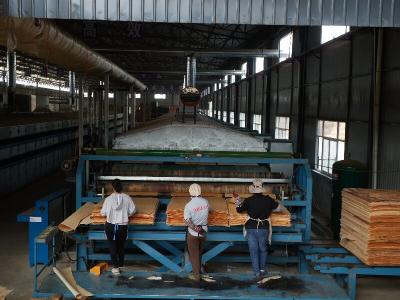
Mid-Scale Production (5–20 m³/day): Manufacturers at this level should consider multi-chamber or conveyor-type veneer dryers with automated loading/unloading. A capacity of 20–50 m³ per day ensures steady output for regional supply chains.
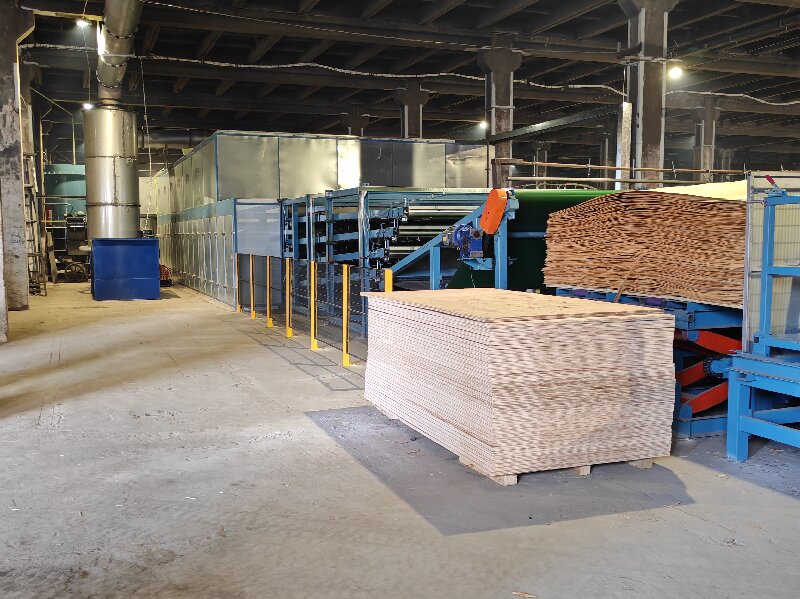
Large-Scale Industrial Plants (20–100+ m³/day): High-volume operations require tunnel dryers or continuous-flow systems with a capacity exceeding 100 m³ daily. Integrated heat recovery and AI-driven controls maximize throughput for export-oriented wood veneer production.
Keyword Tip: Match the veneer dryer capacity to your current output—and future expansion plans.
2. Technical Specifications: Moisture Control, Energy Efficiency, and Uniformity
A wood veneer dryer must deliver precise moisture control (typically 8–12% for most applications).
Moisture Uniformity: Look for dryers with ±1% moisture deviation across batches. Multi-zone airflow systems prevent over-drying or under-drying, critical for premium wood veneer grades.
Energy Sources: Heat pump veneer dryers can reduce energy costs by 40–60% compared to traditional steam or gas systems. Solar-assisted options are emerging for sustainable operations.
Drying Time: Faster drying isn’t always better. Depending on veneer thickness (0.3–3 mm), cycle times range from 2 to 24 hours. Balance speed with quality retention.
3. Layout and Space Optimization
The physical arrangement of your veneer dryer impacts workflow and efficiency.
Linear Flow: Position the dryer between peeling/ splicing stations and finishing areas to minimize handling.
Ventilation and Safety: Ensure adequate spacing (at least 1–2 meters around the unit) for maintenance and heat dissipation.
Scalability: Modular veneer dryer designs allow easy capacity upgrades without major facility changes.
4. Cost-Benefit Analysis: ROI Considerations
Investing in a veneer dryer involves evaluating long-term returns.
Upfront Costs: Small batch dryers start around $20,000; industrial continuous systems can exceed $500,000.
Operational Savings: High-efficiency models cut energy and labor costs by up to 30%, with ROI often achieved within 2–3 years.
Quality Premiums: Consistently dried wood veneer commands 15–25% higher market prices due to fewer defects.
5. Future-Proofing Your Investment
Technology is transforming veneer dryer capabilities.
IoT Integration: Real-time monitoring of temperature, humidity, and veneer dryer capacity utilization via cloud platforms.
Automation: Automated sorting and loading systems reduce labor dependency and increase throughput.
Customization: Some suppliers offer tailored solutions for exotic wood veneer species or non-standard sizes.
Conclusion: A Strategic Approach to Veneer Dryer Selection
Choosing the right veneer dryer is a strategic decision that directly impacts product quality, operational costs, and business growth. By aligning capacity with production targets, prioritizing technical precision, and planning for scalability, wood veneer producers can turn drying from a bottleneck into a competitive advantage.
For manufacturers ready to upgrade, conducting trials with dryer suppliers and consulting industry benchmarks are recommended next steps.