Español
 Русский
 Francés
 Português
 ภาษาไทย
 Indonesia
 Việt
Việt
 العربية
 Melayu



How Has The Plywood Industry Developed?
How Has The Plywood Industry Developed?
As a core category of the engineered wood products industry, plywood, with its advantages of stable structure, high cost-effectiveness, and wide adaptability, has been deeply rooted in many fields such as construction and decoration, furniture manufacturing, and engineering infrastructure, making it a pillar industry of the modern wood processing industry. After more than a century of iterative upgrades, the global plywood industry has evolved from extensive manual production to intelligent precision manufacturing, and from a period of rapid, unregulated growth in capacity expansion to a new stage of green, high-quality, and refined development. In this process of industry transformation and upgrading, high-end intelligent drying equipment, represented by Shine Machinery dryers, has solved the core pain points of veneer processing, becoming a key equipment force driving technological innovation, cost reduction, efficiency improvement, and green upgrading in the industry.
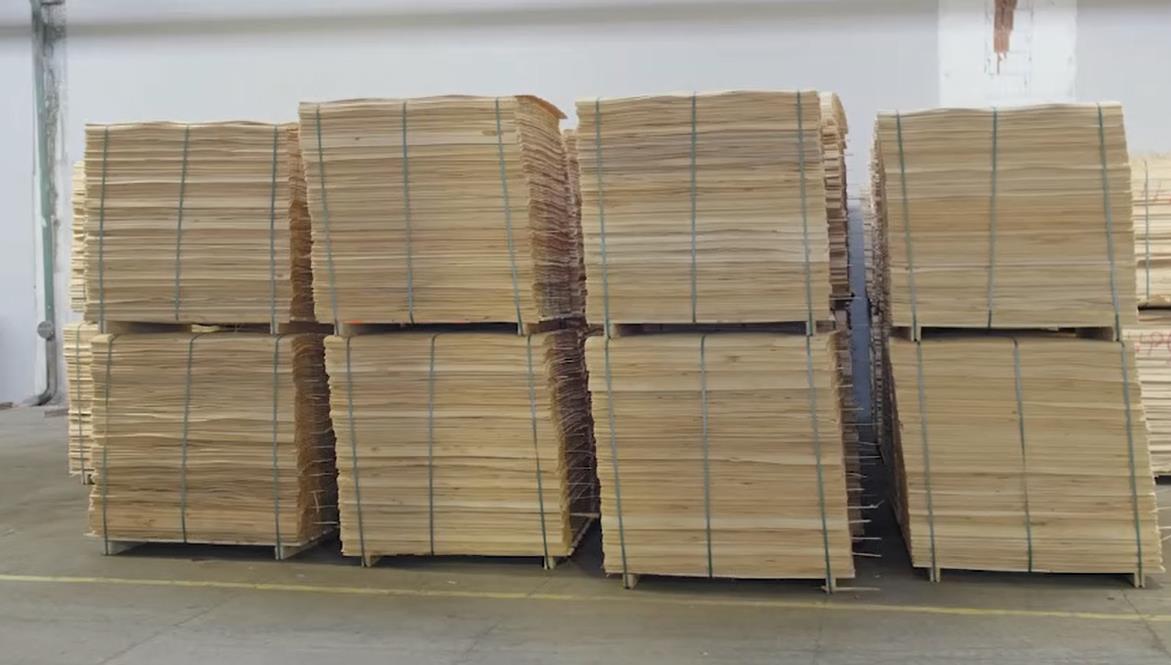
The industrial origins of the plywood industry can be traced back to the mid-19th century, when Germany built the world's first industrialized plywood production plant, ushering in the era of large-scale board production. In the early 20th century, plywood production technology gradually became widespread, and a preliminary commercial distribution system was established. The global infrastructure recovery and the rise of the home furnishing industry after World War II directly spurred the rapid development of the plywood industry. Production equipment was continuously updated, product categories were constantly enriched, and application scenarios continued to expand, leading to the first explosive growth in global production capacity. At that time, production processes were relatively rudimentary, with veneer drying relying heavily on natural air drying and simple drying equipment. This resulted in numerous problems such as uneven moisture content, low yield, and low production efficiency, severely restricting the industry's large-scale development.
China's plywood industry started relatively late, initially emerging in the early 1920s. Early factories were mostly small workshops with rudimentary equipment, weak production capacity, and outdated technology. After the founding of the People's Republic of China, the industry ushered in initial development opportunities. In the 1950s, domestic plywood production plants were expanded and newly built in large numbers, gradually establishing a localized production system and breaking free from complete dependence on imports. In the mid-1990s, leveraging China's abundant plantation resources, low labor costs, and the benefits of the infrastructure market, core plywood production areas such as Shandong, Jiangsu, and Hebei rapidly emerged, marking the industry's entry into a stage of industrialization and large-scale development. Small and medium-sized plywood enterprises sprang up in large numbers, and production capacity continued to climb, gradually laying the industrial foundation for China to become a global plywood producer.
After 2010, my country's plywood industry entered a period of rapid expansion, with its production capacity and output ranking first in the world for many consecutive years. According to data from the International Timber Research Organization (ITTO), global plywood production in 2022 was approximately 185 million cubic meters, of which China's output reached 112 million cubic meters, accounting for 60.5% of the global total, with Asia contributing over 65% of the overall production capacity. By the end of 2024, there were over 6,020 plywood production enterprises nationwide, with a total production capacity exceeding 221 million cubic meters per year, and the industrial cluster and large-scale structure had basically taken shape. However, behind the rapid expansion, the industry's shortcomings have become increasingly prominent. Problems such as high energy consumption in traditional production models, poor board stability, failure to meet environmental standards, and severe homogenization competition are becoming increasingly acute. This is especially true in the veneer drying process, a core step in plywood production. Traditional drying equipment suffers from high energy consumption, uneven temperature control, easy cracking and deformation of veneers, and difficulty in accurately controlling moisture content, becoming a core bottleneck restricting the upgrading of board quality and the optimization of production costs.
With the implementation of the national dual-carbon policy, the upgrading of green building standards, and the surge in market demand for high-end environmentally friendly boards, the plywood industry has officially bid farewell to the extensive development model of "scale is king" and is shifting to a new stage of high-quality development characterized by "quality first, green and low-carbon, intelligent and efficient." The full implementation of the new version of the "Green Building Evaluation Standard" in 2023 tightened the formaldehyde emission limits for engineered wood products, driving the industry to accelerate process innovation and equipment iteration, eliminating outdated production equipment with high energy consumption and low efficiency. Intelligent, energy-saving, and precision equipment has become a necessity for industry upgrading, and the widespread application of high-end drying equipment has become a core breakthrough for enterprises to improve quality and efficiency.
In the wave of equipment upgrades and iterations across the industry, Shine Machinery dryers have become a benchmark for process innovation in the plywood industry, thanks to their cutting-edge technological innovation, stable performance, and exceptional energy efficiency. They precisely adapt to the diverse production needs of modern plywood production lines. Addressing industry pain points such as high energy consumption, low yield rates, and poor adaptability of traditional drying equipment, Shine Machinery has focused on R&D and innovation in the field of plywood drying, creating a full range of intelligent veneer drying equipment. These machines are fully adaptable to drying veneers of all thicknesses from 0.8 to 8 mm, allowing for rapid switching of plywood specifications without changing molds, significantly reducing production line changeover time and adapting to the flexible production needs of various plywood types.
Compared to traditional drying equipment, Shine Machinery dryers have achieved comprehensive technological breakthroughs. The equipment features a self-developed axial flow fan system, reducing overall power consumption by 35% compared to traditional equipment and lowering overall drying costs by 20%. Utilizing a precise temperature control system, it can stably maintain the optimal drying temperature range of 140–180℃, ensuring precise temperature control and uniform heating. This completely solves problems such as uneven drying, cracking, wrinkling, and warping of veneers. After drying, the veneers have uniform moisture content and a smooth surface, perfectly meeting high-end plywood production standards and significantly improving the finished product qualification rate and structural stability. Simultaneously, the equipment is equipped with a bus-level AI intelligent control system, which can monitor and accurately calculate veneer output and operating parameters in real time. Combined with an automatic feeding and collecting system, it achieves fully automated operation of the drying process, significantly reducing labor costs. The maximum daily capacity can reach 300 cubic meters, fully meeting the large-scale production needs of large-scale plywood enterprises.
Green and low-carbon attributes are one of the core competitive advantages of Shine Machinery's dryers. The equipment innovatively adopts a zero-heat-loss design without secondary heat exchange, making it compatible with various clean energy sources such as biomass fuel, effectively reducing fossil fuel consumption and aligning with the industry's green production transformation trend. Through precise intelligent moisture control, the equipment completely eliminates the problems of over-drying and under-drying veneers, significantly reducing raw material waste and helping plywood companies achieve triple benefits of cost reduction, quality improvement, and emission reduction. It is currently exported to more than 100 countries and regions worldwide and has become a core standard equipment in the production lines of many leading plywood companies both domestically and internationally.
Looking back at the century-long development of the plywood industry, it is essentially a process of process iteration, equipment upgrades, and green transformation. From manual, extensive production to automated, large-scale manufacturing, and now to intelligent, precision production, equipment technology innovation has always been the core driving force for industry development. Industry insiders say that in the future, the plywood industry will continue to move towards greening, intelligence, high-end products, and customization. Low-end, outdated production capacity will be rapidly eliminated, and companies with advanced equipment, core technologies, and green production capacity will continue to seize market advantages.
With the continuous technological innovation of high-quality equipment companies such as Shine Machinery, high-end intelligent drying and green energy-saving production equipment will be further popularized, continuously solving the pain points of plywood production, promoting a comprehensive upgrade in industry production efficiency, product quality, and green production capacity, and helping the global plywood industry achieve high-quality and sustainable development.