Español
 Русский
 Francés
 Português
 ภาษาไทย
 Indonesia
 Việt
Việt
 العربية
 Melayu



The Profound Impact Of Veneer Dryers On Finished Veneer Pricing And Industry Value
The Profound Impact Of Veneer Dryers On Finished Veneer Pricing And Industry Value
As a core raw material for plywood, decorative panels, and solid wood furniture, the price of finished veneer directly determines the profitability and market competitiveness of wood processing enterprises. Within the veneer production process, drying is a critical stage for ensuring product quality, managing production costs, and setting the final price. Compared to traditional, rudimentary production methods—such as natural air-drying or simple, low-tech drying—the widespread adoption of professional veneer dryers has fundamentally restructured cost frameworks and quality systems. This shift has transformed the underlying logic of pricing, price ranges, and market premium potential for finished veneers, making the dryer a pivotal factor influencing market price trends.
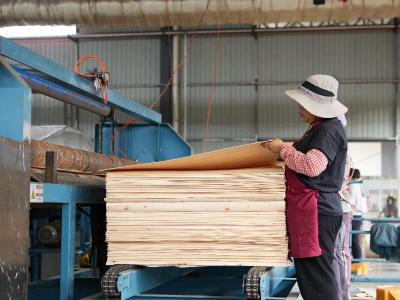
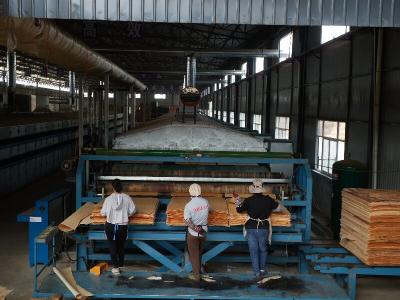
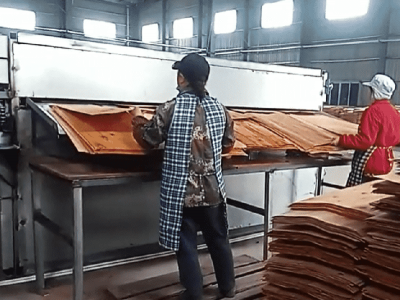
Traditional veneer drying methods have long constrained the industry's pricing structure and are the root cause of the "low-price, low-quality" dilemma. In the past, small and medium-sized enterprises relied heavily on natural air-drying, a process entirely dependent on weather conditions like temperature and humidity; this resulted in uncontrollable drying processes and highly inconsistent production cycles. Natural air-drying causes significant disparities in moisture evaporation rates between the veneer's edges and its center. Rapid shrinkage at the edges often leads to defects such as cracking, warping, and deformation, while uneven drying—where the surface is parched but the core retains excessive moisture—drastically increases product scrap and downgrade rates. Furthermore, adverse weather—such as rain, high humidity, or frost—can halt production entirely, causing order delays and inventory backlogs, which further drives up material waste and time costs. Due to these quality issues, air-dried veneers are typically relegated to the low-end market; they suffer from severe commoditization and minimal added value, forcing companies to compete on volume through low prices and trapping them in a vicious cycle of "low quality, low price, and meager profits." Additionally, traditional methods require extensive manual labor for turning, drying, and stacking veneers, resulting in high labor costs and significant material loss. While these methods appear to avoid equipment investment, the comprehensive production cost is actually higher, further squeezing the actual profit margins for veneer products. The large-scale application of veneer dryers enables precise cost reductions at the production stage, laying a solid foundation for lowering prices while enhancing the quality of the finished veneer. Cost is the primary basis for pricing finished products; specialized drying equipment optimizes every aspect of the drying process through automated, standardized, and intensive production models. Regarding labor, modern roller-type and shelf-type veneer dryers facilitate continuous assembly-line operations, requiring minimal manual intervention—only a small workforce is needed for loading and unloading. Compared to traditional air-drying methods, this significantly cuts labor costs per cubic meter, effectively addressing industry pain points such as high labor dependency and rising wage costs. In terms of energy and material costs, new energy-efficient veneer dryers feature heat recovery and constant temperature/humidity control systems. These allow for precise regulation of drying temperature, airflow velocity, and duration, eliminating material waste caused by over-drying or under-drying. Consequently, the comprehensive drying cost is kept between 40 and 70 RMB per cubic meter, with energy efficiency far exceeding that of traditional drying methods. Furthermore, the equipment enables 24-hour uninterrupted production unaffected by seasons or weather, thereby boosting efficiency, shortening production cycles, and reducing inventory turnover costs and losses associated with delayed orders. Overall, by lowering labor, energy, and material losses while increasing efficiency, veneer dryers effectively dilute unit production costs. This grants enterprises greater pricing flexibility while maintaining profit margins, resulting in more reasonable market pricing for mid-range veneers and a significant boost in their cost-performance ratio.
Building on this cost optimization, veneer dryers facilitate quality upgrades that reshape the pricing hierarchy of finished veneers and unlock potential for product premiums. Product quality and consistency are the core determinants of market price—areas where mechanical drying holds a decisive advantage over traditional air-drying. Professional veneer dryers employ a drying process characterized by constant low-speed movement, low temperatures, and uniform airflow. Drying parameters can be precisely adjusted based on wood species, veneer thickness, and initial moisture content, ensuring simultaneous moisture evaporation from both the interior and exterior of the veneer. This achieves an optimal industry-standard moisture content of approximately 6%, effectively eliminating quality issues such as uneven drying, warping, cracking, surface carbonization, and discoloration. Veneers processed in this manner feature flat, smooth surfaces, intact grain patterns, and uniform, stable moisture content. They are highly compatible with subsequent hot-pressing and gluing processes, resulting in superior bonding strength and resistance to delamination or deformation, with a product pass rate exceeding 98%.
Differences in quality directly lead to price stratification. Low-end air-dried veneers, plagued by defects and poor stability, are relegated to use in low-end packaging boards and standard base panels, commanding consistently low market prices. In contrast, high-quality mechanically dried veneers are suitable for premium applications—such as high-end furniture, decorative panels, and precision plywood—where their stable quality and reduced processing waste allow them to command a significant market premium. Furthermore, various dryer types (such as hot-press and jet-air models) accommodate veneers of diverse specifications and materials, enabling finer quality grading and shifting the market from a landscape of "homogenized low-price competition" to a healthy model of "tiered pricing and premium pricing for premium quality."
From a long-term perspective, the evolution of veneer drying technology is driving the standardization and premiumization of the industry's pricing structure while reshaping the market landscape. Historically, the industry lacked standardized drying equipment, resulting in inconsistent quality, chaotic pricing, and a market flooded with low-quality, low-cost products that squeezed out high-quality offerings. However, driven by stricter environmental regulations and industry upgrades, traditional drying methods—characterized by inefficiency, high energy consumption, and unstable quality—are being phased out in favor of intelligent, energy-efficient veneer dryers, which are becoming the industry standard. The widespread adoption of this equipment has driven the standardization of industry production, unifying core quality metrics—such as moisture content, flatness, and structural integrity—thereby establishing a clear, evidence-based foundation for veneer pricing and grading.
Simultaneously, the use of high-end drying equipment enables enterprises to move beyond low-end price wars and focus on the R&D and production of premium products, thereby increasing the market share of domestically produced veneers in the mid-to-high-end segments. Although the initial investment for high-quality veneer dryers is relatively high, the advantages of low waste, high throughput, and premium pricing allow for a quick return on investment and offer significant long-term profitability. For the industry as a whole, equipment upgrades have eliminated inefficient, low-cost production capacity and optimized the supply structure; this has fostered a steady recovery in market prices and a sustained improvement in overall industry profitability.
The veneer dryer is not merely a core piece of processing equipment; it is a pivotal driver of high-quality industry development and a key factor influencing the price of the finished product. By minimizing waste on the cost side, creating room for premium pricing through enhanced quality, and standardizing pricing structures across the industry, it has fundamentally transformed the economics of veneer production. Looking ahead, the continuous evolution of energy-efficient, intelligent, and automated drying technologies will further enhance drying precision, efficiency, and stability. This will lead to more refined quality grading, accentuate the premium value of high-end products, and steadily propel the wood processing industry toward standardization, high-end positioning, and increased value addition.