Español
 Русский
 Francés
 Português
 ภาษาไทย
 Indonesia
 Việt
Việt
 العربية
 Melayu


Manufacturers and Artisans Turn to Technology to Safeguard Veneer Quality
As the first bitter winds of winter sweep across the Northern Hemisphere, a critical segment of the global woodworking and furniture manufacturing industry is facing a familiar yet increasingly acute challenge. For countless small to medium-scale veneer producers and workshops reliant on traditional natural drying methods, the sudden, sharp drop in temperatures and corresponding rise in humidity are bringing production lines to a crawl, threatening product quality, and putting crucial supply chain contracts at risk. This seasonal crisis is catalyzing a significant shift within the sector, underscoring the paramount importance of investing in controlled veneer drying technology. Industry experts and affected businesses alike are now emphasizing that the adoption of specialized veneer dryer systems is no longer a luxury but an essential strategy for survival and growth, ensuring consistent output and superior wood veneer quality irrespective of external climatic conditions.
The Perils of Natural Drying in Winter
Wood veneer, the thin, elegant sheet of wood prized for its beauty and efficiency in furniture, cabinetry, and interior paneling, is exceptionally sensitive during the drying phase post-peeling or slicing. The process of veneer drying is a delicate balancing act: remove moisture rapidly and uniformly to prevent decay and stabilize the sheet, but do so without inducing cracks, checks, or undue stress that compromise its integrity and value.
For generations, many producers, particularly in regions with traditionally warm, dry summers, have utilized air-drying yards. Here, freshly cut veneers are stacked with stickers in vast, open-air sheds or yards, allowing natural airflow and sunlight to gradually reduce moisture content. "From May to September, our yards work perfectly," explains Aris Thomaidis, manager of a family-run wood veneer mill in northern Greece. "But by late October, everything changes. The humidity climbs, the sun weakens, and the drying time for a batch of oak or maple veneer can triple or even quadruple. Our entire inventory becomes immobilized, and we risk mold and stains."
The problem is multifaceted. Cold air holds less moisture, slowing evaporation. Rain, snow, and frost introduce variable moisture, leading to uneven drying. Prolonged exposure in damp conditions invites fungal growth and blue stain, devastating the aesthetic grade of the veneer. Furthermore, the physical properties suffer. "Uneven drying in winter leads to internal stresses," notes Dr. Lena Schröder, a materials scientist at the Institute for Wood Technology in Dresden. "When these veneers are later pressed onto substrates in a warm, dry factory, they can shrink unpredictably, causing delamination or surface imperfections. The fundamental reliability of the material is undermined."
The economic impact is immediate. Missed delivery deadlines result in contractual penalties and eroded trust from large furniture manufacturers operating on just-in-time production models. Production planning becomes a gamble on the weather forecast. "We lost a major contract last February because we couldn't guarantee a steady supply of dry, flat walnut veneer for two consecutive weeks," shares Chen Wei, owner of a veneer workshop in Shandong, China. "The client moved to a competitor with climate-controlled drying facilities. That was our wake-up call."
The Technological Imperative: Rise of the Industrial Veneer Dryer
In response to these relentless seasonal pressures, the industry is witnessing a pronounced migration towards artificial veneer drying solutions. The veneer dryer – an engineered system providing precise control over temperature, airflow, and humidity – is emerging as the definitive answer to climatic unpredictability.
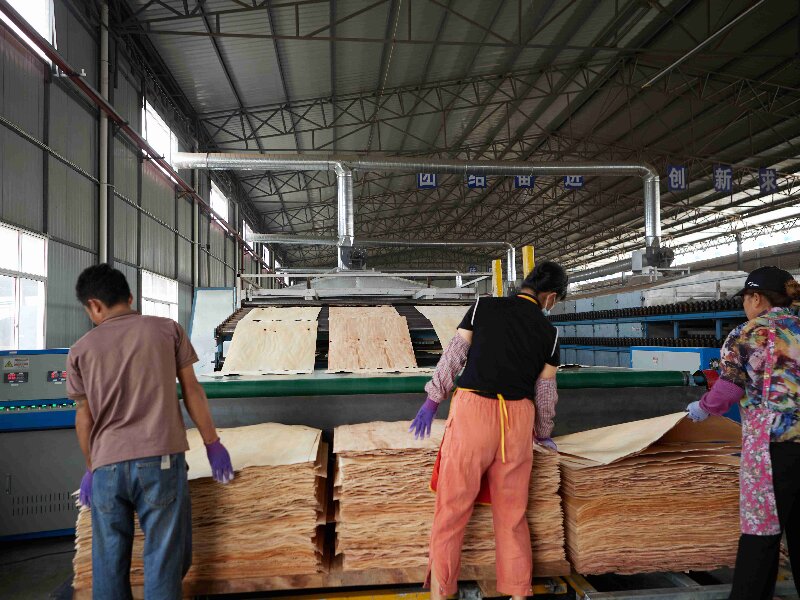
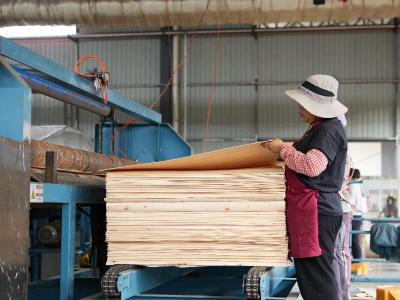
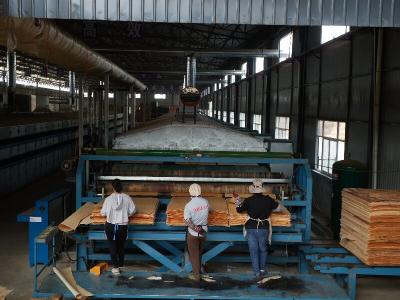
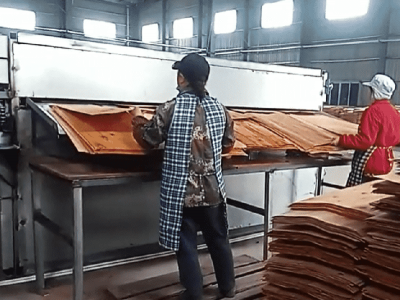
Modern veneer dryers, ranging from compact rack dryers for specialized shops to continuous roller dryers for high-volume mills, operate on the principle of forced convection. They create an optimized microclimate for veneer drying. Heated air is circulated at high velocities across the surfaces of the veneer sheets, ensuring rapid and uniform moisture removal. Crucially, these systems are integrated with sophisticated control panels that allow operators to program specific drying schedules (time-temperature-humidity curves) tailored to wood species, initial moisture content, and veneer thickness.
"The difference is night and day," says Marco Ferrero, whose Italian veneer company installed a new multi-chamber veneer dryer last year. "Where natural drying took 7-10 days in good weather and 25+ in winter, our dryer processes a charge of 1mm thick ash veneer from 60% to 8% moisture content in under 4 hours, 24/7/365. The consistency is remarkable. Every sheet is stable, flat, and ready for immediate clipping and stacking. Our defect rate has fallen by over 80%."
Key Advantages Driving Adoption:
Uninterrupted Production & Guaranteed Yield: A veneer dryer decouples production from the weather. It enables factories to run at full capacity year-round, fulfilling orders and stabilizing cash flow. This reliability is priceless in today's competitive global market.
Superior and Consistent Veneer Quality: Controlled veneer drying minimizes drying defects. It preserves the natural color of the wood (reducing oxidative graying), prevents stains, and produces a more dimensionally stable sheet with improved tensile strength. This results in higher-grade wood veneer that commands better prices and satisfies premium clients.
Enhanced Efficiency and Space Optimization: The drying cycle is reduced from days/weeks to hours. This dramatic compression frees up vast areas previously used as drying yards, allowing for expansion of other operations like peeling, sorting, or storage. The energy input, while significant, is focused and efficient compared to the latent losses and waste associated with failed natural drying batches.
Flexibility and Precision: Different species require different handling. A delicate 0.3mm anigre veneer cannot be dried like a robust 3mm oak veneer. Modern dryers offer programmable recipes for hundreds of species, allowing producers to diversify their product range without risking quality.
Improved Working Capital Turnover: Faster drying means faster throughput—from log to packaged, saleable product. This accelerates inventory turnover, improves liquidity, and allows businesses to respond more swiftly to market trends.
Market Trends and Technological Innovations
The demand surge is most evident in temperate regions with strong woodworking traditions, from Eastern Europe and the Balkans to the Pacific Northwest of North America and Northeast Asia. Manufacturers of veneer dryer equipment report record inquiries and order backlogs. "Our sales for modular, energy-efficient dryers have increased by over 40% this quarter compared to last year," says Viktor Kovács, sales director for a leading Austrian drying technology firm. "The urgency is palpable. Clients aren't just planning for next year; they need solutions for this winter."
Innovation is keeping pace. The latest generation of veneer dryers focuses on sustainability and smart technology. Heat recovery systems capture waste thermal energy from exhaust air to preheat incoming fresh air, slashing fuel consumption by 20-30%. IoT-enabled dryers allow for remote monitoring and control, with sensors tracking moisture content in real-time and AI algorithms adjusting the drying curve for optimal results and energy use. Hybrid systems combining conventional convection with radio-frequency (RF) or vacuum drying are gaining traction for ultra-thin or difficult-to-dry species, offering even faster cycles and unparalleled quality.
Challenges and the Road Ahead
The primary barrier remains capital investment. A high-quality industrial veneer dryer represents a significant financial outlay for a small business. However, the narrative is shifting from cost to cost-benefit analysis and Return on Investment (ROI). Governments in some countries are offering green manufacturing grants or low-interest loans for equipment that reduces waste and improves energy efficiency, which can include advanced dryers.
Furthermore, the business case is strengthened by the growing demands of downstream industries. Large furniture makers and construction material suppliers, under pressure to ensure their own supply chain resilience and product consistency, are increasingly preferring to partner with veneer suppliers who have controlled drying capabilities. Certification bodies are also placing greater emphasis on process control, which natural drying cannot reliably provide.