Español
 Русский
 Francés
 Português
 ภาษาไทย
 Indonesia
 Việt
 العربية
 Melayu


Biomass-Fired Veneer Dryer: An Optimal Solution For Plywood Manufacturers To Reduce Costs And Enhance Quality
Biomass-Fired Veneer Dryer: An Optimal Solution For Plywood Manufacturers To Reduce Costs And Enhance Quality
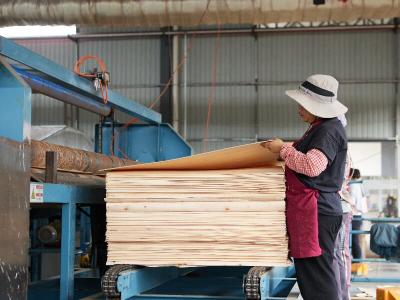
In the plywood production chain, veneer drying is a critical process that determines both the quality of the finished product and the overall production cost. Traditional drying methods—relying on steam boilers, thermal oil heaters, natural gas, or electricity—often suffer from high energy consumption, volatile fuel prices, difficulties in waste disposal, and significant environmental compliance pressures. By utilizing biomass combustion technology, biomass-fired veneer dryers convert wood waste generated within the facility into a heat source for the drying process, creating a closed-loop production system. Offering a combination of economic efficiency, environmental friendliness, operational stability, and high-quality output, these systems are increasingly becoming the preferred choice for plywood factories worldwide looking to upgrade their facilities.
I. On-Site Waste Utilization: Drastically Reducing Drying Costs through a Circular Production Model
Equipped with specialized biomass burners, these dryers can directly utilize agricultural, forestry, and wood-based waste—such as bark, sawdust, offcuts, and defective veneers—generated during the rotary-cutting and panel-trimming stages. This eliminates the need for large-scale external procurement of coal or natural gas, cutting fuel expenditures at the source. Previously, many plywood factories incurred costs to remove and store wood waste, which not only occupied valuable space but also posed fire hazards. In contrast, a biomass drying system transforms this waste into fuel, eliminating disposal costs and establishing a circular economy model where the factory consumes its own waste. Compared to electric or natural gas-based heating, this system can reduce total drying energy costs by 40%–60%, effectively insulating the factory from the cost risks associated with rising fossil fuel prices and making production costs more predictable.
II. Precise and Uniform Temperature Control: Improving Veneer Quality and Reducing Defect Rates
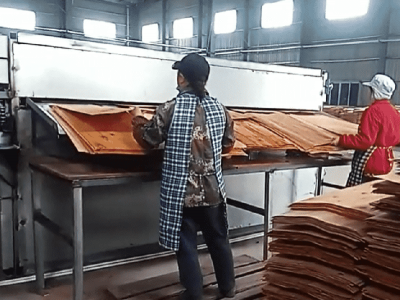
In veneer drying, significant temperature fluctuations and uneven moisture distribution are major concerns. If moisture content varies inconsistently, the subsequent hot-pressing stage is highly prone to issues such as blistering, delamination, warping, cracking, and surface wrinkling—all of which directly compromise the grade and quality of the finished plywood. The biomass heating system provides a stable output of clean, hot air at temperatures between 140°C and 180°C. Integrated with a fully enclosed, insulated structure, a hot-air circulation system, and variable-frequency drive (VFD) controls, it ensures minimal temperature variance across the drying zone. This allows for uniform heating and dehydration of veneers, enabling precise control of moisture content to meet specific process requirements.
The system is compatible with a wide range of wood types—including eucalyptus, poplar, rubberwood, and engineered wood veneers—as well as both thin veneers and thick core panels. The dried panels emerge flat and smooth, free from ripples or structural collapse. This enhances bonding performance, significantly increases the yield of high-quality veneers, and allows for higher product premiums from the same raw materials.
III. Clean, Low-Emission Operation: Meeting Environmental Standards and Supporting Exports
Modern biomass combustion systems utilize a high-efficiency, complete-combustion design paired with dust-removal equipment. This results in significantly lower emissions of smoke and particulate matter compared to coal-fired boilers, making it easier to comply with local environmental regulations and reducing the risk of production halts due to environmental inspections or audits. From the perspective of the carbon cycle, biomass fuel is a renewable resource; the carbon dioxide released during combustion is balanced by the carbon absorbed during the growth of the trees, rendering the process nearly carbon-neutral. For panel manufacturers targeting overseas markets, "green" production credentials facilitate compliance with the sustainable procurement requirements of regions like Europe, North America, and Southeast Asia. This strengthens product competitiveness and helps secure more high-value-added export orders.
IV. High Automation and Continuous Production: Labor Efficiency and Stable Capacity
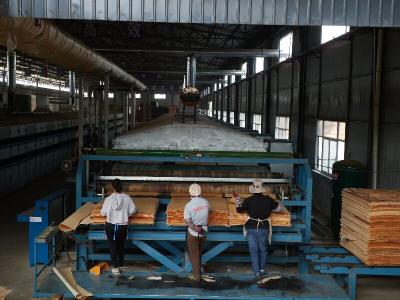
Biomass veneer dryers typically feature a continuous, automated design—such as a roller or mesh-belt conveyor system—integrated with intelligent electronic controls, variable-frequency drives, automatic temperature regulation, and real-time moisture-monitoring modules. These systems support 24/7 continuous operation, handling the entire process from veneer loading and drying to unloading. Features such as automated negative-pressure feeding and belt-tracking correction minimize the need for manual intervention and reduce reliance on highly skilled labor. The equipment heats up rapidly upon startup, eliminating the need for the long preheating periods required by traditional steam boilers—production can begin the moment the machine is turned on. Multi-layer, extended-length models allow for flexible adjustments to speed and temperature based on specific orders, balancing output with quality. These units are well-suited to the production capacity requirements of plywood plants of all sizes—from small to large—and feature simple maintenance and a low failure rate, ensuring stable production line operation.
V. High Compatibility, Adaptability to Diverse Operating Conditions, and Short Return on Investment (ROI)
This integrated heating and drying solution is suitable for both new production lines and the retrofitting of existing ones. It can be incorporated into new facilities or used to replace legacy steam or thermal-oil heating systems without requiring complex civil engineering modifications. The system supports a flexible range of fuel sources; in addition to the plant’s own wood waste, it can utilize biomass pellets, straw, and other agricultural residues, ensuring stable production even in regions where wood waste is in short supply.
By reducing overall costs and increasing the yield of high-quality veneer, this solution boosts profitability. Most plywood manufacturers can recover their equipment investment within a relatively short period, with the economic advantages becoming increasingly significant over the long term.
The drying process serves as a critical turning point for profitability in panel manufacturing plants. A biomass-powered veneer dryer is more than just a simple alternative heat source; it is a comprehensive solution that lowers costs, improves quality, ensures environmental compliance, and stabilizes production. It establishes a circular "waste-to-energy-to-veneer" loop within the wood processing workflow—addressing the persistent challenges of fuel costs and solid waste disposal, while ensuring consistent veneer drying quality. Aligned with the shift toward green manufacturing, this technology represents a reliable choice for high-quality upgrades within the plywood industry.