Español
 Русский
 Francés
 Português
 ภาษาไทย
 Indonesia
 Việt
Việt
 العربية
 Melayu


A High-Quality Dryer Brings More Than Just Product Upgrades
A High-Quality Dryer Brings More Than Just Product Upgrades
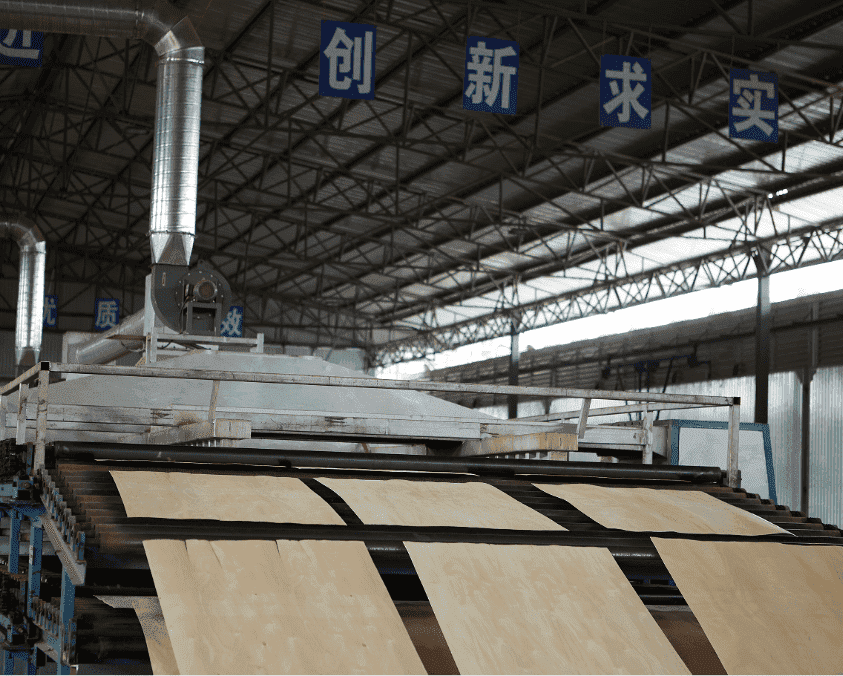
In many industries, such as veneers processing, deep wood processing, agricultural product drying, and industrial material handling, dryers are never simply auxiliary equipment; they are core devices that determine product quality, control production rhythm, and influence corporate profitability. For a long time, many manufacturers have fallen into a misconception, limiting the value of dryers to "drying materials and removing moisture," believing that equipment upgrades are merely a simple product upgrade to achieve higher moisture content and better appearance in finished products. However, in reality, a high-quality intelligent dryer brings more than just optimized product quality to a company; it brings a comprehensive transformation covering production efficiency, cost control, technological upgrades, brand competitiveness, and even the industrial landscape. It is the core breakthrough for enterprises to move from extensive production to refined intelligent manufacturing.
The most direct value of Shine Machinery's high-quality dryers is the complete reshaping of product quality, solidifying core market confidence. Traditional dryers mostly employ a single hot air drying and constant temperature drying mode, resulting in low heat exchange efficiency and uneven temperature and airflow distribution within the equipment. This easily leads to problems such as over-drying of the material surface, excessive internal moisture content, uneven drying in certain areas, cracking and deformation of the veneers, and discoloration and deterioration of the material. Taking veneer drying and the wood processing industry as examples, veneers produced by inferior drying equipment often have defects such as warping, cracking, and inconsistent moisture content. This not only results in a high defect rate but also directly affects subsequent gluing, pressing, and molding processes, leading to poor stability of the finished veneers and making them prone to quality problems such as delamination, deformation, and mold growth during later use.
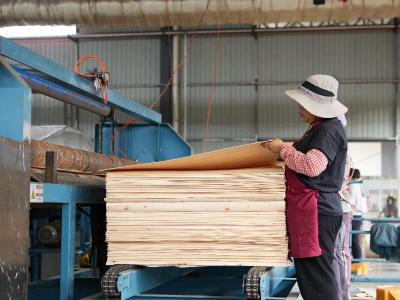
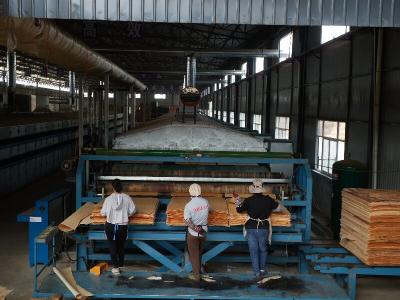
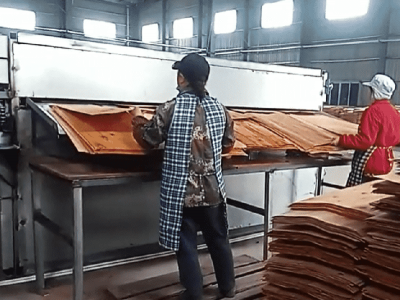
In contrast, professional equipment such as Shine Machinery's high-quality roller veneer dryers, equipped with stepped heat exchange, intelligent variable frequency temperature control, and layered temperature control technology, can achieve gradual heat exchange, allowing heat to penetrate evenly into the material. This constant temperature and speed drying throughout the process fundamentally avoids problems such as uneven drying, deformation, damage, and dull color. Materials processed with high-precision drying exhibit precisely controllable moisture content, uniform finished product appearance, and enhanced structural stability, resulting in a significant increase in product qualification rates. This quality upgrade is not a minor optimization, but a qualitative leap from "just getting by" to "precise and high-quality," allowing companies to escape the competitive cycle of low-end, low-price products and acquire the quality strength to compete in mid-to-high-end markets and export markets.
Compared to the visible product upgrades, the hidden cost optimization brought about by high-quality dryers can reshape a company's profit system, which is also the core value most easily overlooked. For manufacturing companies, the ability to control production costs directly determines their survival and development. Traditional drying equipment is energy-intensive, suffers from high losses, and has a high failure rate; the accumulated hidden costs over the years often far exceed the price difference of the equipment itself. Conventional drying equipment suffers from poor temperature and speed control precision. To ensure drying meets standards, companies often extend drying time and increase drying temperature, resulting in significant wasted electricity and heat. Furthermore, the equipment suffers from poor stability and low automation, requiring 24-hour on-site monitoring and control, leading to continuously rising labor costs. Frequent equipment failures also cause production line downtime for repairs, resulting in hidden losses such as wasted capacity and order delays.
Shine Machinery's intelligent dryer is equipped with a fully automatic control system and a variable frequency control system. It intelligently and dynamically adjusts the conveyor speed, drying temperature, and hot air volume based on material thickness, initial moisture content, and material characteristics, achieving precise and intelligent drying operations. No manual intervention is required throughout the process, significantly reducing labor costs. Precise energy consumption control eliminates heat and electricity waste, effectively reducing energy costs per unit product. Moreover, the core components of this high-quality equipment are more precise and stable, with an extremely low failure rate, significantly reducing maintenance costs, downtime losses, and material scrap. Over the long term, the savings in energy, labor, maintenance, and material costs from the equipment are sufficient to cover the purchase price difference, substantially expanding the company's profit margins and overcoming the industry pain point of "high output but low efficiency, high volume but no profit."
Furthermore, upgrading the dryer can drive the standardization of the production line, promoting the iterative innovation of the company's production model. Traditional drying equipment is cumbersome to operate, has unstable parameters, and its drying effect is highly dependent on worker experience. The lack of standardization and regulation in the production process leads to large fluctuations in product quality, chaotic production rhythms, and difficulty in achieving large-scale, standardized mass production. Modern high-quality dryers, on the other hand, are the core hub of intelligent production lines, equipped with a standardized operating system. All drying parameters can be recorded, traced, and replicated, completely eliminating reliance on human experience.
A stable, intelligent, and standardized drying process can link upstream and downstream processes, driving the standardization upgrade of the entire production line. From material feeding and drying to finished product output and quality inspection, a complete standardized operating process is formed, resulting in a smoother production rhythm and more stable capacity output. This upgrade in production models allows enterprises to move beyond extensive, experience-based production and into a stage of refined, intelligent, and standardized intelligent manufacturing. This lays a solid foundation for enterprises to expand production scale, build standardized production systems, and obtain industry certifications.
At a deeper level, a high-quality dryer is a key asset for enterprises to enhance their core competitiveness and seize market share. Today, market competition across all industries has long since moved beyond simple price competition to competition based on quality, efficiency, and technology. Low-end products produced by low-end, homogenized equipment can only fall into a vicious cycle of low-price competition, constantly squeezing profit margins and making enterprise development extremely difficult. In contrast, high-quality, high-stability products built on high-quality drying equipment can help enterprises establish a superior brand reputation, accurately target high-end customers, foreign trade orders, engineering projects, and other high-value markets, achieving product premium pricing.
Furthermore, the high efficiency, stable quality, and low cost advantages brought by intelligent drying equipment enable enterprises to gain an absolute advantage in market competition. Faced with large-volume, high-standard, and urgent orders, enterprises can efficiently and reliably complete delivery, enhancing customer satisfaction and partnership loyalty, and gradually building brand advantages and market reputation. Under the major trend of industry transformation and upgrading, companies that take the lead in iterating their drying equipment and achieving intelligent production upgrades are able to seize the high-end market ahead of time, escape low-end homogeneous competition, and become benchmarks for high-quality development in the industry.
From a macro-level industry perspective, the iterative upgrades of drying equipment by countless enterprises are also driving the standardization, high-end development, and green development of the entire industry. The traditional drying industry generally suffers from high energy consumption, high pollution, poor quality, and low efficiency, hindering the transformation and upgrading of the entire industry. High-quality energy-saving drying equipment, with its advantages of low energy consumption, high efficiency, low loss, and intelligence, helps the industry reduce production energy consumption, reduce material waste, and improve overall product quality, propelling the industry away from extensive development models and towards a new track of green intelligent manufacturing and high-quality development. The upgrade of a single piece of equipment, seemingly an individual choice for a company, actually converges into a powerful force for the iterative upgrade of the entire industry, driving technological innovation and industrial structure optimization.
In conclusion, we must never define the value of a high-quality dryer from the narrow perspective of "a single drying device." It brings more than just improved material drying effects and optimized product appearance and quality; it also reduces production costs, boosts production efficiency, innovates production models, and upgrades brand competitiveness.
For companies deeply rooted in physical production, equipment upgrades are never just a simple expense, but a strategic investment with a long-term vision. A high-quality dryer eliminates outdated production methods, unlocks higher-quality products, more substantial profits, and a broader market; it is the core foundation for a company's current success and future dominance. In the wave of industrial upgrading, only by proactively embracing equipment innovation and cultivating refined production can a company stand firm in fierce market competition and achieve long-term, stable development.robust development.