Español
 Русский
 Francés
 Português
 ภาษาไทย
 Indonesia
 Việt
 العربية
 Melayu


How To Reduce Labor Costs For Dryers
How To Reduce Labor Costs For Dryers
In the plywood and veneer processing industry, the drying section is always a major labor consumer. For traditional drying lines, feeding, veneer laying, unloading, stacking, parameter adjustment and on-site inspection are mostly manual work. Factories face high costs on wages, social insurance, night shift allowances and work injury risks. These expenses eat up a large share of profits. Many manufacturers only focus on electricity and fuel costs, while ignoring the great potential of labor optimization in drying workshops. To cut labor costs reasonably, blind layoffs are not the solution. The right approach is equipment upgrading, process restructuring, intelligent control and manpower reallocation. Heavy manual work can be replaced, and workers can shift from repetitive physical tasks to inspection and quality control, so as to realize low-labor operation and stable production.
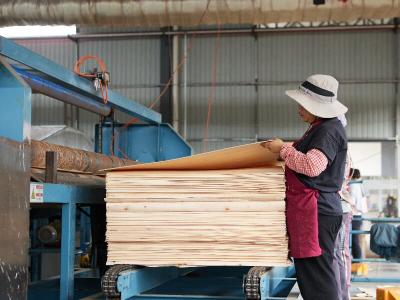
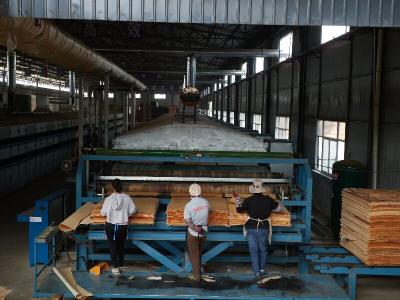
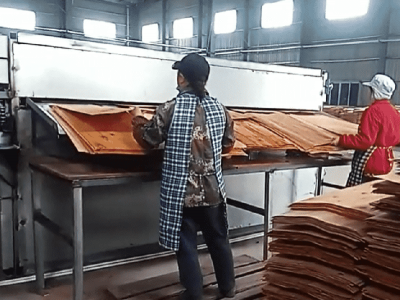
High labor costs in drying workshops mainly come from these links: manual feeding and veneer arrangement at the inlet, manual picking and stacking at the outlet. Operators have to stay on site to adjust temperature and speed based on experience. Once belt deviation, jamming or uneven moisture content occurs, extra workers are needed for handling. Night shifts bring higher labor expenses and greater recruitment difficulties. A traditional semi-automatic drying line usually requires 6–8 workers per shift. With three shifts running all day, the labor expenditure is substantial. The core optimization targets are the feeding & discharging ends, on-site control and abnormal troubleshooting.
First of all, upgrade front and rear sections of the dryer, and replace heavy manual work with automatic feeding and unloading systems. Feeding and stacking are the most labor-intensive positions in dryer workshops. Automatic vacuum feeding, servo laying and auto stacking systems deliver the fastest labor-saving effect. In traditional modes, workers repeatedly carry and align veneers with high labor intensity and high turnover rate. After installing automatic feeding systems, suction cups pick and lay veneers evenly. Matched with automatic stacking at the discharge end, most workers for carrying and laying can be removed. Many practical cases prove that the number of workers for feeding and discharging can be cut from 4–6 to only one inspector, with labor reduction over 60%. Roller veneer dryers, turnover dryers and mesh-belt dryers can all connect with automatic auxiliary systems according to 4ft×8ft and other veneer sizes. Partial retrofitting is available for old machines instead of full replacement.
Secondly, adopt intelligent control systems to reduce reliance on experienced operators and achieve low-manpower monitoring. Old-style dryers rely on manual adjustment of temperature, air speed, chain speed and moisture exhaust. Skilled operators must be on duty all the time. New staff take a long time to master the operation, and improper adjustment easily causes veneer cracking, curling and uneven moisture, leading to material waste. Equipped with PLC control, online moisture testing modules, the dryer can automatically generate drying curves according to veneer thickness and inlet moisture content, and adjust hot air, transmission speed and exhaust fans without frequent manual setting. With remote monitoring and fault alarm functions, one inspector can take charge of multiple drying lines. No dedicated operator is required for a single line. Night shifts can run automatically with only regular patrols, which greatly cuts night-shift positions and eases night-shift recruitment pressure.
Thirdly, optimize workshop layout, combine posts and adjust shifts to realize multi-task workers. Besides hardware investment, management optimization also helps save labor. Many factories set separate posts for feeding, machine watching, unloading and inspection, resulting in redundant staffing. Reasonable pipeline planning allows post combination: inspectors can monitor drying status, identify defective veneers and handle simple faults such as belt deviation and jamming. Meanwhile, connect peeling, drying and veneer jointing processes to reduce secondary transfer labor. For shift arrangement, avoid full staffing for three shifts. Arrange heavy production in day time and low-load automatic running at night, with only flexible patrol staff instead of a full night team. Note that post combination shall not lead to overwork. It must be carried out on the premise of stable equipment and complete safety protection to avoid safety risks.
Fourthly, strengthen equipment maintenance to lower failure rates and reduce emergency labor demand. Frequent jamming, deviation, chain failure and dust blockage bring invisible labor consumption. Breakdowns require multiple workers for emergency repair, interrupt production and force temporary manpower scheduling. Regular maintenance on fans, transmission parts and dust removal systems together with water film dust removal and anti-deviation sensors can reduce unexpected shutdowns. Stable equipment with low failure rates means inspectors do not need to deal with emergencies all the time, so one person can cover several production lines. On the contrary, frequent malfunctions will offset the labor-saving effect of automation.
Fifthly, choose upgrading plans rationally based on return on investment and factory budget. Many small and medium-sized enterprises worry about the high one-time investment of automation transformation. We can implement upgrades step by step: if the budget is limited, install either automatic feeding or automatic discharging first to remove the most labor-heavy post. Factories with stable production and long-term orders can invest in full-line automation plus online moisture detection. Usually, the extra cost can be recovered within 1–2 years by saving wages, social insurance and night shift subsidies. Low-labor operation also lowers work injury risks, staff training costs and veneer waste caused by inexperienced new workers. These hidden benefits are often overlooked.
Last but not least, promote staff transformation and shift workers from physical jobs to technical posts. Automation is not simply cutting jobs, but reallocating manpower value. Workers originally engaged in veneer laying and picking can be trained as inspectors, quality controllers or equipment maintenance personnel. The same workforce creates higher value. Factories no longer compete fiercely for general manual workers, recruitment pressure drops and team stability improves.
In summary, the key to cutting dryer labor costs lies in: replacing heavy manual work at both ends with automation, reducing full-time operators by intelligent systems, combining posts via process optimization and minimizing emergency labor through reliable equipment. For veneer and plywood mills, low-labor transformation of drying workshops is not only a solution to labor shortage, but also a necessary way to reduce long-term production costs. With the same output, an automated stable drying line needs fewer workers and delivers consistent product quality, helping factories build obvious advantages in overall production cost.