Español
 Русский
 Francés
 Português
 ภาษาไทย
 Indonesia
 Việt
 العربية
 Melayu



Understanding Structural Market Shifts: Guiding Veneer Producers Toward Resilient Transformation
Understanding Structural Market Shifts: Guiding Veneer Producers Toward Resilient Transformation
Veneer serves as a core substrate for plywood, engineered wood, solid wood surfacing, and reconstituted timber. It bridges the upstream raw timber supply with a diverse range of downstream sectors, including construction, furniture, interior decoration, logistics packaging, and export-oriented panel products. For a long time, the industry relied on high-volume expansion—primarily through veneers for construction formwork and standard furniture—characterized by low entry barriers, product homogenization, and persistent price wars. In the last two years, however, profound shifts have occurred across downstream demand, resource supply, environmental regulations, and the international trade landscape. The market has transitioned from "aggregate growth" to "structural divergence," rendering production models based solely on capacity and low pricing increasingly unprofitable. For veneer producers, grasping these changes, identifying a precise market position, and upgrading manufacturing processes are now essential for survival and achieving a breakthrough.
I. Four Key Shifts In Downstream Veneer Application Markets
1. Slowing Growth in Traditional Core Demand: The Shift to Zero-Sum Competition in the Low-End Segment
Construction formwork was once the largest application market for veneer, offering high demand and stable orders; however, the underlying demand logic is evolving. The rise of prefabricated construction, alongside the increasing adoption of steel and plastic formwork, has led to a sustained slowdown in the overall demand for wood-based formwork veneers. Furthermore, procurement standards have become increasingly rigorous: clients now prioritize consistent moisture content, crack resistance, uniform thickness, and greater reusability (turnover cycles) over price alone. Consequently, low-end eucalyptus veneers—often produced by smaller, less sophisticated facilities and characterized by thin profiles, inconsistent moisture levels, and a high susceptibility to mold—are losing their bargaining power, frequently resulting in inventory backlogs and unstable order flows.
Furniture and custom home furnishings remain the second-largest application sector, yet the demand structure here has also diverged significantly. Manufacturers of standard panel-based furniture and low-end finished goods are aggressively squeezing budgets for surfacing veneers. In contrast, the high-end custom furniture, solid wood door, integrated interior fit-out, and "affordable luxury" furniture segments favor stable, high-quality veneers—such as those made from birch, rubberwood, *Albasia*, or premium-grade eucalyptus. These segments demand strict adherence to standards regarding color consistency, the quality of backside repairs, surface flatness, and drying precision; they are also willing to pay a premium for consistent, high-quality products. In simple terms: for low-end furniture, the competition centers on the price of veneers, whereas for high-end decorative veneers, it focuses on quality and consistency.
2. Rapid Emergence of New Market Segments and Growing Demand for High-Value-Added Veneers
"Reconstituted" (or "engineered") decorative veneer has been the fastest-growing segment in recent years. Produced by taking standard wood veneers—which are then dyed, restructured, and embossed to replicate the textures of rare or precious wood species—these engineered veneers are widely used in whole-house custom furnishing, wooden doors, wall paneling, and decorative molding. This market segment imposes requirements on veneers that differ significantly from those used for standard plywood: they must feature uniform thickness, be free of large knots, offer high flexibility, and ensure consistent coloration. Such products demand precise drying processes and rigorous sorting standards; they command a much higher value-added than conventional plywood veneers, making them a prime target for veneer manufacturers looking to transform their business models.
Furthermore, there is a steady rise in demand for specialized veneers across niche sectors, including logistics pallets, packaging for new-energy products, structural timber components, substrates for musical instruments, and interior finishes for vehicles and marine vessels. In particular, the demand for veneers used in export pallets and packaging for the photovoltaic (solar) industry—which must be pest-resistant, mold-resistant, and compliant with international quarantine standards—offers opportunities for standardized, high-volume production. These segments are less dependent on the cyclical fluctuations of the real estate and furniture industries, providing greater resilience against market risks.
3. Restructuring of the Raw Material Supply Landscape: Shifts in Species Composition and Procurement Logic
The tightening of raw timber resources is a constraint shared by the entire industry. Strict regulations on natural forests within China have limited the domestic supply of high-quality hardwoods, leaving eucalyptus and poplar as the primary raw materials for domestic veneer production. Meanwhile, the supply of imported timber is fragmented; prices for species like birch and rubberwood are subject to frequent volatility driven by geopolitical factors, tariff changes, and shifting logging policies in exporting nations, leading to reduced supply stability. The era when one could simply "acquire raw logs and start rotary-cutting" is over. Today, raw material procurement is no longer driven solely by unit price; it now requires careful consideration of species stability, sustainable harvesting certifications, transportation lead times, and the diversification of supply sources to ensure a reliable inventory. Meanwhile, the approach to raw material utilization has shifted. The industry no longer focuses exclusively on large-diameter logs; instead, small-diameter timber, thinned wood, rotary-cutting residues, and bamboo veneers are gaining importance. The emphasis has moved from "simply maximizing veneer output" to "achieving high material yield," with greater value now placed on precise rotary-cutting, drying, and sorting processes. From a single log, a well-equipped factory can produce various grades of veneer—such as those suitable for surface finishing, core layers, or base layers—and sell them at tiered price points, thereby maximizing the revenue from each log. In contrast, factories relying on crude production methods are forced to sell their entire output as low-value core veneer, which severely compresses profit margins.
4. Stricter Environmental, Low-Carbon, and Trade Regulations Raise Compliance Thresholds
Domestic environmental regulations are becoming increasingly stringent, with tighter oversight on dust, volatile organic compounds (VOCs), wastewater, and emissions from drying processes. Small-scale drying kilns and rudimentary production lines lacking dust-collection systems now face mandatory rectification or even closure. As energy costs continue to rise, transitions—such as switching from coal to biomass, implementing waste-heat recovery, and adopting low-temperature drying—have become essential upgrades. Investments in environmental impact assessments, dust-control systems, and combustion technology have turned into unavoidable fixed costs, compelling companies to phase out inefficient, crude production lines.
Changes in export market regulations have an even greater impact. Key export destinations—including Europe, the United States, Southeast Asia, and Africa—are imposing increasingly rigorous requirements regarding forest certification, quarantine protocols, carbon footprints, formaldehyde emission standards, and anti-dumping measures. Many veneer producers, previously accustomed to supplying only domestic plywood manufacturers, lack familiarity with the documentation, certifications, and quarantine requirements necessary for exports. Today, downstream plywood manufacturers and exporters prioritize suppliers who can provide proof of compliance, ensure stable moisture content, and implement effective pest and mold prevention. Suppliers who fail to meet these standards are being excluded from the supply chain. Consequently, industry competition has evolved from a focus solely on the product itself to a broader contest centered on compliance capabilities and quality traceability.
II. Common Pain Points for Veneer Producers Amidst Market Shifts
1. Severe Product Homogenization and Vague Grading: Many factories ship mixed batches without proper grading, causing high-quality veneers to be sold at low-grade prices—a direct loss of profit. Furthermore, because customers cannot rely on consistent quality, they are compelled to continuously push for lower prices. 2. Significant shortcomings in drying processes and inconsistent moisture content: Issues such as mold, warping, cracking, and substantial color variation in veneers are the most frequent complaints from downstream clients and a primary reason for losing high-end orders. Traditional methods—such as natural air-drying or rudimentary drying techniques—cannot meet the stringent stability requirements for engineered wood or high-end decorative veneers.
3. Low levels of automation and heavy reliance on manual labor: Processes like rotary cutting, board loading, sorting, and packaging remain highly labor-intensive. This creates challenges in recruitment and leads to rising labor costs. Furthermore, product consistency is heavily influenced by human factors, making it difficult to secure and fulfill large-scale, stable export orders.
4. Undiversified client base and vulnerability to cyclical downturns: Many veneer manufacturers serve only producers of concrete formwork or low-end plywood. Consequently, their order volumes shrink immediately during real estate downturns. These firms lack a diverse client portfolio that could include manufacturers of furniture, engineered wood, or export-grade pallets.
5. Weak supply chain risk management: A reliance on a single source for raw logs leaves companies without alternatives when raw material prices spike or supplies are interrupted. There is a notable lack of long-term, strategic partnerships with upstream forestry operations or overseas timber suppliers.
III. Practical Strategies For Veneer Manufacturers To Adapt To Market Shifts
1. Product Tiering: Transitioning from a "single-product" focus to a multi-grade, multi-category portfolio
Establish a clear grading system, categorizing veneers into: decorative grade (for engineered wood and high-end furniture), core grade (for standard plywood), and base/packaging grade (for formwork and pallets). Implement tiered pricing and separate inventory management to ensure that high-quality veneers are not sold at low-grade prices.
- For companies with the necessary capabilities, expand into thin veneers suitable for dyeing (for engineered wood) or modified, flexible veneers.
- Maintain a stable production capacity for eucalyptus core veneers to serve the basic plywood market, providing a reliable foundation for cash flow.
- Develop specialized veneers for pallets and packaging—incorporating anti-pest and anti-mold treatments—to enter the export packaging sector and hedge against fluctuations in the real estate cycle.
- Rather than abruptly abandoning existing clients, establish a dedicated high-end product line alongside current production, allowing for a gradual transition in the client base. 2. Upgrade Core Drying and Sorting Processes to Capitalize on Quality-Driven Value
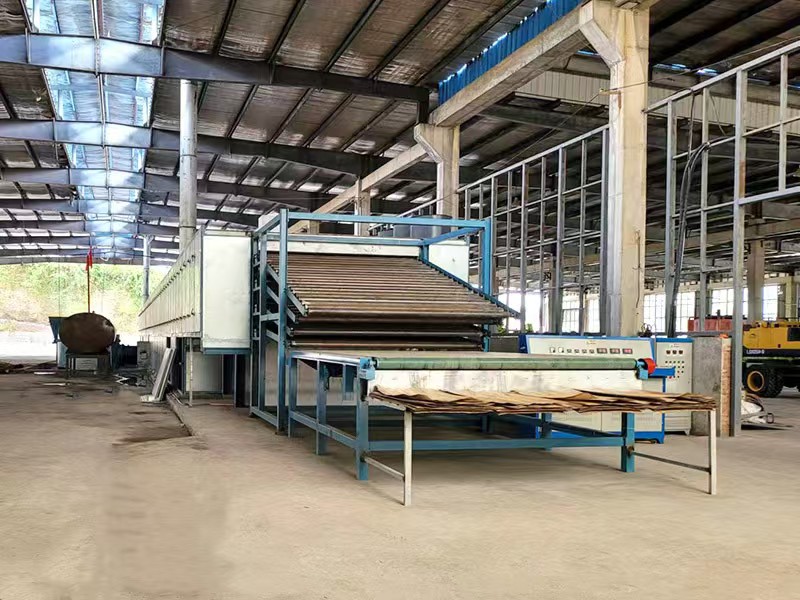
Drying is the critical control point for veneer quality. As the market increasingly demands uniform moisture content and flat, smooth surfaces, advanced drying systems—featuring low-temperature, slow-drying processes, real-time intelligent moisture monitoring, negative-pressure feeding, insulated kiln structures, and waste-heat recovery—are no longer merely optional upgrades; they are essential entry requirements for high-end supply chains. Consistent moisture content directly reduces rejection rates for downstream customers and serves as a key selling point to differentiate your offerings from those of competitors.
Complement this with AI-powered visual sorting and automated edge trimming. These systems can automatically detect knots, holes, cracks, and color variations, minimizing human error and ensuring consistent grading. For a veneer mill, investments in drying and sorting equipment are, in essence, strategic moves to increase log yield and secure premium-priced orders.
3. Restructure the Raw Material Supply Chain to Mitigate Risk and Improve Material Utilization
First, diversify raw material sources: combine domestic fast-growing species—such as eucalyptus and poplar—with legally sourced timber imports from Southeast Asia, Africa, and Latin America. Secure long-term supply agreements to prevent disruptions caused by over-reliance on a single source.
Second, maximize the use of small-diameter and lower-grade timber by optimizing the rotary-peeling process to improve overall yield.
Third, establish mechanisms for inventory management and price forecasting. Strategically stock up when log prices are low to avoid being caught off guard by market volatility.
Additionally, explore alternative raw materials, such as bamboo veneer or reconstituted wood substrates, to build a diversified product portfolio.
4. Diversify Customer Channels: A Dual-Track Strategy for Domestic and Overseas Markets
Domestically: Reduce over-reliance on a single segment (such as formwork manufacturers) by proactively engaging with producers of engineered wood, custom furniture surfaces, wooden doors, timber structures, and industrial packaging/pallets. Diversifying across different market sectors helps smooth out fluctuations in order volume.
Internationally: Proactively familiarize yourself with export compliance requirements. Prepare in advance by obtaining forest certifications, arranging for fumigation and quarantine, and securing environmental compliance reports. Establish connections with overseas plywood manufacturers and timber traders. Emerging markets—such as those in Africa, Southeast Asia, Central Asia, and Latin America—exhibit stable demand for plywood veneers and relatively favorable trade barriers, representing key growth opportunities.
In terms of marketing, companies should move beyond the mindset of "just selling veneers." Instead, they should offer solutions—providing products with consistent moisture content and standardized grading, as well as customizable specifications—rather than merely supplying raw materials.
5. Compliance Upgrades and Green, Low-Carbon Practices: Aligning Early with Long-Term Industry Standards
Accelerate environmental compliance upgrades—such as installing flue-gas dust removal systems, biomass combustion controls, or water-film dust collectors—to ensure stable environmental impact assessment (EIA) status. Prioritize the adoption of low-formaldehyde or formaldehyde-free production processes, and develop ENF-grade (ultra-low formaldehyde) veneers to align with the shift toward eco-friendly, high-end plywood products in downstream markets.
Low-carbon requirements and traceability will become mandatory thresholds for future overseas orders. Proactively maintain detailed production records and raw material traceability, while tracking energy consumption and emissions data, to prevent the loss of future business due to concerns over carbon footprints or supply chain transparency.
6. Collaborative Clustering: Moving Toward Specialized Division of Labor
Small and medium-sized veneer mills do not need to build an entire, end-to-end supply chain on their own. Instead, they can collaborate through a division of labor—partnering with specialized rotary-cutting facilities, drying plants, or sorting and packaging centers. Alternatively, they can secure long-term contracts with downstream plywood or engineered-wood manufacturers to stabilize production capacity. Within an industrial cluster, companies can consolidate testing, coordinate with overseas traders, and engage in collective raw material procurement. This approach reduces the costs associated with independent sourcing and individual certification, while helping to avoid destructive, chaotic price wars.
The veneer industry is not facing a disappearance of demand, but rather a structural transformation. Low-end, inefficient, and inconsistent production capacity will continue to be phased out. Manufacturers that can reliably supply high-grade face veneers, substrates for engineered wood, or specialized packaging veneers—while maintaining rigorous control over raw materials, drying processes, and compliance traceability—will continue to secure premium-priced orders.
For veneer producers, transformation is not merely about switching tree species or upgrading equipment; it is a fundamental shift from "selling semi-finished products obtained through rotary cutting" to "providing downstream clients with stable, controllable, and customizable wood-based substrates." By discerning the shifting trends—the ebbs and flows—within downstream application sectors and concentrating resources on areas that offer controllable quality and higher added value, companies can safeguard their profit margins and sustain growth amidst the cyclical fluctuations of the industry.