Español
 Русский
 Francés
 Português
 ภาษาไทย
 Indonesia
 Việt
Việt
 العربية
 Melayu


Differences Between Red and Black Plywood
Core Differences Between Red and Black Plywood and Optimization Solutions for Plywood Factory Drying Processes
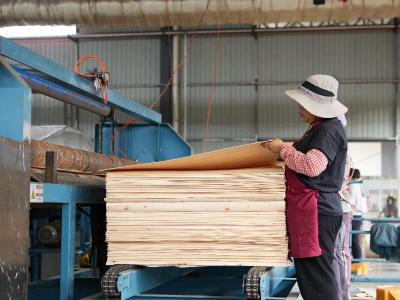
In the construction formwork industry, most plywood factories only focus on the differences in the veneer material, surface appearance, and price between red and black plywood, neglecting the fact that veneer drying quality is the core underlying factor determining the pass rate, turnover rate, and market reputation of both types of plywood. The quality gap between red and black plywood is not only due to the difference in surface coating processes, but also stems from the different standards for controlling the moisture content, flatness, and internal stress of the veneer during the initial drying process.
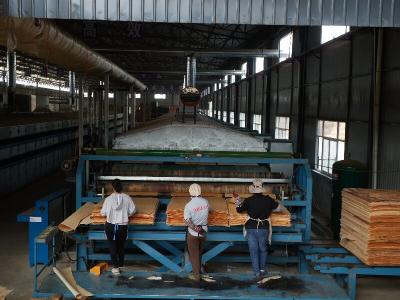
As a professional veneer dryer manufacturer, we have been deeply involved in plywood drying processes for many years and understand that: poor quality low-end red plywood, unstable high-end black plywood, high rework losses, and numerous customer complaints all originate from non-standard veneer drying procedures. This article deeply analyzes the essential differences between red and black plywood and provides precise and practical optimization suggestions for veneer drying production for plywood manufacturers, helping factories reduce costs, improve quality, and adapt to the production standards of different plywood types.
I. The Essential Difference Between Red and Black Plywood: More Than Just Lamination, the Core Difference Lithium-Laminate Veneer Grade
Many plywood manufacturers have a misconception: they believe the difference between red and black plywood lies solely in the surface lamination paper (melamine film/phenolic film). In fact, lamination is merely a post-processing step to improve the plywood's waterproofing and release properties. The real difference in grade, lifespan, and pass rate lies in the drying quality of the veneer.
1. Red Plywood (Ordinary Construction Formwork): Low-Standard Drying, Economical Plywood
Red plywood primarily targets the low-end civilian, small-scale projects, and short-term turnover markets. Its market price is low, and profit margins are thin. Therefore, most factories cut costs during the initial drying process. Its core production characteristics are concentrated in the veneer stage:
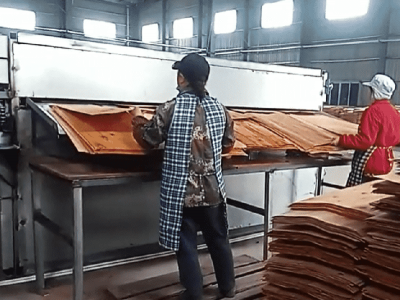
The veneer materials are mostly mixed hardwoods, second-grade eucalyptus, and poplar, which inherently have many problems such as knots and uneven thickness. The accompanying drying process standards are lenient, generally employing rapid drying methods with unstable temperature differences. The finished veneer has a wide range of moisture content, mostly controlled between 12% and 18%, resulting in large moisture content deviations, severe residual internal stress, and poor flatness.
Subsequent hot pressing and lamination processes can only compensate for surface defects and cannot repair the uneven moisture content, micro-cracks, and warping issues within the veneer. This is the core reason why red plywood is generally prone to delamination, blistering, deformation, low reuse count, and adhesion to concrete demolding.
The applicable scenarios determine the process standards: Red plywood is designed for low-end projects without high-standard fair-faced concrete pouring requirements and short-term construction. The market has a high tolerance for board flatness, water resistance, and reusability; therefore, the industry defaults to using low-standard veneer drying processes.
2. Black Plywood (Clear Water Film-Coated Formwork): High-Standard Drying, Engineering-Grade Board
Black plywood is positioned for high-end infrastructure, high-rise buildings, bridges, water conservancy, and export projects. It has extremely high requirements for flatness, water resistance, stability, and reusability. Using a high-cost phenolic waterproof membrane for coating is just the foundation; the core threshold is the high-precision control of veneer drying.
High-end black plywood must use first-grade solid core veneers, and has stringent requirements for drying parameters: the veneer moisture content must be precisely controlled within the standard range of 8%-12%, with an overall board moisture content deviation of ≤2%, completely eliminating internal stress and ensuring veneer flatness, no warping, no micro-cracks, and uniform moisture content.
Only veneers that meet the drying standards, after multi-layer gluing and high-temperature, high-pressure hot pressing, can achieve a dense core, no delamination, and no deformation. Combined with phenolic coating, it achieves a mirror-like, clear water release effect, perfectly meeting the stringent construction requirements of high-end projects.
In short: Red plywood is inferior due to its lower drying standards, while black plywood is more expensive due to its higher drying precision; the lamination determines the plywood's "appearance and water resistance," while veneer drying determines its "lifespan and stability."
The surface difference between red and black plywood lies in the lamination process, but the core difference is in the level of veneer drying technology. The affordability and durability of red plywood, and the high-end wear resistance of black plywood, ultimately stem from the different front-end drying standards.
For plywood manufacturers, to escape low-price competition, increase product premium, reduce production losses, and secure high-end projects and export orders, there's no need to blindly pile on high-end auxiliary materials. Prioritizing the optimization of veneer drying processes and upgrading to precision drying equipment is the most efficient, practical, and cost-effective production upgrade solution.
We specialize in the research and customization of veneer dryers, providing customized drying equipment and process adjustment solutions for the differentiated production needs of red and black plywood, helping plywood factories reduce costs, increase efficiency, upgrade quality, and expand into the high-end market.